

Feature
Bainbridge Island Japanese American Exclusion Memorial hours
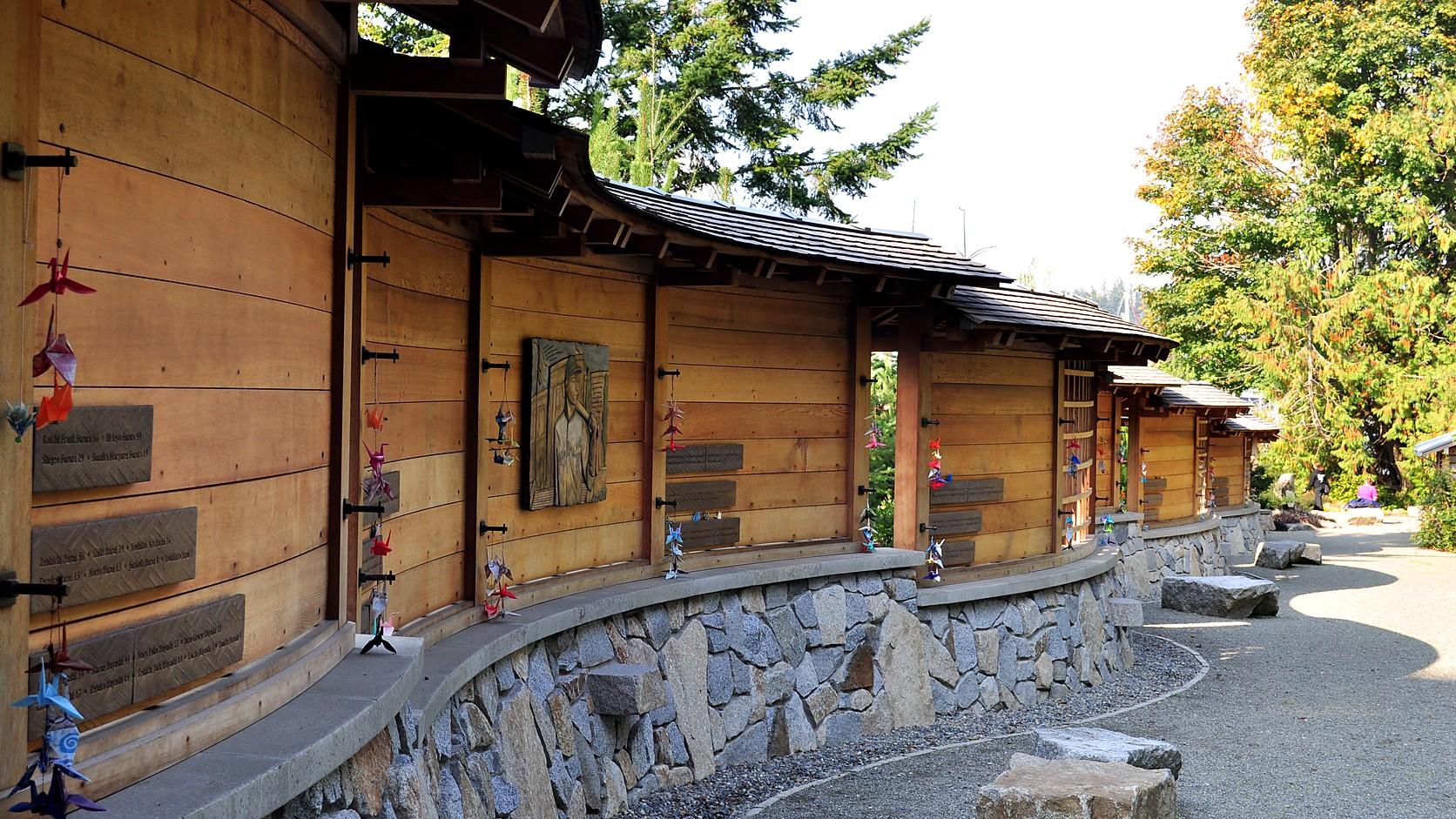
The Bainbridge Island Japanese American Exclusion Memorial is free and open daily, dawn to dusk. Ferry route, parking, visitor center hours and history.
The Bainbridge Island Japanese American Exclusion Memorial is free, and its outdoor grounds are open every day from dawn to dusk, according to the National Park Service and the memorial's own association, as of November 2026. It sits in Pritchard Park at 4192 Eagle Harbor Drive, about 3.7 to 3.8 miles by road from the Bainbridge Island ferry terminal, which makes it a ferry day trip from Seattle and a long one from Enumclaw. A visitor center opened on the grounds on October 11, 2026, and keeps shorter hours than the park.
Here is the fact that gives the place its weight. On March 30, 1942, the island's Japanese American residents boarded a ferry at a dock that stood on this exact ground. HistoryLink says they were the first people in the country taken from their homes and held in a government camp under Executive Order 9066. The memorial is built along the path they walked, and a wall one foot long for each person on the island's list runs beside it.
When is the memorial open?
The outdoor memorial is open daily from dawn to dusk, and the National Park Service's pages, updated November 16, 2026, say so in these words: "Open daily, dawn to dusk." The visitor center is open Friday through Sunday from 10 a.m. to 4 p.m., say both the park service and the Bainbridge Island Japanese American Exclusion Memorial Association, usually shortened to BIJAEMA. Both add weekdays from 10 to 4 when staff are available and ask callers to ring 360-386-2114 before counting on one.
Staffing by the park service is a softer matter. BIJAEMA says a seasonal ranger is generally on site Thursday through Sunday from March through November. The park service's own memorial page, updated November 16, 2026, gives no ranger schedule; it says the station is locked when the ranger is out on the grounds and lists a ranger phone number, 206-713-8407. Late November is a time to call first if a ranger matters to you.
Is there a fee, and can you bring a dog?
Admission is free. The park service calls the site a non-fee park, and BIJAEMA's visit page says admission is free. An older park service listing for the site, last updated in April 2021, shows a fee and no pets; the newer pages from October and November 2026 supersede it.
Dogs are allowed outdoors on a leash and under close supervision, and not inside the visitor center. Both organizations add a request: this is a memorial as well as a park, so think about whether a dog belongs on this visit.
How do you get there from Enumclaw?
You cross Puget Sound on a Washington State Ferries boat from Seattle's Colman Dock to Bainbridge Island, a crossing that WSDOT lists at about 35 minutes. From downtown Enumclaw to Colman Dock is roughly 41 miles and about an hour and four minutes without traffic, by the OSRM routing service, which uses OpenStreetMap data; treat that as approximate. Ferry waits and traffic come on top.
On Thanksgiving, Thursday, November 26, 2026, WSDOT says the Seattle and Bainbridge route runs its holiday schedule, which follows the weekend timetable. The fall schedule runs to December 26, 2026, and this site's guide to Washington State Ferries sailing seasons explains when the winter timetable takes over. WSDOT sets fares and posts them on its route page, and the Bainbridge route takes no vehicle reservations, so check the fare calculator on the day.
Without a car, the first leg can be done by bus and train from Enumclaw, but the island is the harder half. BIJAEMA says walking from the terminal is strongly discouraged, because there are no sidewalks and the trip takes about an hour and a half each way. It suggests biking, which it calls hilly with some stretches lacking a bike lane, or a ride arranged with BI RIDE at 844-424-7433 with two hours of notice. As of November 2026, BIJAEMA's page says BI RIDE does not operate on Sundays.
Where do you park, and is any of it closed?
As of November 2026 the BIJAEMA visit page, stamped October 20, 2026, still says the main lot is closed, though the visitor center it was closed for has since opened, so confirm the parking arrangement before you go. Before the park entrance, turn left from Eagle Harbor Drive onto Taylor Avenue. Cars park against the curb in the circular bus turnaround just ahead, and signs mark a short walk to the temporary entrance. Do not drive down the gravel road to the marina at the bottom; it is private.
There is one open question. In an October 2025 update, BIJAEMA said the upper memorial, which includes the Pavilion and its boardwalk, would be closed from October 1, 2025, through September 2026, while the lower memorial, the wall, the departure deck and the walking loop, stayed open daily. The association's later pages do not say whether the upper areas have reopened. Ask before you go if the Pavilion is on your list. The grounds have a porta-potty in the lot and no running water.
What is the memorial wall?
The wall is the heart of the site. BIJAEMA describes it as built of cedar and granite, 276 feet long, with one foot for each of the 276 Japanese and Japanese American residents of the island on March 30, 1942. Their names and ages are grouped by family. The architect was Johnpaul Jones, and the terracotta friezes along it are the work of the artist Steven Gardner, with quotations drawn from survivors' oral histories.
The wall follows the route to the old Eagledale ferry dock. At its end the departure deck marks the dock's location, and BIJAEMA says life-size weathered metal sculptures there by the artists Anna Brones and Luc Revel depict the exiles and the numbered tags they were given, and the park service calls them steel. A Western Red Cedar that stood beside the dock in 1942 still stands on the site, and American Forests added it to the National Registry of Historic Trees in 2003, BIJAEMA says.
The motto is in Japanese romanization and English: "Nidoto Nai Yoni," which BIJAEMA translates as "Let It Not Happen Again."
Why did it start on Bainbridge Island?
HistoryLink's essay by Jennifer Ott says Army troops put up Civil Exclusion Order No. 1 across the island on March 24, 1942, giving Japanese Americans six days. Walt and Milly Woodward, who published the island's weekly Bainbridge Review, objected to what they called "this high-handed, much-too-short evacuation order." HistoryLink says that after the order was first announced in February, the Woodwards were the sole editors on the West Coast to speak out in print against internment, in HistoryLink's words.
On March 30, soldiers took 227 people to the Eagledale dock, and the ferry Kehloken carried them to Seattle. From there a train took them to Manzanar in California. Onlookers, the Review reported, "wept unashamed." Within a year most were moved to Minidoka in Idaho, and only about half the island's Japanese Americans came back after the war, HistoryLink says.
The numbers differ by source, and the difference matters here. HistoryLink and the 2002 plaque it quotes say 227 boarded the ferry, and the park service's memorial page said the same when it was read on November 2. BIJAEMA's wall lists 276 residents. One BIJAEMA history page gives 272. The pages open for this article do not explain the gap, so each figure is credited to its source here.
HistoryLink is also careful about the word first. Residents of Terminal Island, near Los Angeles, were removed on February 25, 1942, but were not immediately sent to a camp. By HistoryLink's account, Bainbridge Island's residents were the first to go from their homes straight into a camp; the Terminal Island group was removed earlier but not sent to one at once.
How the ground itself changed
Before it was a memorial the ground was industrial. BIJAEMA says it was the Wyckoff Company wood-treating plant, once one of the world's largest creosote plants and a federal Superfund cleanup site by 1987. A city task force appointed in 2001 recommended a public park there, and Pritchard Park was created in 2006. Congress added the memorial to Minidoka National Historic Site in 2008, which is why a Washington island memorial belongs to a park headquartered in Jerome, Idaho. This site's guide to the national parks in Washington lists it among the state's sites.
The wall opened to the public on July 30, 2011, by BIJAEMA's and the park service's account. The departure deck was dedicated on March 30, 2021. On October 11, 2026, BIJAEMA says, thirteen survivors cut the ribbon on the visitor center before about 400 people, exactly a year after the groundbreaking.
How long does a visit take?
Plan on about an hour and a half if you use the free audio tour. BIJAEMA says it has 16 stops in the memorial and takes about 90 minutes. It runs in the National Park Service mobile app: search for "Klondike Gold Rush-Seattle Unit," choose Self-Guided Tours, then the Japanese American Exclusion Memorial Audio Tour. The Seattle unit is that park's Pioneer Square site, covered in this site's guide to the Klondike Gold Rush museum.
The older park service listing gives 60 to 120 minutes. Groups can ask BIJAEMA for a docent-led tour at least two weeks ahead. The paths are packed gravel with gentle slopes and wooden bridges that can be slippery when wet, and BIJAEMA calls the grounds ADA-compliant.
Before you go
On the day, check three things. First, the ferry: the WSDOT route page for Seattle and Bainbridge Island lists alerts and the holiday timetable. Second, access: the BIJAEMA visit page carries the parking arrangement, visitor center hours and any closure, and the park service sends visitors there for the latest word on construction. Third, the weather, since the paths are outdoors and gravel.
BIJAEMA's phone number is 360-386-2114. March 30 is the anniversary of the removal, the date the memorial marks each year, so check BIJAEMA's calendar if you want to attend a commemoration instead of an ordinary day.
Story label: Original Story or Guide
Originally published: