

Feature
The skiers who built Crystal Mountain named its silver peaks
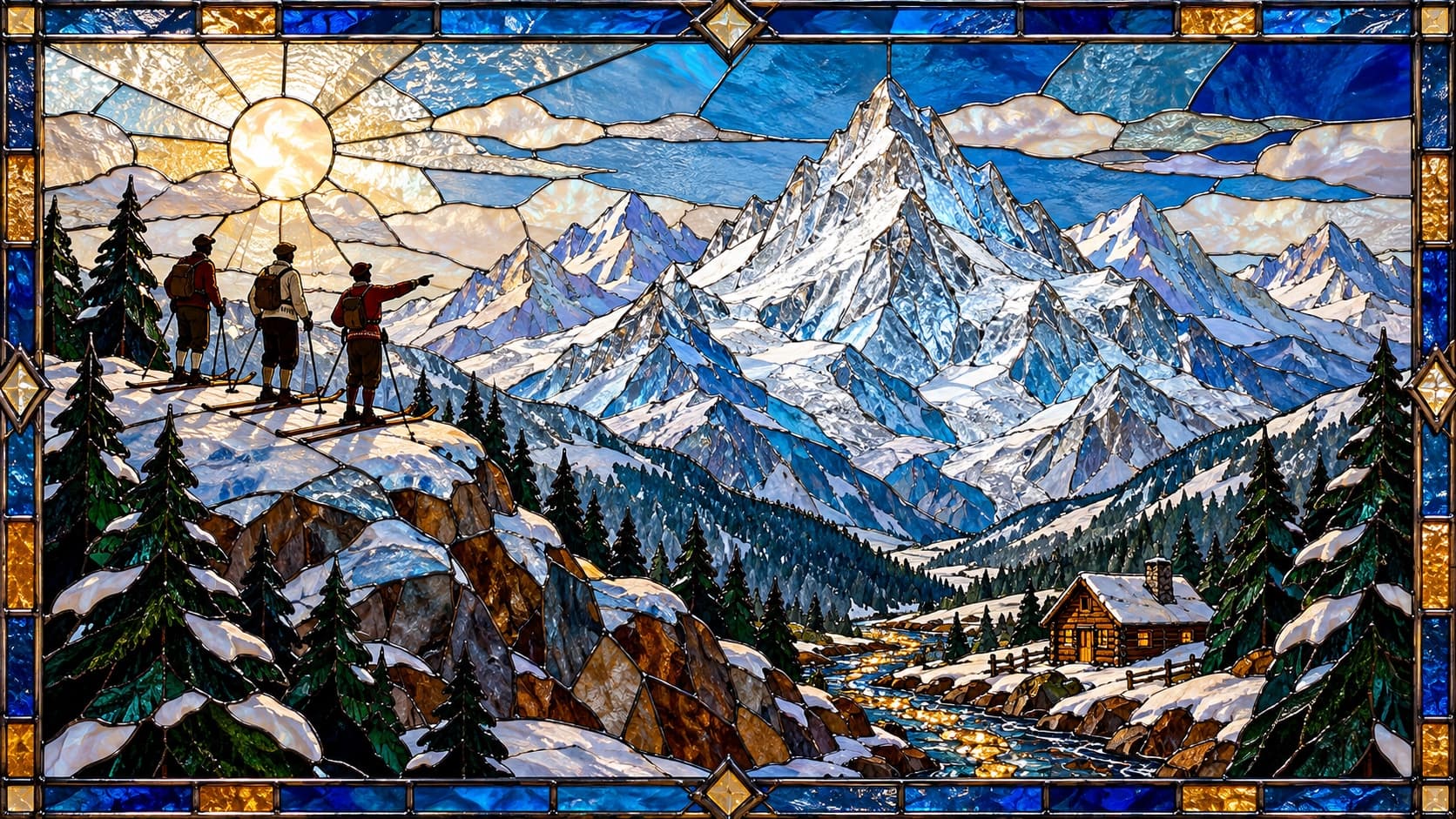
Crystal Mountain's founders were scouting Corral Pass when they spotted it in the 1950s. Then, one founder said, they named its silver peaks.
Read the trail map at Crystal Mountain, about 40 miles east of Enumclaw off SR 410, and it sounds like a prospector's ledger. Silver King. Silver Queen. Silver Basin. The Throne. Lifts once called Miners Basin and Quicksilver, a T-bar on the Gold Hills slope, a building once called the Bullion House. It is easy to assume the skiers inherited all of this from the men with pans and picks.
Some of it they did. A good deal of it, by the account of one of the founders, they made up. And a peak photographed as Crystal Mountain in 1959 now answers to another name.
The wrong pass
The ski area began as a plan for somewhere else. In March 1950 Mary Lea Griggs, a Tacoma civic leader, finished a proposal to the U.S. Forest Service for a ski area at Corral Pass, a few miles to the north, and led winter scouting parties there, according to the Crystal Mountain Founders Club's history. Her husband, Everett "Spike" Griggs II, ran the St. Paul and Tacoma Lumber Company. Duke Watson, a Seattle lumberman and early director, told the ski historian Lowell Skoog that "Mary Lea was the driver." She recruited friends, mostly from Seattle.
The Korean War stalled everything; the steel for lifts went to the war. In June 1954 the Rev. Leo Gaffney, a Seattle University civil engineering professor whom the Northwest Skier described as a mountaineer, "though not a skier," restarted the Corral Pass committee. Corral Pass Inc. incorporated in May 1955.
Then someone looked the other way. Watson remembered a scouting trip with Bill Black, Ted Watkins and Walt Little to a basin first spotted from Corral Pass: "We were sitting up there on this beautiful spring day and we looked over and said, 'What is that?'" They got out the maps. Corral Pass had good upper slopes but would have needed a long lift just to reach them. "It just didn't pencil out," Watson said. Little, put in charge of the investigation by John Graham's engineering firm, spent the next three years on the new basin. Gaffney, Watson recalled, was keenly disappointed.
In November 1956 Corral Pass Inc. changed its name to Crystal Mountain Inc.
Somebody else's secret
The basin was not empty. From the late 1930s, Yakima skiers wintered at the Gold Hill cabin in Morse Creek, just over the Cascade crest. Chuck Hessey had first visited Gold Hill as a boy, Skoog writes, "when a few down-on-their-luck prospectors were still there." His favorite tour ran to a cirque known as Crystal Bowl, now Silver Basin.
On one scouting trip, Watson's party skied in from Highway 410 over Silver Saddle and met a couple on skis: Chuck Hessey and his wife, Marion. "Who has discovered my secret area?" Hessey asked. Then: "Darn it, the word's going to get out. We've always had this totally to ourselves." The Hesseys never cared for lift skiing. They went on to help establish the Glacier Peak Wilderness and North Cascades National Park.
The silver names
Then came the names. In April 1959 the Northwest Skier ran a photo of the basin. Skoog, cataloging the issue decades later, notes that it "depicts Crystal Mountain (now called Silver Queen)." The peak labeled Crystal Mountain in 1959 is, on Skoog's reading, today's Silver Queen. Modern references muddy it further: Wikipedia and Peakbagger give the name Crystal Mountain to the main summit, which they also call Silver King.
Who did that? According to Skoog's notes of a 2001 interview, Watson and Warren Spickard, a fellow director, "came up with some of the names now associated with Crystal Mountain, such as Silver King, Silver Queen, The Throne, and Three-way Peak." The royal family on the skyline is, on that account, the work of two ski company directors, not the prospectors.
There were limits. Walt Little proposed naming peaks and basins after members of the board. Spickard, "definitely opposed to what he called 'eponymous names,'" and others voted him down. Little eventually resigned.
The mining underneath is real, only smaller than the names suggest. The U.S. Geological Survey's mineral database lists a Silver Creek mine, a past producer of gold, silver and lead with a shaft and several adits, and a Silver Creek placer where "CONSIDERABLE COARSE GOLD" was reported, with "SMALL PRODUCTION BETWEEN ABOUT 1920 AND 1930." USGS locates both "WITHIN SKI RESORT AREA." A 1959 photo shows a 5,300-foot miners' cabin in Silver Creek Basin below Silver Queen, and the founders' volunteer crews spent weekends from 1958 to 1962 working out of an old miner's cabin. Where the word crystal came from in the first place, no source found for this article explains.
824 families and one road
In July 1958 the Forest Service issued a prospectus for "Crystal Mountain Area Development." Its road specifications cost $350,000 more than the company expected, but in November the agency granted a temporary three-year permit so fundraising could go ahead. The Northwest Skier reported that Crystal Mountain Inc., formed by sixteen Seattle and Tacoma businessmen, had submitted the only bid.
The money came from skiers. The company offered stock and bonds to raise $850,000, and Class A shares came with a season pass, called the lift privilege. By July 1959 the issue was oversubscribed, with investment from 824 families in thirty-six Washington communities. A 1967 Ford Times article reported that 70 percent of stockholders had put in $1,000 or less and the largest held only $15,000.
The hard part was the six miles from the highway. The regional head of the Bureau of Public Roads opposed spending public money on it, Watson recalled. The company lobbied for two years, with Gov. Albert D. Rosellini and Sens. Warren G. Magnuson and Henry Jackson as allies, until the road joined the forest highway system. In April 1962 the Forest Service issued a twenty-year term special use permit, later extended to thirty.
December 8, 1962
On November 14, 1962, Rosellini dedicated the area at the junction of Highway 410 and the new road, which was still a single lane of gravel and dirt for its last two miles. Opening day was December 8, with two Riblet double chairs, Miners Basin and Iceberg Ridge, seven rope tows, the Gold Hills T-bar and a day lodge. The Northwest Skier called it "the first major Northwest ski area to be built away from an existing highway." The board chairman, Joe Gandy, was better known that year as president of the Seattle World's Fair.
The first passengers on the first chairlift, the paper reported, were three carpenters: Paul Borell of Buckley and L. E. Thorsett and John Collins of Enumclaw.
The timing was poor. Snow that first winter was the lowest in forty years, and the area lost money. It kept building anyway: a third chair in Green Valley in December 1963, and in February 1964 the Silver Skis Chalet, which the Founders Club calls the first condominium development in Washington. That spring the Silver Skis, a downhill first run from Camp Muir to Paradise in 1934, was revived at Crystal.
Nationals in the new basin
In 1965, in its third season, Crystal hosted the NCAA ski championships in late March and the National Alpine Championships from April 2 to 4. The resort's own history lists Jimmie Heuga, Billy Kidd and Jean-Claude Killy among the field. Canada's Nancy Greene, three years before her Olympic gold, won both the slalom and giant slalom there, according to the BC Sports Hall of Fame.
What the shareholders became
The skiers ran Crystal for more than three decades. In March 1997 they sold to Boyne USA in a deal that kept the lift privilege, and the Crystal Mountain Founders Club was formed from the former shareholders. John Kircher, who ran it for Boyne, bought it himself in 2017, and Alterra Mountain Company has owned it since October 2018. It is now the largest ski area in Washington, with some 2,600 acres. The drive, the chains and the gondola are covered in this site's Enumclaw to Crystal Mountain guide.
The Founders Club still exists, and so does the lift privilege: members must activate their units for the 2026-27 season by 6 p.m. on October 1. Its home page says some of those original stockholders "even helped to pick the site and held the shovels!" Two of their directors, by Watson's account, also named its peaks. Look up from the base area at Silver Queen. By Skoog's reading of a 1959 photograph, that is the peak once called Crystal Mountain.
Story label: Original Story or Guide
Originally published: