

Feature
Rainier School in Buckley was built because parents demanded it, and the group those parents founded now wants it closed
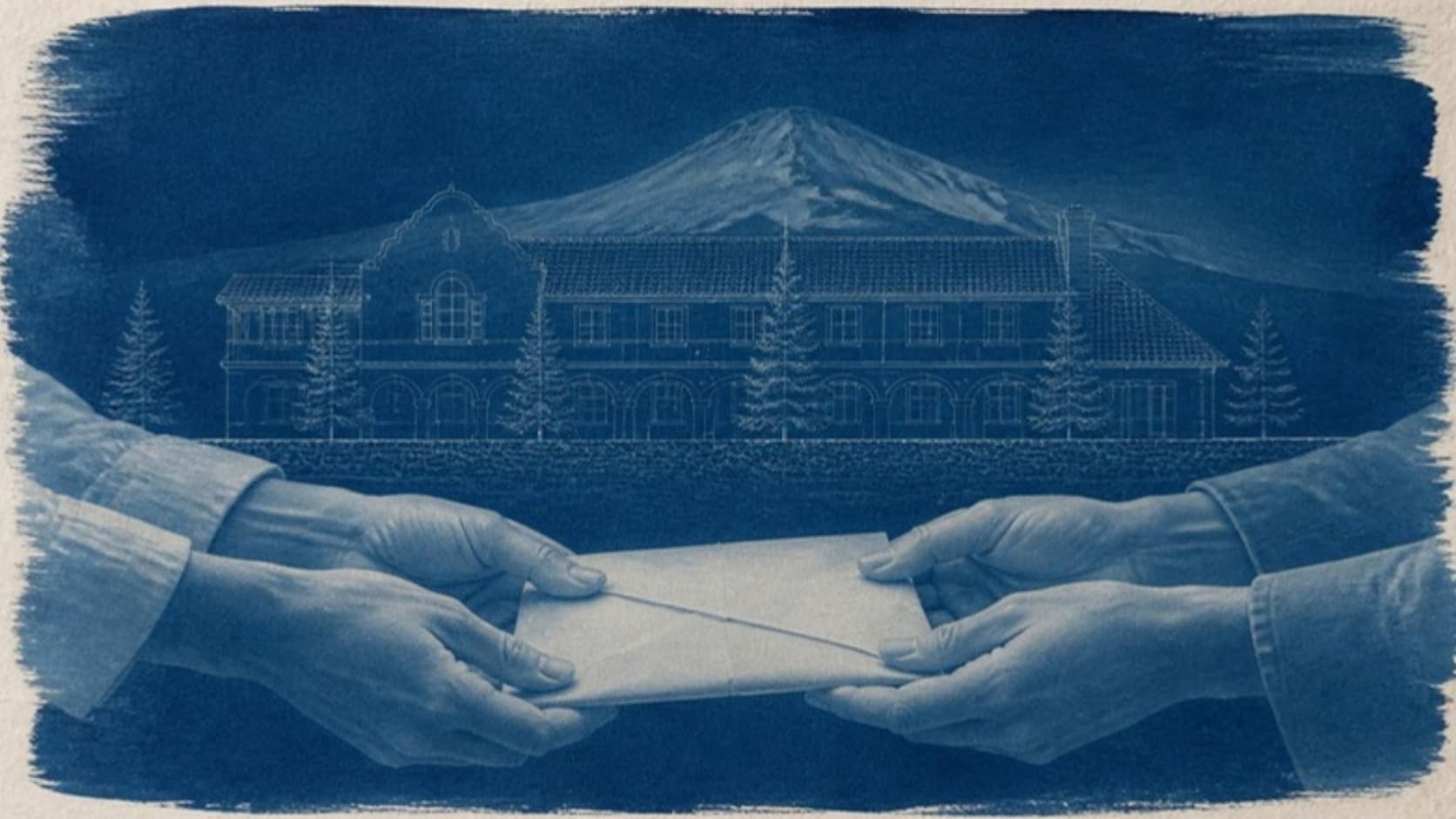
Parents lobbied Buckley's Rainier School into being in 1937. In 2025 the group they founded backed the law winding it down. Its history, and what comes next.
Cross the White River from Enumclaw, drive into Buckley, and turn east on Ryan Road. The long, low rock wall on your left was laid by Works Progress Administration crews in 1938. Behind it is Rainier School, a state residential center for people with developmental disabilities: 80 buildings on 1,097 acres, with Mount Rainier filling the windshield. At the end of 2025 it was home to 70 people. In 1958 it held more than 1,900.
To most neighbors it is a big state employer behind a stone wall. How it got there is the better story. The usual story of an American institution is a state deciding where to put people the public preferred not to see. Rainier School's story begins with people who very much wanted to see their children, and found them on the far side of the state.
A league of parents
In 1935 Washington had one custodial school for children and adults with developmental disabilities, at Medical Lake, near Spokane. It had been designed for 700 and held 840 by 1923. For a family in Seattle or Tacoma, a visit meant crossing the Cascades.
That October a Seattle father, James F. Oakley, who with his wife, Anna, led the effort, called a meeting of parents and relatives of residents at Medical Lake. A second meeting followed in Tacoma in December, chaired by Ada Percival. The Tacoma group chose a name, the Children's Benevolent League, and in 1936 the families incorporated. The organization describes itself today as founded by parents "who believed their children deserved more." Once incorporated, it set its sights on a second state school, this one west of the Cascades, where most of the families lived.
Then the league did something unusual for a parents' group. Its president, Monty Percival of Pierce County, ran for the state Senate in 1936 and won. The Arc of Washington State, as the league is now called, puts it this way in its history: "The CBL's president, Monty Percival, goes one step further: he runs for the state senate…and wins."
Fifty-one sites and a senator from Pierce County
Percival became chair of the Senate committee on charitable institutions and sponsored Senate Bill 34. Gov. Clarence D. Martin signed it on February 16, 1937, creating the Western State Custodial School for the "care, confinement, training and employment" of its residents. The law required at least 400 acres and a three-member committee to choose them. Percival sat on that committee himself.
The committee looked at 51 locations and narrowed them to two, one at Mount Vernon and one outside Buckley. According to a 2014 history commissioned by the Department of Social and Health Services, Percival argued for his home county and "excellent soil quality further solidified his case." Buckley won on May 24, 1937.
The core of the site was the homestead of Edward Collins, an 85-year-old bachelor who had held the land since 1890 and would not come down below $30,000. The state would not come up. Buckley's postmaster, John E. Martin, pledged $5,000 toward the difference, and Frank Hickey of Tacoma's White Motor Company gave another $5,000. Pierce County donated 160 acres. Federal New Deal grants helped pay for the buildings, and Seattle architect John Graham drew a Spanish Colonial Revival campus of wards linked by covered arcades.
The first 19 residents arrived on the evening of October 19, 1939, transferred from Medical Lake. By the end of the year there were 169. The girls' ward was named Buckley. The boys' ward was named Percival.
A farm with a hospital attached
The good soil was the point. "Rainier School was dependent on its farm from its inception," wrote Howard Baumgart, a former employee who wrote its history. In the year ending June 1944 the farm produced 616,160 pounds of milk and 13,128 dozen eggs. By 1959 it ran 180 registered Holsteins, 240 hogs and 4,000 chickens on 415 acres, with 17 full-time farm employees. The milk went to the state reformatory at Monroe to be pasteurized. A cottage built in 1940 housed boys learning farm work, meant as training for jobs outside.
The rest of daily life came from the institution's own plant: its powerhouse, its kitchen, and an industrial laundry that washed every sheet on campus and kept growing through the 1950s and 1960s. There were Saturday matinees in the gym, Scout troops from 1949, day trips to Lake Tapps, and from 1952 an outdoor pool built with help from the Seattle Athletic Club.
There was never enough of anything. For years admissions outran construction, and basements converted to game rooms in 1949 went back to being sleeping quarters. The first superintendent, Frederick Lash, told the state in the mid-1940s that staff living conditions were intolerable: "We are remotely situated, we are isolated, we are at the end of the road, and whatever enjoyment or social relaxation we have, we must make ourselves."
The long unwinding
Population peaked in 1958. DSHS puts the figure at 1,918; Baumgart's history gives 1,958. It hovered near 1,700 through the 1960s, then began falling in 1971, as the state and parents' groups turned toward care closer to home. A 1971 state law promised public schooling to children with disabilities, and from the 1973 to 1974 school year every resident under 21 attended classes. In 1979 the original concrete wards, Buckley and Percival among them, were torn down for duplex-style homes. By then the population was 867. The dairy passed to Washington State University after the farm manager retired in 1981.
By 2014 Rainier School served 370 adults. It was certified by the federal government as an intermediate care facility, which brings federal Medicaid matching money. That certification became the pressure point. In April 2018 federal surveyors from the Centers for Medicare and Medicaid Services told DSHS that one of the three units, known as PAT C, could not come into compliance with three federal conditions. After a settlement, CMS reinstated that unit in April 2019, and the same month it decertified a second unit, PAT A, which closed by 2020, according to DSHS and the Legislature. Each unit brought in about $1 million a month in federal money. In a January 2021 report, Disability Rights Washington, which campaigns for closing the state's institutions, wrote that state and federal regulators had found many residents of PAT C in "immediate jeopardy" of harm for more than nine months in 2020. In December 2022 DSHS agreed to close PAT C rather than appeal decertification by CMS, and it was empty by 2024. As of 2025 one unit, PAT E, remained fully certified.
The bill of 2025
In 2025, at the request of the governor's budget office, the Legislature passed Substitute Senate Bill 5393, titled "Closing the Rainier school by June 30, 2027." Gov. Bob Ferguson signed it on May 20, 2025. New long-term admissions stopped on July 27, 2025, and all new admissions end after June 30, 2027.
The title overstates it. Amended in the House on a proposal that Rep. Joshua Penner's caucus credits to him, the law lets eligible long-term residents stay, and Rainier stops operating as a residential habilitation center only when that population reaches zero. The law even defines "closure" as "prohibiting new admissions." A long-term resident who moves to a community setting may return once within the first year. DSHS told legislators in June 2026: "Residents may stay at Rainier School for as long as they choose and continue to be eligible."
The hearings split along lines that the 1930s would not have predicted. Speaking for the bill were self-advocates, a former resident, Disability Rights Washington, and Stacy Dym of The Arc of Washington State, among others. The Senate committee staff's summary of the supporting testimony included the line "We no longer believe in locking our loved ones with I/DD away." Against it were the state employees' union and two groups of residents' families and guardians, Action DD and Friends of Rainier; the opposing summary began: "Many residents of Rainier School view it as their home and family." Rep. Joshua Penner of the 31st District, which includes Buckley and Enumclaw, wrote in an April 2025 op-ed that "viable community alternatives simply do not exist for the majority of Rainier's residents."
In September 2025 the Arc told DSHS that "the current campus utilization represents a significant underuse of state resources and flies in the face of current research on outcomes and civil rights protections for people with developmental disabilities." The league Monty Percival led had fought for a better place for its children. Ninety years on, the organization it became has decided that no institution is the better place. Families remain on both sides.
What Buckley stands to lose
Rainier employed about 400 people at the end of 2025, according to DSHS, and that count leaves out maintenance, human resources, finance and IT. DSHS calls it one of Buckley's largest employers. It also helps run the town's water: DSHS "works jointly with the City of Buckley to produce, treat, and transmit water throughout the water service territory," and the city is studying alternatives, with results expected in 2027. When DSHS asked the public in 2025 what worried them about the closure, 152 people responded, and 31 of the answers named lost jobs and economic loss in Buckley and the surrounding area.
The state land does not stop at Buckley, either. A 2014 survey found two state parcels reaching inside Enumclaw's city limits, beside Anderson Riverview Park. What becomes of 1,097 acres, 80 buildings and a working water system is still undecided; DSHS has asked the public, and the state has not said.
Rainier School is a home to the people who live there. The grounds are not open for sightseeing; see them from Ryan Road.
Story label: Original Story or Guide
Originally published: