

Feature
The downtown that forgot to die
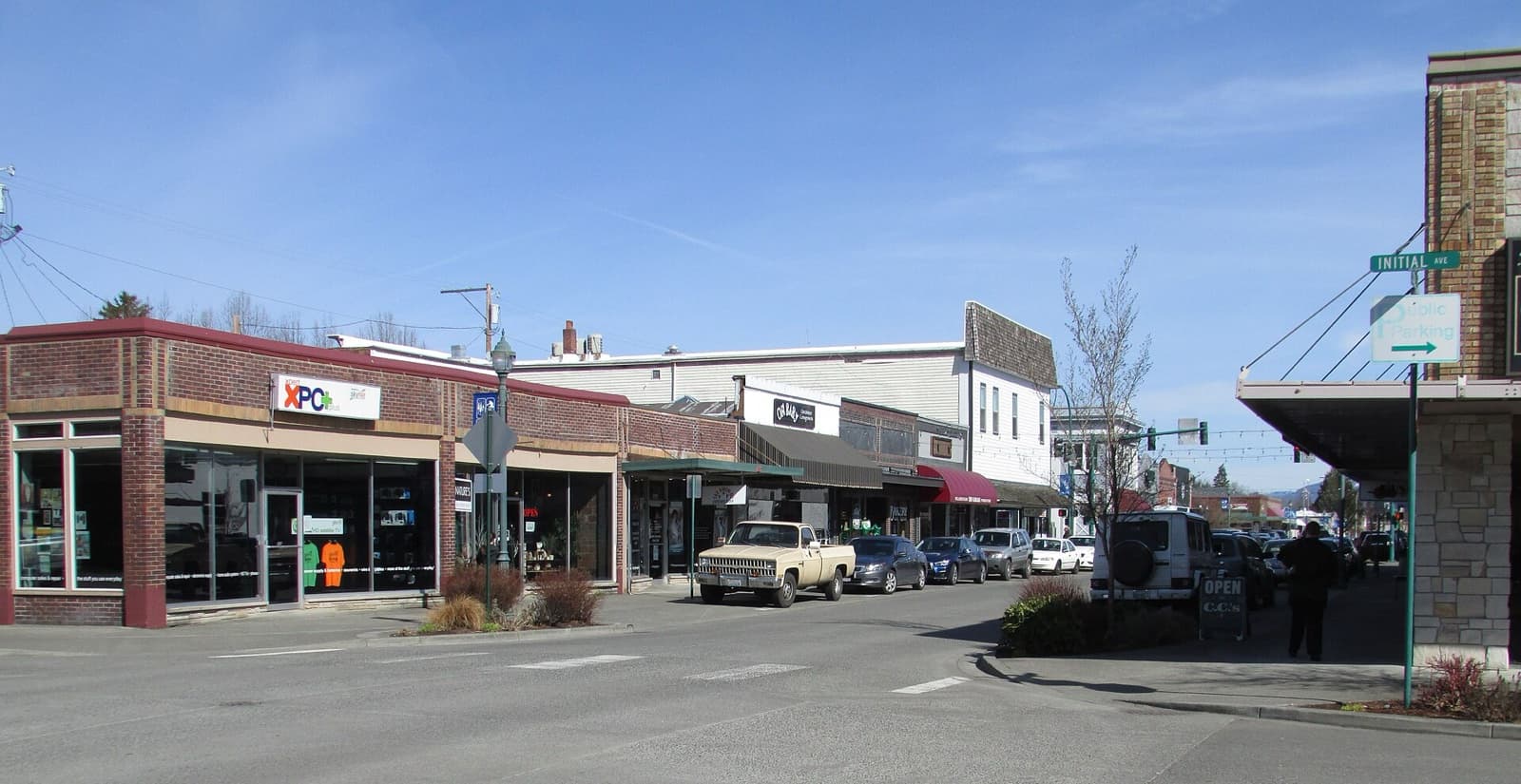
Sundays on Cole, half the small-town main streets in America are parking lots now. Ours is still open for business
There is a block of Cole Street where you can, on the same afternoon, buy a quarter-pound of candy, watch a movie, get a glass of Washington wine, and drink a beer in a bar that’s been pouring since before your grandparents were born. None of these things are pretending. They’re all just open, next to each other, on a street that by every rule of the last seventy years should not still look like this.
Here’s what usually happens to a town like Enumclaw. You know the story even if you’ve never named it. The highway gets a bypass, so nobody drives through the middle anymore. A shopping center opens out by the county road, then a big box past that, and one by one the useful stores, the ones that sold you socks and screws and school shoes, follow the parking lots out of downtown. The old brick storefronts go vacant. Somebody with a plan and a bulldozer decides the empty blocks are “blight,” calls it renewal, and by the time anyone misses the buildings they’re a surface lot with good drainage. What’s left is either a corpse or a costume: a downtown that’s boarded up, or one embalmed into a cute little museum of itself, where the only things for sale are candles and regret.
Cole Street didn’t do that. Cole Street forgot to die.
The buildings are still here, the real ones, brick and early-1900s, from back when the town had only just decided, in 1913, that it was a town. The awnings are still here. And the buildings are still doing something. Kelly’s Mercantile looks, from the sidewalk, exactly like an old general store, which is a small trick, because inside it’s a pub with a coffee bar and live music. The Chalet Theatre will still show you a movie, then hand the stage to a comedian on a Friday. The Historic Mint has the word “historic” right there in its name and has earned it, in the way that only a bar which has outlasted everyone who ever said it wouldn’t can earn it. There’s a candy shop called Sweet Necessities, which is the correct name for a candy shop and also, if you sit with it, a small complete philosophy. There are wine tasting rooms and antique stores and the kind of independent bookstore that towns keep announcing is extinct and this one keeps forgetting to be.
It is not a museum. That’s the entire point. People actually buy things here. It’s a working street.
You could ask why, and you’d get a few honest answers. Part of it is geography, Enumclaw sits up on its plateau, an hour out from Seattle, far enough that it never fully dissolved into somebody else’s suburb. A town that’s a little bit out of the way gets to keep its own center of gravity. Part of it is that people here actually live here, in the full sense of it, they don’t just sleep here and spend their whole waking life somewhere else. A downtown survives when a town needs it to be somewhere, not just look like somewhere.
And part of it, I think, is simpler and harder to put on a spreadsheet. The town liked its street and decided to keep it. That’s it. That’s the whole strategy, and it is much rarer than it sounds.
You can see the decision most clearly on the Sundays in summer when they close Cole Street to cars completely and give it back to people. Music sets up in the middle of the road. Vendors put tables where the traffic usually goes. Kids run down the centerline of a street they’re normally told to look both ways before crossing. It’s a small thing and it’s not a small thing. A town that closes its main street to fill it with its own residents is a town making a quiet argument about what a street is for. The argument is: this is ours, it’s for us, and we’re going to stand around in the middle of it.
I won’t sell you a postcard, because a street like this is never actually safe. There’s a building or two that isn’t here anymore, and everyone who remembers them will tell you exactly where they stood. A downtown like this is always one bad decade, one absentee landlord, one recession away from the other ending. It survives on attention. The moment a town stops caring whether its center is alive, the bulldozer paperwork practically fills itself out.
That’s also the good news, though, because attention is a thing a town can actually give. Cole Street is still here for the least glamorous reason imaginable: enough people, for long enough, kept showing up. They bought the candy. They saw the movie. They had the beer in the old bar. They treated the street like it mattered, and so it went on mattering.
Every downtown in America had the same choice at some point, keep it or pave it. Most towns, for reasons that all seemed sensible at the time, paved it. Walk down Cole Street on a closed-off Sunday with the music going and the mountain out over the whole thing, and you’re looking at the other answer. The rarer one. The one where the town got to keep its own front room.
Go buy something down there this week. That’s not sentiment. That’s the entire mechanism.
Consider it.
This story first appeared in Beyond Enumclaw, the free Substack newsletter from Enumclaw.com. Subscribe to get new stories in your inbox.
Story label: Original Story or Guide
Originally published: