

Feature
The flat part of town is the top of the mountain
The Mountain Lost Its Top. Enumclaw Got the Real Estate
Go stand in the middle of Enumclaw. A parking lot will do. The football field, the fairgrounds, your own backyard, anywhere the ground is flat and behaves itself.
"You live on the part of the mountain that left."
The flat ground under your feet and the white summit fourteen thousand feet up are the same rock. They used to be in the same place. One of them moved.
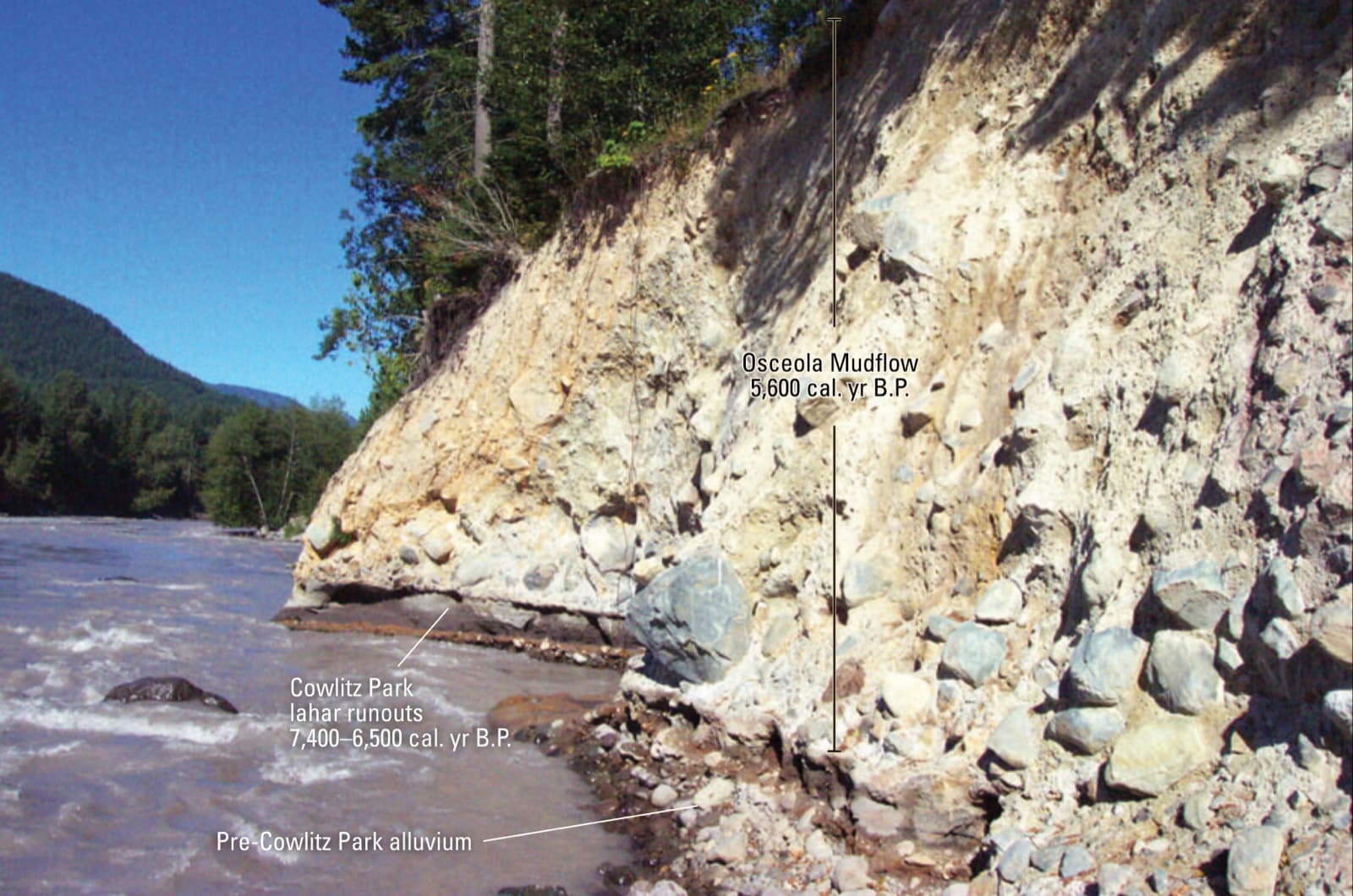
Here’s the thing nobody puts on the welcome sign. The plateau that Enumclaw sits on, the reason the town is flat and easy to build on, the reason there’s room for farms and a fairground and a tidy grid of streets, is not old, patient ground in the way you’d assume. It is a delivery. About 5,600 years ago the top of Mount Rainier came off, turned into a moving river of mud and rock and melted glacier, and ran down the valley until it stopped, more or less, right here.
You live on the part of the mountain that left.
Geologists have a name for it, and the name does it no favors: the Osceola Mudflow. “Mudflow” sounds like a bad afternoon in a wet garden. What actually happened is that a piece of the summit, weakened, waterlogged, held together by not very much, let go all at once and became a wall of debris moving fast enough to bury a valley. It went more than forty miles. It didn’t trickle down to the lowlands; it arrived at them. Kent, Auburn, Sumner, Puyallup, people down there are living on it too. Enumclaw just sits closer to where it started, up on the thick part of the deposit, on the plateau the mountain built for us before anyone asked.
Now sit with the arithmetic a second, because this is the part that should get you.
The mountain used to be taller. The summit you photograph on the clear days is not the original top. The original top is gone. Some of it is under your car. The most permanent-looking thing in your entire life, the fixed point the whole town navigates by, the thing that was here before the town and will be here long after, has already partly fallen down. And it landed where you park.
Five thousand six hundred years is a strange distance. It’s long enough to feel completely safe and short enough to be humbling. It is older than the Great Pyramids. It is not older than people being here. Someone stood on this river valley and saw the sky go wrong, or came home to a valley that had a brand-new floor. The Muckleshoot and the Puyallup, the peoples of this water, had names and stories for the mountain thousands of years before it got a Latin label and a hazard map. A town that can’t agree on what its own name means is sitting on top of an event that rewrote the map, and most days, nobody thinks about it at all.
That’s not a complaint. It’s the deal you make with a place like this. You can’t walk around every morning vibrating about geology; you’d never get to work. So the mountain becomes scenery. The plateau becomes “the flat part of town.” The single most extraordinary fact about where you live gets folded up small and put in a drawer, the way you file anything you see every single day.
There’s one more thing the geologists will tell you, if you keep them talking past the polite part. The mountain isn’t finished. It’s not a monument; it’s a machine that’s currently paused. What happened once can happen again, not tomorrow, not on a calendar anybody can hand you, but again. That’s what those signs on the valley roads are, the ones you’ve stopped seeing: a little running figure, the word VOLCANO, an arrow pointing uphill and away from the water. They aren’t decoration. Somebody thought hard about which way you should run.
I’m not telling you this to spoil the view. It’s the opposite of spoiling the view. Once you know the flat ground and the white peak are the same rock caught at two different moments, the whole plateau tilts a little in your head. The fairgrounds are on it. The dairy farms are on it. Every football game, every Sunday market, every kid wobbling down a cul-de-sac on a first bike, all of it happening on the settled dust of a mountain that came apart, and is quietly stacking itself back up while we get through our week.
You wanted to know where the town comes from. This is where the town comes from. Not the founders, not the railroad, not 1913. Before any of that, the ground showed up. The rest of us moved in on top of it.
So the next time somebody calls Enumclaw flat, you’ll know why. It had to fall a long way to get that way.
The mountain’s out. It’s shorter than it used to be.
Consider it.
This story first appeared in Beyond Enumclaw, the free Substack newsletter from Enumclaw.com. Subscribe to get new stories in your inbox.
Story label: Original Story or Guide
Originally published: