

Feature
The mountain keeps its own hours
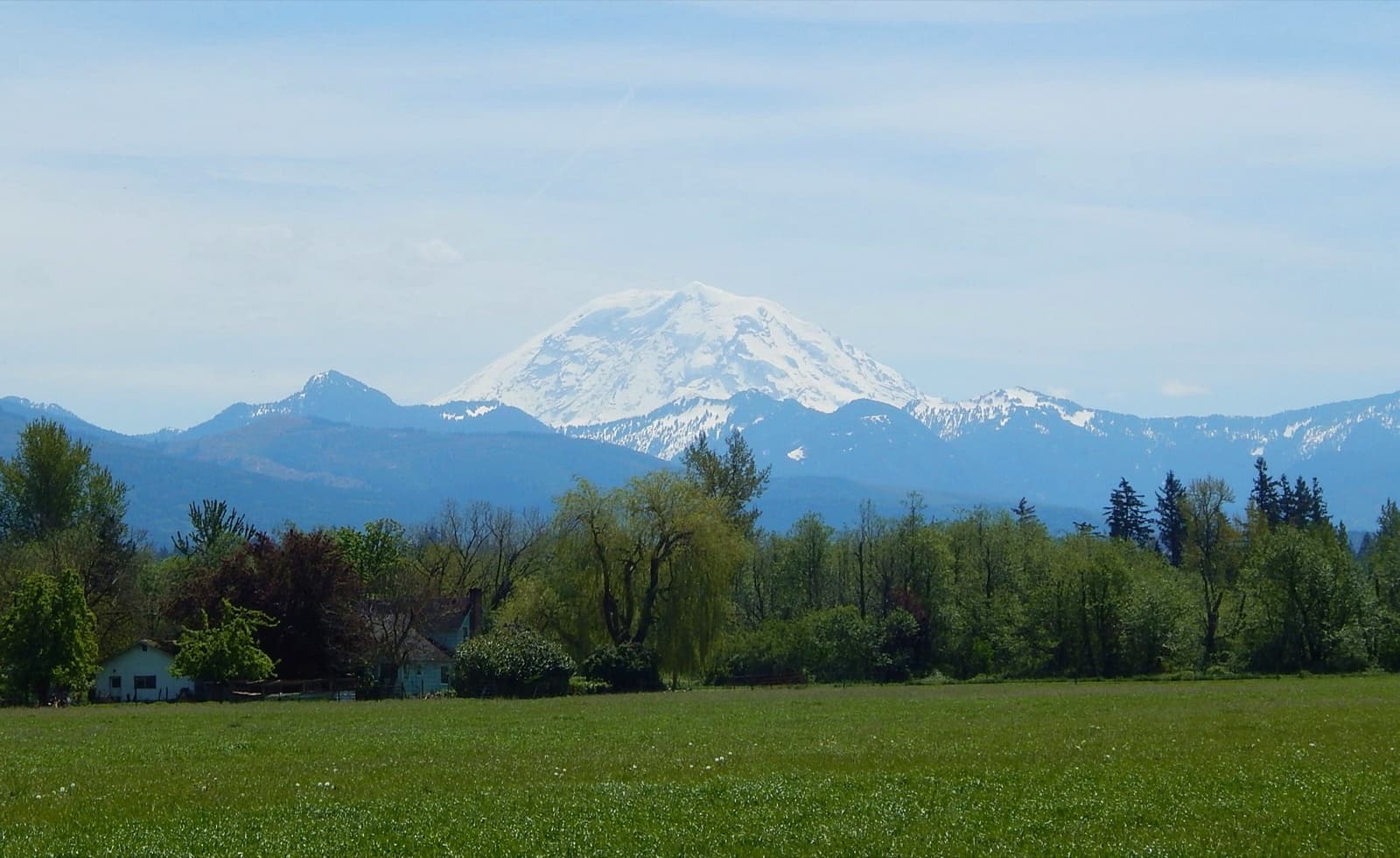
Mountain Notes, there's a phrase here, "the mountain's out," that does a lot of quiet work. On living with a fourteen-thousand-foot neighbor who shows up only when it feels like it
Someone will say it to you in the checkout line, or across the fence, or in the school pickup lane, in the same flat tone they’d use for anything else about the weather, because it is the weather: “Mountain’s out.”
Not “what a beautiful day.” Not “clear skies.” Mountain’s out. As if Rainier is a neighbor who mostly keeps to himself and has, this morning, decided to come to the party.
You have to live here a while to understand what a strange sentence that is. Most places, a mountain is a fact. It sits where it sits. You can plan your whole life around it not moving. Here, the largest object for a hundred miles is part-time. Fourteen thousand feet of rock and ice, close enough to feel a little rude about it, and for weeks at a stretch you would never know it was there.
That’s the arrangement in this part of Washington. The clouds come down and tuck the whole sky in grey and low and total, and the mountain steps behind the curtain. Not far behind it. Just behind it. You drive past the exact spot where it should be and there’s a soft nothing, like a stage before the show. You can go most of a winter that way. You forget. You genuinely forget that you live at the foot of one of the largest volcanoes on the continent, because you haven’t seen it since October, and a person can only hold so much.
And then some ordinary Tuesday the curtain lifts.
It’s always a small shock, even for the people who’ve been here their whole lives and would never admit it. You come around a bend on the highway, or step out for the mail, or look up from the gas pump, and there it is, absurdly, impossibly close, whiter than you remembered, taking up an amount of sky that seems like a mistake. For half a second your brain files it as new information. That can’t have been there the whole time. It was. It just keeps its own hours.
You can tell how long someone’s lived here by how they handle it. Newcomers pull over. They take the photograph, everyone takes the photograph, and everyone’s photograph is a small disappointment, because a phone can’t do the part where it presses on your chest. The lifers don’t pull over. But watch them anyway. They glance. Every single one of them glances. Forty years in and they still turn their head, quick, the way you check that someone you love is still in the room. Nobody in this town has fully gotten used to it. That isn’t a failure of attention. I think it might be the whole point.
The mountain runs quiet errands in the back of everyone’s mind here. People give directions by it. They know which windows in the house catch it and which don’t, and they’ll show you, unprompted, like it’s a feature they had installed. There’s a real-estate phrase around here, “territorial view”, for the good listings, but everybody knows the real question is whether you can see the mountain from the kitchen sink while you’re doing something boring. On a plateau this flat, with the streets in a sensible grid, the mountain is the one thing that tells you which way you’re facing. It is south, and it is southeast, and it is home.
And then there are the evenings it does the trick with the light. The sun drops somewhere behind the town, and for a few minutes the snow up top catches the last of it and turns the color of the inside of a shell, pink going to peach going to a soft dark rose, a color that has no business being real, sitting fourteen thousand feet up over a town of people mostly just trying to get dinner on. Nobody arranged that. It’s only what the mountain does at the end of certain days, for no one, whether you’re watching or not. Most nights nobody is. Some nights everybody stops.
It helps, maybe, that the thing is not entirely gentle. We got into that last time, the mountain that made this plateau made it by falling on it, and it’s a paused machine, not a monument. Living here means holding two ideas at once: the neighbor and the giant, the most beautiful thing you’ll see all week and the reason there are evacuation signs on the valley road. You’d think that would sour it. It doesn’t. If anything it sharpens the affection, the way anything you could lose gets held a little closer.
Here’s what I think a mountain like this actually does to the people who grow up under it. It hands them a permanent sense of scale. You can’t spend a childhood in the shadow of something that large and that old and come out believing you’re the most important thing in the frame. It’s humbling in the good way, not the way that shrinks you, the way that makes you part of something bigger than the week you’re having. Kids here draw it without being asked. It’s the first thing in the picture, every time, a lopsided white triangle across the top third of the page, because of course it is. It’s the first thing in the real picture too.
So when someone tells you the mountain’s out, hear what they’re actually saying. They’re saying: look up. The big quiet thing came back today. It won’t stay, it never does. Go stand where you can see it while it’s here.
The mountain’s out. Go look.
Consider it.
"Forty years in and they still turn their head, quick, the way you check that someone you love is still in the room."
This story first appeared in Beyond Enumclaw, the free Substack newsletter from Enumclaw.com. Subscribe to get new stories in your inbox.
Story label: Original Story or Guide
Originally published: