

Feature
Your barn burns, and the neighbors pay
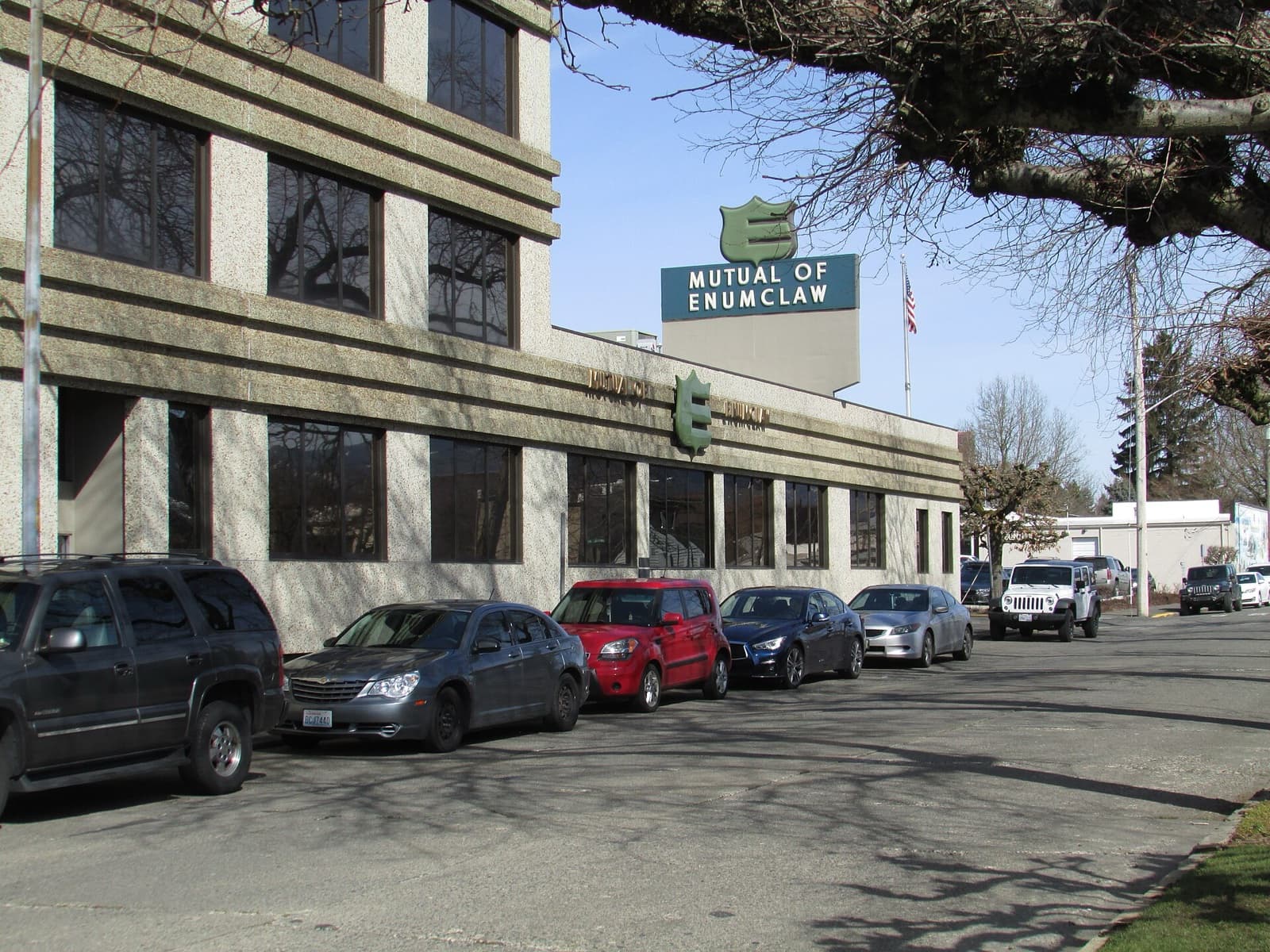
The Namesake, there’s a real company with this town’s name on it, insuring houses all over the Northwest. Its whole idea is older than the city itself, and kinder than you’d expect
Somewhere out there right now, in a town that has never heard of us, a person is opening a piece of mail they won’t read closely, and near the top of it, in small serious type, is the word Enumclaw.
It isn't a corporation that happened to land in a farm town. It's a farm town's kindest habit, incorporated in 1898 and never quite abandoned.
Which turns out to be exactly the right way to think about it.
Here’s where this one started, and it’s older than you’d guess. Older than the city, in fact. Enumclaw didn’t incorporate, didn’t officially become a town in the eyes of the state, until 1913. The company beat it by fifteen years. On a February day in 1898, a group of farmers out here, led by a man named George Bruhn, filed papers for something they called Farmers Mutual, and the entire purpose of it, the whole reason it existed, was fire.
That’s worth sitting with, because it tells you what these people were actually afraid of. Not crime, not markets, not the future. Fire. You built a farm out here with your hands over years, the barn, the house, the animals, the season’s hay stacked and waiting, and a single bad night with a lantern, or a dry August, could take all of it back down to the dirt in an hour. One farm, alone, could not survive that. So they did the only sensible thing frightened, practical people have ever done. They agreed to be afraid together.
That’s the whole idea buried in that dull little word, mutual. A mutual company isn’t owned by investors somewhere waiting on a dividend. It’s owned by its own members, the people it covers. The farmers weren’t customers of Farmers Mutual. They were Farmers Mutual. Everybody paid in a little. When one of them lost a barn, the pool rebuilt it. When the next one did, the pool rebuilt that. Nobody got rich. Everybody got to keep farming.
If that sounds familiar, it should, because it’s just the oldest thing a small town already knows how to do, filled out in triplicate. When a barn burns out here, the neighbors show up, always have. They bring lumber and casseroles and a free Saturday, and they put the thing back up. Farmers Mutual was that instinct, formalized: the barn-raising turned into a ledger, so it would still work even between people who’d never met, even in a year too hard for casseroles. It isn’t a corporation that happened to land in a farm town. It’s a farm town’s kindest habit, incorporated in 1898 and never quite abandoned.
And it stayed. That’s the part I keep turning over. A company that grows for a hundred-some years has every reason and every opportunity to leave, to move down the hill to a city with an airport, to trade “Enumclaw,” a name that requires a small pronunciation seminar, for something smooth and regional and forgettable. Northwest This. Cascade That. It didn’t. In 1966 it made the name official and doubled down: Mutual of Enumclaw. It kept the plateau in its own title, on purpose, and left its headquarters right here on Wells Street.
There’s something I love about that, and it’s the same thing I keep loving about this whole town. This is a place whose name, depending on who you ask, means “thundering noise” or “place of evil spirits”, a name that sounds, honestly, a little ominous. And the town took that exact word, that slightly haunted mouthful, and quietly made it also mean this: the promise that covers your house. The name carries both now. It’s the place of evil spirits, and it’s the thing that pays to rebuild after the fire. That’s a lot of range for four syllables nobody can spell.
So the next time you’re filling out something boring and you see the word, on your own policy, maybe, or a neighbor’s, or a form in a town three states away, you’ll know what you’re looking at. It isn’t a brand. It’s a town. And under the town, it’s a promise a handful of scared, sensible farmers made to each other in 1898, back when the worst thing that could happen was a spark: that nobody out here would have to burn down alone.
They incorporated the barn-raising. It’s still standing. So is the barn.
Consider it.
This story first appeared in Beyond Enumclaw, the free Substack newsletter from Enumclaw.com. Subscribe to get new stories in your inbox.
Story label: Original Story or Guide
Originally published: