

Feature
Mountain goats in Washington, where to see them
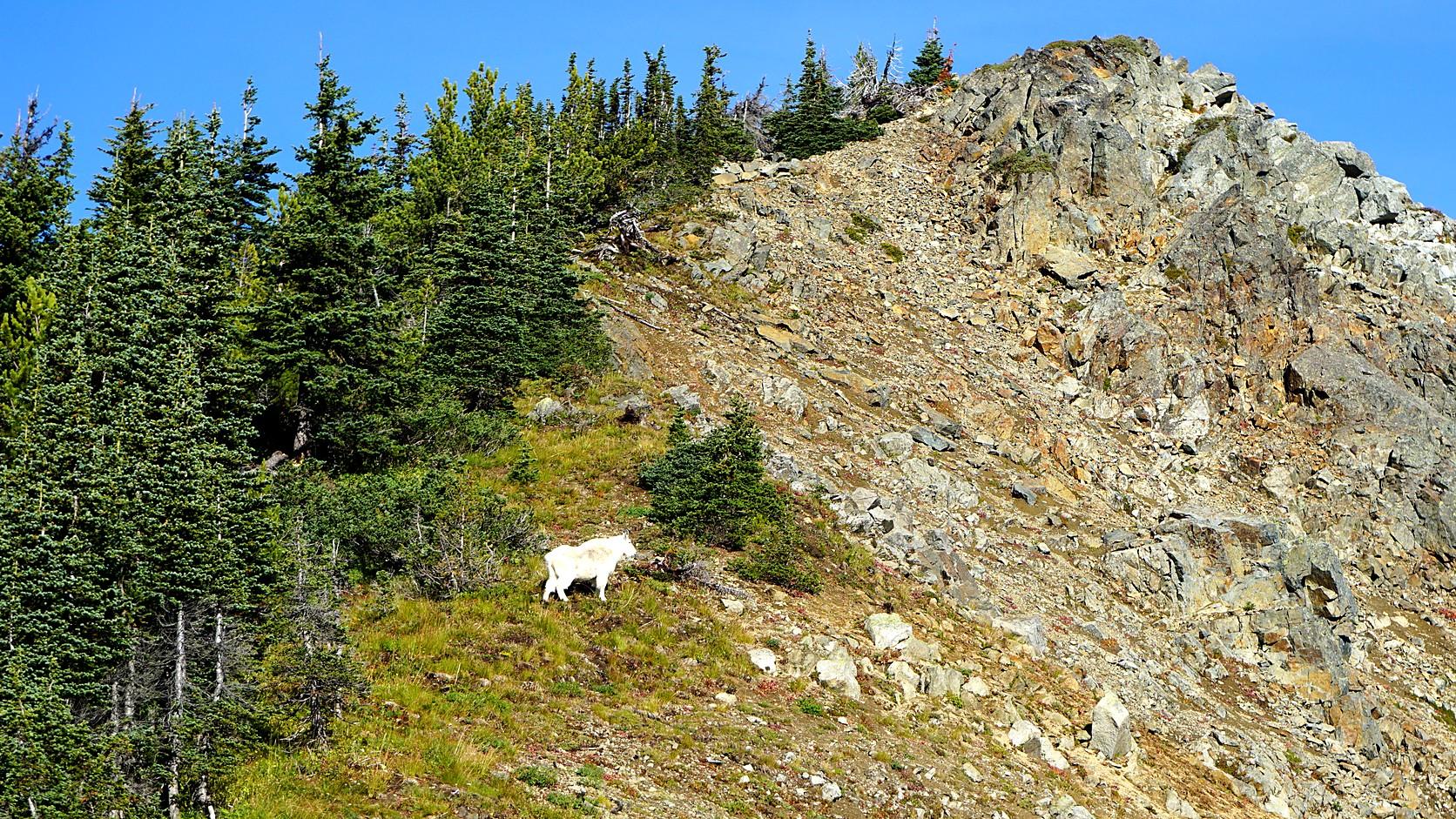
Where to see mountain goats in Washington: the Rainier, Cascade Pass and Enchantments trails agencies name, which are closed, and the 50 yard rule.
Most of Washington's mountain goats live in the high Cascades, and the places the Park Service and the state wildlife agency tie to goat sightings are Crystal Lakes, Summerland and Dege Peak at Mount Rainier, Sahale Arm at Cascade Pass in North Cascades National Park, and Aasgard Pass in the Enchantments. As of November 2026 the Sunrise Road to Dege Peak is closed for the season and the Summerland trailhead is closed through 2029, and Highway 410, the road to the Crystal Lakes Trail, closed for the season on November 18, 2026. In the North Cascades park's October 29, 2026 report, trails above 4,000 feet were covered in snow.
The goats of the Olympic Mountains were never supposed to be there. By the Park Service's reading of old newspaper stories, about a dozen were released near Lake Crescent between 1925 and 1929, and the herd grew to roughly 725 by 2018. Between 2018 and 2022 the park and its partners removed 548, and 325 of them were moved to the Cascades, where goats are native. The state says the North Cascades herds that move was meant to help are doing poorly: goat numbers there have been declining since about 2016.
1. Crystal Lakes Trail, the Enumclaw side of Rainier
The Park Service's Sunrise area page lists the Crystal Lakes Trail at 6.3 miles and says to watch for elk and mountain goats among its midsummer meadows. The trailhead is on State Route 410, 4.5 miles north of Cayuse Pass, which puts it on the Enumclaw side of the mountains. The upper lake sits 0.7 mile beyond the lower one.
The Park Service's trail report for Crystal Lakes, dated October 16, 2026, lists no closure and says its next update, for the 2027 season, comes in June 2027. The highway is the weak link. The park's road page, updated November 18, 2026, lists SR 410 as "CLOSED for the season." The state's Chinook Pass report, read on November 26, 2026, says the pass is "closed for the season due to adverse conditions and avalanche risk," with the eastbound closure at milepost 57, Crystal Mountain Boulevard, 12 miles west of the summit. This site's Chinook Pass closing dates guide gives the closings in the state's records.
Entering Mount Rainier requires a pass. The park's fee page, last updated September 1, 2026, lists $30 for a private vehicle for seven consecutive days and $15 per person on foot or bicycle, and says the park does not take cash. The National Park Service sets those fees, so the page is the one to trust when they change. From November 1 to May 1 the park requires every vehicle to carry tire chains, four-wheel drive included.
2. Summerland Trail, closed at the trailhead
The Sunrise area page describes the 8.5 mile Summerland Trail as a route with mountain meadows, Mount Rainier and Little Tahoma in view, and goats and elk herds among the sights. It starts 3 miles west of the White River entrance. It is also the trail the park has closed at the bottom: the road page says the Summerland trailhead is closed for Fryingpan Creek Bridge construction through 2029, and that no pedestrians may use White River Road through the closure zone past the bridge.
The trail report adds that the upper Fryingpan Creek crossing is out and that the Wonderland Trail is closed between the Carbon River and Summerland because of the 2026 fires. This site's Summerland trailhead closure story explains why the 1931 bridge is being replaced.
3. Dege Peak, above Sunrise
The Park Service captions a photograph of Dege Peak, taken on September 27, 2020, with the line "Keep an eye out for mountain goats on the rocky slopes of Dege Peak." The picture sits in an album titled Dege Peak via Sourdough Ridge Trail, and the Sunrise page sends hikers onto that trail from Sunrise.
Sunrise is the problem. The Park Service says the Sunrise Road season runs from around late June or early July to between late September and early October, and its road page, updated November 18, 2026, says "CLOSED for the season." The Grand Park 2 Fire and the Wonderland Complex Fires also closed trails in 2026, including the Mount Fremont Trail. Nothing on the park's pages says when cars go back up, and this site's Enumclaw to Sunrise guide follows that road.
4. Cascade Pass and Sahale Arm
The Park Service's Cascade Pass trail page carries a photograph captioned as mountain goats walking along the Sahale Arm trail. The Cascade Pass Trail runs 3.7 miles one way and gains 1,700 feet. Sahale Glacier is 5.9 miles and 3,940 feet up. Pets are not allowed. North Cascades National Park charges no entrance fee, according to its fee page, last updated June 9, 2026.
The access road is the catch. The Cascade River Road runs 23.1 miles from Marblemount, on State Route 20, to the trailhead. The park says it usually opens by the end of June, or early July in heavy snow years, and may close at different points during the year. The park's road page lists the Cascade River Road as closed for the winter at milepost 21, two miles from the trailhead, in an update dated November 9, 2026, and says foot and bicycle traffic is permitted beyond the gate. The trail report of October 29, 2026 says the first heavy snowfall had covered trails above 4,000 feet with several inches. The state highway is a separate matter, and this site's North Cascades Highway closure dates guide covers it.
5. Aasgard Pass, in the Enchantments
The state wildlife agency's goat page includes a photograph of a young goat "halfway up Aasgard Pass (Colchuck Pass), Alpine Lakes Wilderness." This is the hardest item here. The Forest Service's Enchantments page says the pass is often under snow through much of the year, typically clears by late June, holds snow much later in many years, and warns against attempting it without the gear and skills for steep snow.
A permit is required even for day use. The Forest Service says the day permit is free and self-issued at any of the three trailheads to the Enchantments Permit Area, and that overnight permits are limited and required from May 15 through October 31. Parked vehicles need a Northwest Forest Pass, an America the Beautiful Pass or the overnight parking pass. Dogs are prohibited. The page was last updated June 22, 2026.
Its alert box, read November 2, 2026, lists a Little Giant Fire closure order for the Wenatchee River, Entiat and Chelan ranger districts, effective November 1, 2026 through April 30, 2027. The closed roads and trails the order lists do not name Colchuck Lake, Aasgard Pass or the Eightmile Road, but the boundary is long, so check its map. The same page says the Eightmile Road reopens by May 15 every year and allows non-motorized use during its closure.
Are there mountain goats near Enumclaw in winter?
Goats do come down in winter. The North Cascades park says winter bands move to lower, south-facing old-growth forests with rocky outcrops, where wind keeps ledges free of snow. The state says the breeding season runs from mid-November through early December, and that males seek out females from late October to mid-December, so both sexes can be found together then. That puts Thanksgiving week in the rut.
None of the agency pages read for this guide names a goat-viewing place in the foothills near Enumclaw. The park's page also says goats can sometimes be seen at a distance from Artist Point on the Mount Baker side, but that page was last updated March 26, 2024, and its road and closures were not checked here. For the parks as a set, see this site's guide to Washington's national parks.
How close can you get to a mountain goat?
The state's rule is to stay at least 50 yards away and use binoculars or a telephoto lens. It also says never to feed a goat, never to urinate within 50 yards of a trail, to leave pets at home, and not to touch, surround, crowd or chase one.
The urine rule is not etiquette. Goats crave salt, and alpine plants hold little of it. The state says goats learn to link people with salt from urine and sweat and lose their wariness, and that habituated goats can injure or kill people with their horns. The Forest Service puts it flatly: "Urine attracts goats and leads to pawing and chewing of plants and soil and may lead to abnormal aggressive animal behavior." A hiker died in 2010 after an encounter with a goat in Olympic National Park. The state thought it the first such death in Washington. The North Cascades park puts the safe version simply: "Please keep a polite distance from any mountain goats you see and then come tell us about your experience!"
Can you hunt mountain goats in Washington?
Washington allows it, in small numbers. The state classes the mountain goat as a game animal and issues a limited number of once-in-a-lifetime permits each year by draw. The season runs from mid-September through October in selected parts of the Cascades, and hunting is not permitted in the three national parks. The state says its permit levels are conservative. The state's Big Game Hunting Seasons and Regulations pamphlet carries each season's dates. Hikers who want to know what hunting means for them can read this site's hunting season guide for hikers.
Before you go
Check the Park Service's road and trail pages for Mount Rainier and North Cascades on the morning you leave, and read the dates on them, because several of the entries above were written weeks before. Check the state's pass report for SR 410 or SR 20, the Forest Service alerts for the Enchantments, and the weather, since the Park Service says conditions in the mountains change quickly. Bring binoculars, not a plan to get closer.
If you see a goat, the state wants to hear about it through its online encounter form, and the Park Service asks the same of North Cascades visitors. In the Olympics, the Park Service wants sightings reported too, because the goal there is none.
Story label: Original Story or Guide
Originally published: