

Feature
Pig War on San Juan Island, and the camps you can visit
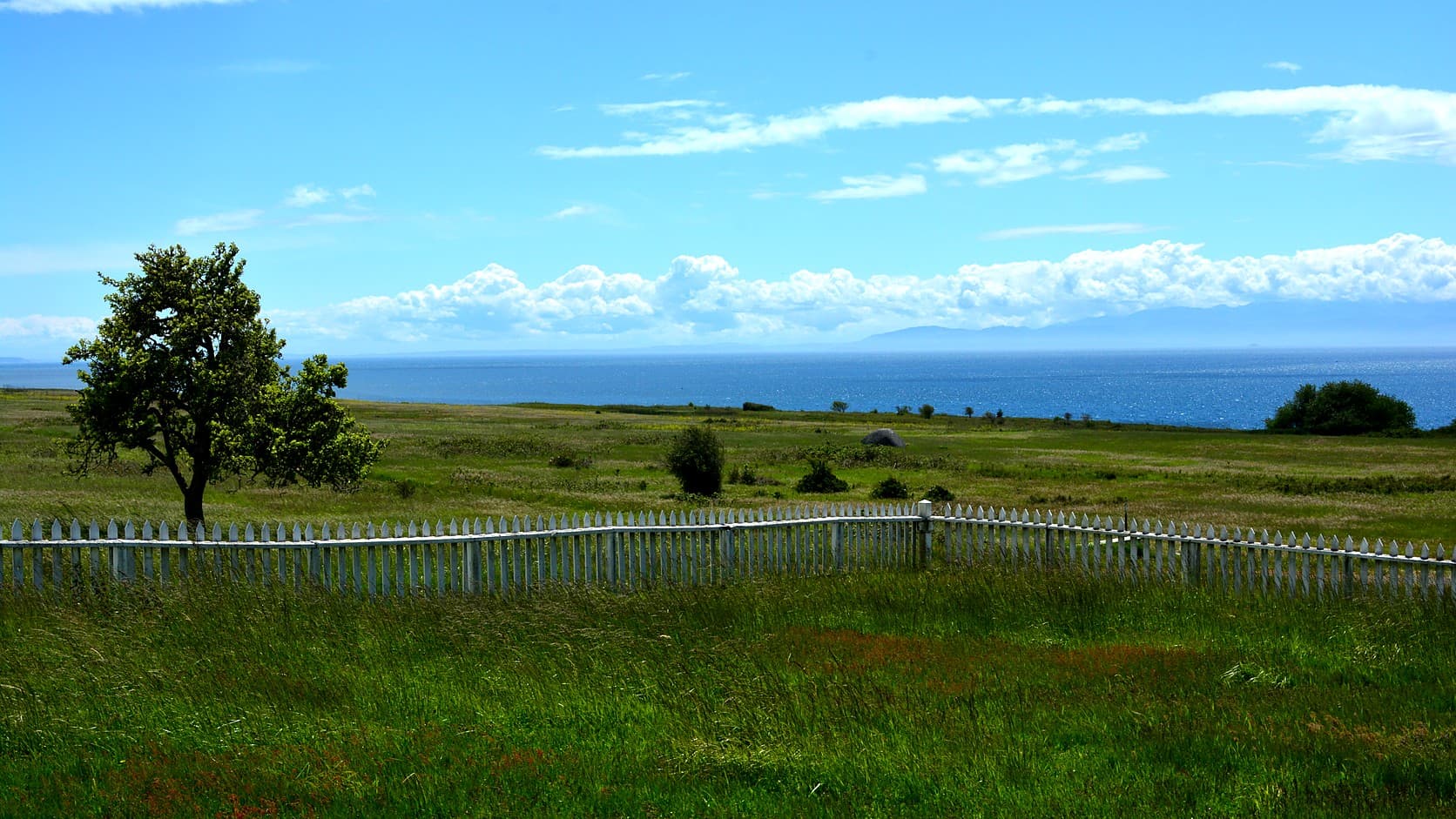
The Pig War began with a pig shot on June 15, 1859 and ended in 1872. What happened, the park's free camps, and the winter ferry dates from Enumclaw.
The Pig War was a boundary standoff between the United States and Britain over San Juan Island, set off on June 15, 1859, when an American settler shot a Hudson's Bay Company pig, and settled in 1872 when Germany's Kaiser Wilhelm I, acting as arbitrator, ruled for the United States. The National Park Service says the only casualty was the pig. You can walk both former military camps at San Juan Island National Historical Park, which charges no entrance fee, and as of October 2026 the grounds are open around the clock. From Enumclaw it is roughly 115 miles to the Anacortes ferry terminal, plus a ferry crossing to Friday Harbor.
The settlers who asked the Army for help in July 1859 left the pig out of their request. HistoryLink says the petition cited raids from the northern British Columbia coast instead, and that the general who sent troops later leaned on the threats against the shooter when explaining himself. The great fortification the Americans then dug was fired only once, as a 13-gun salute to a visiting general, and HistoryLink adds that it was the only time the redoubt's artillery ever fired.
How did the Pig War start?
It started with a treaty that named a channel without saying which one. The Treaty of Oregon of 1846 ran the boundary along the 49th parallel to "the middle of the channel which separates the continent from Vancouver's Island," the National Park Service writes, but two channels fit the description. Haro Strait lies nearest Vancouver Island and Rosario Strait nearer the mainland, and both countries claimed all the islands between them.
The Hudson's Bay Company, the British fur-trading firm, set up Belle Vue Sheep Farm on the island's southern shore in December 1853. By spring 1859 the park service counts 18 Americans with claims on land the company grazed; HistoryLink says about 20. The British called them trespassers.
On June 15, 1859, Lyman Cutlar shot a pig rooting in his garden. HistoryLink identifies it as one of the farm's Berkshire boars, says the manager insisted it was worth $100 and Cutlar countered that it was not worth $10, and notes that what was said at the later confrontation was sharply disputed. By the park service's account, British authorities threatened to arrest Cutlar and to evict the Americans, and the settlers sought military protection.
Why did a pig nearly cause a war?
The pig mattered because it forced the question of whose law applied on the island. Brig. Gen. William S. Harney, who commanded the Army's Department of Oregon, sent Capt. George Pickett and an infantry company, which the park service says landed on July 27. The British governor of Vancouver Island, James Douglas, ordered a warship captain to remove them if he could do it without a fight.
HistoryLink says Capt. Geoffrey Phipps Hornby declined to land marines against Pickett's threat to resist, and the park service quotes Rear Adm. Lambert Baynes saying he would not "involve two great nations in a war over a squabble about a pig." Meanwhile the American force grew to 461 men with 14 field cannons by August 31, the park service counts, and it says officers from both sides attended church together and shared whisky and cigars.
How did the Pig War end?
It ended in two stages. In late 1859 the army's commanding general, Winfield Scott, negotiated by messenger with Douglas, and the two sides agreed to pull back reinforcements and share the island under a joint military occupation. The Royal Marines landed on Garrison Bay in March 1860 and built English Camp.
The joint occupation lasted 12 years by the park service's count. The 1871 Treaty of Washington sent the boundary question to Kaiser Wilhelm I, who passed it to a three-man commission. HistoryLink says two of the three voted for Haro Strait and one dissented, and that the arbitrator could only choose between the two countries' claimed lines, not split the difference. On October 21, 1872, the ruling went to the United States. The Royal Marines left English Camp that November, and the last American troops left American Camp in July 1874. In October 1873, HistoryLink says, the territorial legislature made the islands San Juan County.
Did the Pig War touch Puget Sound?
It did. Pickett's company came from Fort Bellingham. HistoryLink says the reinforcements under Lt. Col. Silas Casey left Fort Steilacoom, near present-day Tacoma, on the steamer Julia and reached the island on August 10, 1859, six days after Pickett asked for help.
The San Juans then belonged to Whatcom County, and HistoryLink says the 1872 award finalized the state's present borders.
What is there to see at American Camp?
American Camp, on the island's southern end, is where Casey moved the American force after Pickett's first camp proved too exposed. The park service lists the original officers' quarters, the laundress quarters, the Redoubt and the modern visitor center. The Redoubt is the earthwork HistoryLink says Lt. Henry Martyn Robert designed; both sources note that he later wrote Robert's Rules of Order.
The park's American Camp page lists trails to Mount Finlayson, where Cattle Point Lighthouse comes into view and, if the day is very clear, Mount Rainier, and down to South Beach and Fourth of July Beach. The visitor center is at 4668 Cattle Point Road, about six miles southeast of Friday Harbor. The island also has Lime Kiln Point, covered in our guide to Washington lighthouses you can visit.
What is there to see at English Camp?
English Camp is on Garrison Bay, on West Valley Road, nine miles northwest of Friday Harbor, and it kept more of its buildings. The park service lists a parade ground and formal garden along with a barracks, blockhouse and commissary, and notes that the Royal Marines built to look like home, with flower gardens and English produce. The site was already in use when they arrived: the park service says the marines found a shell bank, built up over years by people who lived largely on shellfish, and a Coast Salish longhouse that held as many as 600 people. The marines took the longhouse apart for building materials.
A fairly strenuous trail climbs Young Hill to the Royal Marines Cemetery, the park service says.
Is San Juan Island National Historical Park free?
Yes. The park service's fees page says no entrance pass is required and that all programming is free, and that page was last updated in January 2025. Washington's state parks on the island work differently: which pass a park takes depends on who runs it, and our lighthouse guide says Lime Kiln Point needs a Discover Pass.
Leashed dogs (six feet at most) may use trails and beaches but not buildings, the park service says. Its one posted caution: stay 75 feet from wildlife.
Is San Juan Island National Historical Park open in winter?
The grounds are. As of October 2026, with the hours page updated on October 26, the park service says "The grounds and outdoor exhibit areas are open 24 hours a day, 7 days a week at both American Camp and English Camp." The American Camp Visitor Center is a different matter: it is open Monday to Friday from 10 a.m. to 3 p.m., and the park service says it "will close for the season on November 12 and will reopen in March 2027." The page does not say whether November 12 is the last open day, so call 360 378-2240, extension 2226, if the exhibits matter.
The park's directions page lists the English Camp Visitor Center as open May through September, with the grounds open year-round. Its American Camp pages disagree on the visitor center's season, March to November on one and May to November on another, so this guide follows the hours page, the newest. The hours page says passport stamps are available at park headquarters, 650 Mullis Street, 24 hours a day.
How do you get from Enumclaw to San Juan Island?
By road and ferry. A public routing service puts the drive from Enumclaw to Anacortes at about 115 miles and about 2 hours 45 minutes without traffic. Deception Pass State Park, just south of Anacortes, is about as far, and the Skagit Valley snow goose season gives a winter reason to stop near the route. The park service says most visitors arrive by Washington State Ferries.
The ferry is where November planning matters. Washington State Ferries' alert, updated October 26, 2026, says "The new reservations release date is Tuesday, Nov. 10 at 10 a.m." for the two-month vehicle reservations covering the winter season, which runs December 27, 2026, through March 20, 2027, with a virtual waiting room. The two-week and two-day releases stay at 7 a.m. The agency's fall 2026 route page for Anacortes and the San Juan Islands says reservations are recommended. The same alert page says the SR 536 bridge in Mount Vernon closes to vehicles from Sunday, November 1, 2026, for at least two weeks, with a detour by I-5 and SR 20 to the Anacortes terminal. Our guide to Washington State Ferries sailing seasons explains how the seasons are set.
Before you go
Open the park service's operating hours page and its alerts and conditions page the day you leave, because the visitor center dates are the part most likely to move. Then check Washington State Ferries' alerts page for the sailing you want, the bridge detour and the reservation release. This guide gives no fare or winter sailing times, because WSDOT's fare tables could not be read and its winter timetable was not posted when it was written, so confirm both on WSDOT's pages.
Phone coverage at English Camp is spotty, the park service says, so download the map first. The hours, fees and rules above were read in October 2026 and can change.
Story label: Original Story or Guide
Originally published: