

Feature
Snow geese in the Skagit Valley: when and where to see them
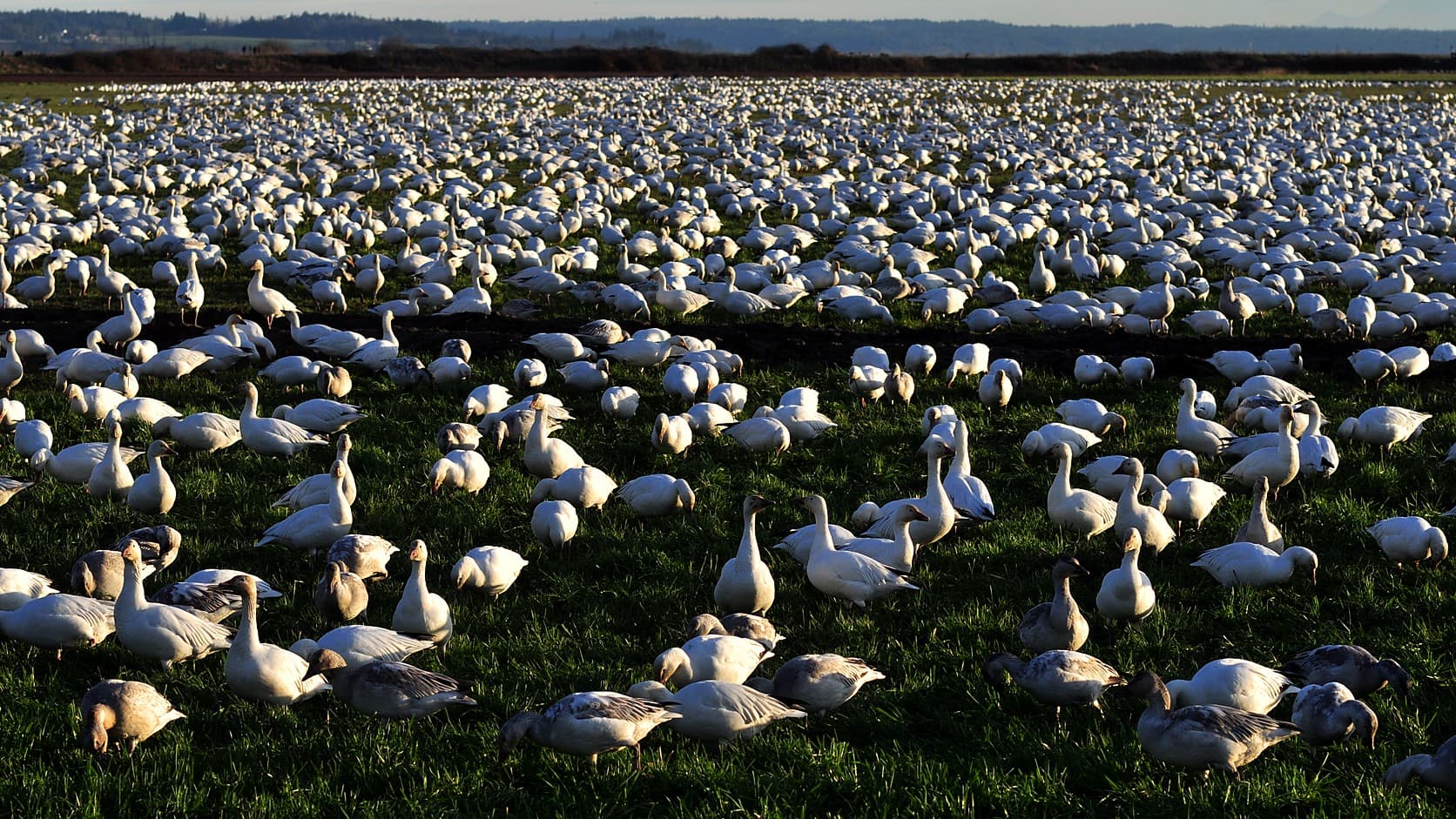
Snow geese in the Skagit Valley: WDFW's Fir Island reserve and three more stops, with the pass, the hours, the hunting overlap and the drive from Enumclaw.
Snow geese winter on the Skagit River delta from fall into early spring, and the one state stop built for them is the Fir Island Farm Reserve, about 94 miles and 2 hours 15 minutes north of Enumclaw by a mapping service's reckoning. As of October 2026, Washington's Department of Fish and Wildlife (WDFW) gives no arrival date or peak week for the geese; its Fir Island page says "in the fall through early spring," and its swan page says the trumpeter swans arrive "generally in late October." Every state lot below takes a Discover Pass ($45 a year or $10 a day) unless the car carries a Vehicle Access Pass from a hunting or fishing licence, and each closes in the dark, with an exception for legal hunting seasons at all but the Fir Island reserve.
A share of the Wrangel Island snow goose population, which breeds in the Russian Arctic, winters on the Fraser and Skagit deltas. A 2000 paper in the journal Wildfowl describes two wintering areas for that population, the Fraser and Skagit river deltas and California, and reports that the delta's share was rising by just over 1 percent a year and had almost doubled since 1970. The state bought the Fir Island land in 1995 to be a feeding ground for these birds, and a local farmer plants winter wheat on it for them to eat.
When are the snow geese in the Skagit Valley?
From fall through early spring, according to WDFW's page for the Fir Island Farm Reserve, which says the unit "attracts thousands of snow geese, swans, ducks and shorebirds in the fall through early spring." A sentence in the page's habitat section names March 31 but is missing a word, so this article does not lean on it. WDFW publishes no live count and no peak date on the pages opened for this piece. The agency lists the Skagit Wildlife Area manager, Greg Meis, at 425-775-1311, and a call to him is the way to ask what is on the fields that week.
The swans run on a clearer calendar. WDFW says trumpeter swans reach Washington "generally in late October" and start north in April, and says "approximately 20,000 trumpeter and tundra swans migrate between November and April," with the trumpeters that winter in Washington found mainly in Whatcom and Skagit counties.
1. Fir Island Farm Reserve
WDFW places the reserve along Fir Island Road, roughly 2.7 miles beyond the Conway bridge over the South Fork Skagit River. It is a Game Reserve, and the page is blunt: "Hunting and trapping is NOT allowed on this unit." The same page warns that "hunting on neighboring property could influence your viewing experience" during waterfowl season, which it gives as mid-October through the last weekend in January.
It is the most restricted stop on the list. The unit is "Closed during hours of darkness," with no exception for hunters, and public access is limited to the entrance road, the parking area and a short dike-top trail. There is no restroom. WDFW's page does not say whether dogs are allowed, so ask the manager before bringing one. A Discover Pass is required, or a Vehicle Access Pass.
WDFW's page lists the unit at 280 acres while its own introduction says "over 200 acres," so no acreage is used here. It also lists an active bald eagle nest in a tree on the west side of the entrance road during nesting season. For eagles on the river itself, see this site's guide to bald eagles on the Skagit River, which covers the upper river between Rockport and Marblemount.
2. Skagit Headquarters Unit at Wiley Slough
This 370-acre unit at the south end of Fir Island is the only stop here with restrooms, and WDFW's page says dog walking and training is allowed. You reach it by turning south from Fir Island Road onto Wylie Road, the page's spelling; the restoration project is called Wiley Slough. It has two parking areas, an out-and-back trail and a boat launch. The Discover Pass rule applies.
Two cautions. WDFW's page names raptors, shorebirds and passerines and does not mention snow geese, so treat it as a place for birds in general. And a posted alert covers summer 2026 to fall 2028, when the launch, its lot and the road in "will be intermittently closed" because of construction at the nearby Island Unit. The Island Unit is reachable only by boat, and WDFW says it reopens to the public from October 17, 2026 through March 2027 while a 270-acre estuary restoration that began on June 29, 2026 continues. Check the unit page before driving up.
The unit is closed in darkness "except during legal hunting seasons," which means hunters can be there before dawn. WDFW limits waterfowl hunting here to boats, dike-tops, or hunting on foot at low tides.
3. Johnson/DeBay's Slough, for the swans
If the geese are the reason for the trip, the swans are the reason to stay. WDFW's DeBay's Slough unit, 390 acres, holds the Johnson/DeBay's Slough Game Reserve, set up under WAC 220-411-120 as a place where trumpeter and tundra swans "can feed and rest during the winter." The page says they "typically roost during the night on DeBay's Slough," so the reserve is a daytime viewing stop, not a dawn one.
The reserve's parking area is at the end of DeBay Isle Road and has a raised mound for looking over a managed field where swans and other waterfowl feed. A separate hunt-area lot on Francis Road serves a 35-acre hunting field to the north. "Dogs are NOT allowed on the Game Reserve," and there is no restroom. The unit is closed in darkness except during legal hunting seasons, waterfowl seasons run mid-October through the last weekend in January, and the Discover Pass or Vehicle Access Pass is required. WDFW's page does not mention snow geese here.
A trumpeter swan is the heaviest native bird in North America, WDFW says, with males up to 28 pounds and a wingspan of about 10 feet; a snow goose, by the same agency, weighs 6.5 to 7.5 pounds. WDFW also says the last trumpeter swan hunting season in Washington was in 1918.
4. Leque Island Unit, near Stanwood
Leque Island is 471 acres west of Stanwood in Snohomish County, between Port Susan and Skagit bays, reached from Highway 532 between Stanwood and Camano Island. Parking is at the northwest corner by Davis Slough and at the end of Eide Road, and WDFW says parking can be limited. There is no restroom, dog walking and training is allowed, and the unit closes in darkness except during legal hunting seasons. Waterfowl seasons run mid-October through the last weekend in January, and only nontoxic shot is allowed.
The page carries a warning to read twice: "Visitors should exercise extreme caution as conditions on the unit have changed following habitat restoration work." It is the southernmost stop on the list, so call before committing a drive to it.
Why does a farmer plant wheat for geese?
Because the land is run as a feeding ground. WDFW says the Fir Island parcels were bought in 1995, and its page gives the purpose as "an upland undisturbed feeding and resting area for snow geese." The agricultural land is managed through a lease with a local farmer who plants a commercial crop for harvest in spring and summer and then an over-wintered cover crop of winter wheat "for snow goose forage."
The reserve has a second job. A restoration finished in 2016 returned part of the unit to intertidal estuary, and WDFW says monitoring has found tens of thousands of juvenile Chinook there every year. The page gives the restored area as about 130 acres in one place and 131 in another. It lists the U.S. Fish and Wildlife Service, the state Recreation and Conservation Office and the Washington Wildlife and Recreation Program among the funders.
Is it hunting season, and do the pass rules change?
The overlap is the point to plan around. Waterfowl seasons on every unit above run from mid-October through the last weekend in January, so for the first three months of the geese's stay, hunting happens on the same delta. The Fir Island Farm Reserve and the DeBay's Slough reserve ban it on their own ground, but the other units close in darkness "except during legal hunting seasons," which lets hunters in before light. The exact days for each species are in WDFW's hunting regulations, and the agency also links a Skagit Wildlife Area hunting guide. For the rules that bind hikers elsewhere, see this site's guide to hunting season for Washington hikers.
The Discover Pass is State Parks' pass: $45 for a year or $10 for a day as of October 2026, with transaction fees possible, and one pass can serve two vehicles, one at a time. This site's guide to the passes near Enumclaw covers where to buy one. WDFW's Skagit Bay Estuary unit also lists Big Ditch and Jensen as hand-launch boat access points, with no written directions for Jensen and no mention of snow geese, so neither is offered here as a stop.
How far is the Skagit Valley from Enumclaw?
About 91 miles and a little over two hours to Conway, and about 94 miles and 2 hours 15 minutes to the Fir Island Farm Reserve, by a public mapping service's estimate without traffic. Plan on more in Friday traffic or in winter weather. The route runs north on Interstate 5, and there is no toll or pass for the road, only for the lots. For another WDFW wildlife area with a winter draw, a longer drive and its own rules, see this site's guide to the Oak Creek elk feeding station.
Before you go
Open the page for each WDFW unit on the morning you leave, since the Wiley Slough closures run from summer 2026 to fall 2028 and the Leque Island conditions are changing. Bring the Discover Pass, binoculars and a layer too many, and arrive in daylight, because the Fir Island reserve is shut in the dark and the others are shut to everyone but hunters. Stay on the dike-top trail and the entrance road at the reserve, which exist to keep the birds from being disturbed. Call the Skagit Wildlife Area manager at 425-775-1311 to ask where the flocks are that week. Then pick a clear day between late October and March and go see whether the sky over the delta has turned white.
Story label: Original Story or Guide
Originally published: