

Feature
Cougar sightings in Washington, and what WDFW says to do
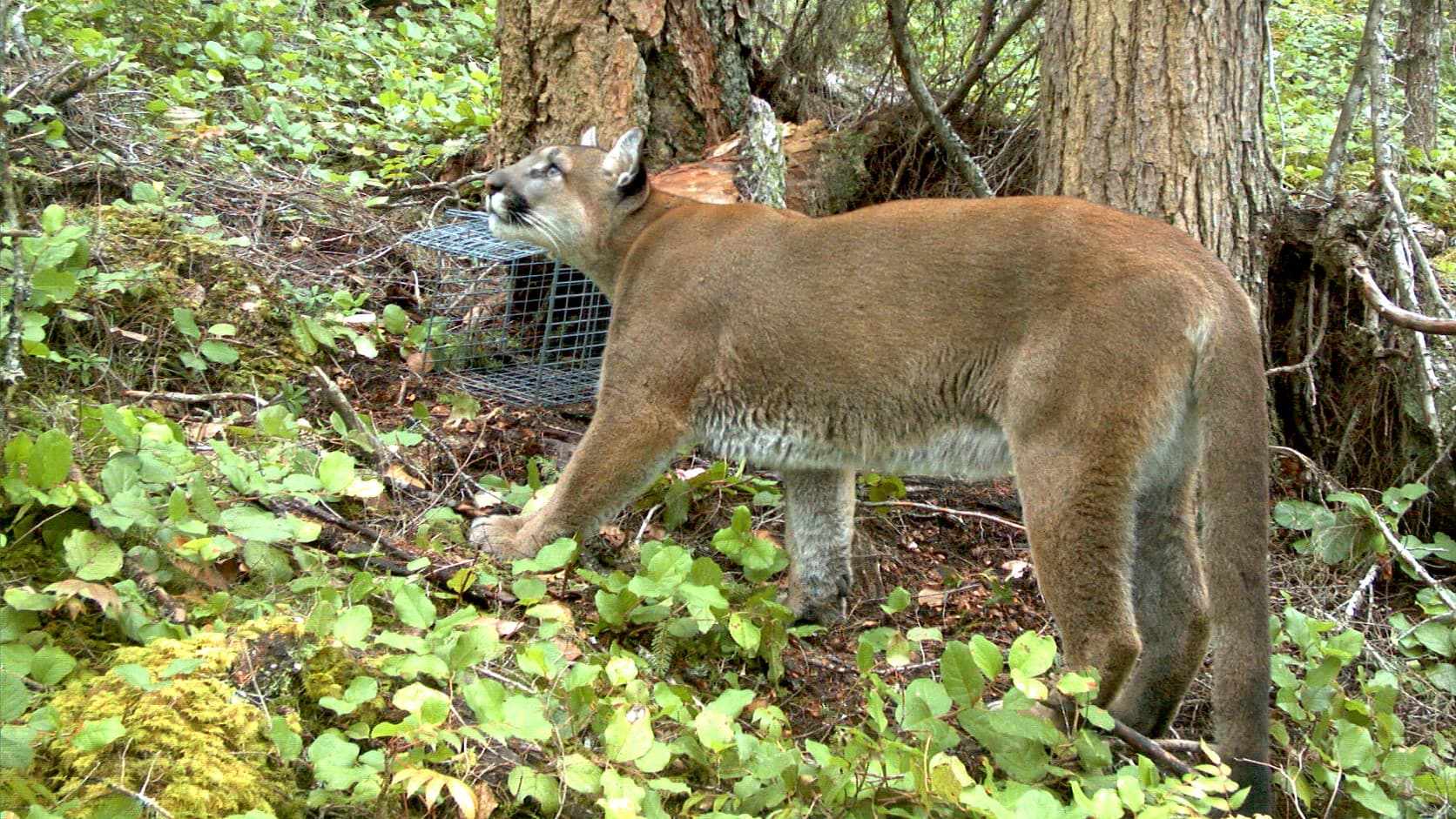
Cougar sightings in Washington: a count of WDFW's map finds 90 entries near Enumclaw since 2022, 20 confirmed by its notes, and what to do if you see one.
As of October 2026, the Washington Department of Fish and Wildlife (WDFW) posts the cougar sightings and incidents reported to it on a public map that its incident reports page links, and state law requires each report to appear within 10 days. Counting the map's entries on October 21, 2026, 90 for cougars fall within about 10 miles of Enumclaw City Hall, dated between August 2022 and September 2026. If you see one, WDFW's cougar page says to stop, not run, pick up small children, face the animal, look as large as you can and back away slowly, and to fight back if it attacks. Report a sighting that is not an emergency to WDFW at 877-933-9847, and call 911 if the animal threatens someone.
The map counts reports, not cougars. WDFW's notes on the 90 entries show it confirmed 20, could not confirm 64 and traced several to a bobcat or a house cat, and none is filed as a confrontation with a person. Across the state, WDFW's records hold two fatal cougar attacks, in 1924 and 2018.
Are there cougars near Enumclaw?
WDFW's map lists reports of them on both sides of the King and Pierce county line, 37 of the 90 within 5 miles of City Hall and the newest dated September 22, 2026. By year, the count runs 9 for the last five months of 2022, then 28 in 2023, 9 in 2024, 9 in 2025 and 35 in 2026 through October 12, a swing the map cannot assign to more cougars or to more people reporting.
WDFW says it may log several close-together reports as one incident and sites each report in the general vicinity of the incident. One cat can turn up in many entries: the species page puts an adult male's range at 50 to 150 square miles, and a brochure on WDFW's site says plainly that "A cougar sighting does not necessarily mean that there are more cougars in an area." Of the 20 entries WDFW confirmed, 14 are sightings and six are attacks on livestock it traced to a cougar, the earliest in July 2023 and the latest in September 2026. Its notes also name two bobcats and two house cats among the reports it checked.
Where do you find and report cougar sightings in Washington?
On WDFW's website: state law, RCW 77.12.885, requires the department to post every reported cougar, wolf and grizzly bear sighting or incident, with its location, time and known details, within 10 days of the report. Its map covers incidents since August 1, 2022, with an archive map for earlier ones, and a new sighting can take up to 10 days to appear.
Call 911 for an emergency. For anything else, as of October 2026, WDFW takes calls at 877-933-9847 from 8 a.m. to 7 p.m. and says to contact the local state patrol outside those hours; its reports page also links an online form. WDFW says its offices respond to sightings when public safety or property is threatened, so a quiet one may draw no visit. Mount Rainier National Park (see this site's winter guide for the winter route in) wants every sighting: its wildlife safety page says "Report all bear and mountain lion sightings to a ranger."
How many cougars live in Washington?
In October 2026, WDFW's species page estimates about 2,400 independent-aged cougars, meaning animals old enough to live on their own, sub-adults and adults. WDFW does not regularly count them: the page says the number extrapolates density research to the state's suitable habitat, and it has moved over the years. WDFW's 2018 Game Status and Trend Report gave 2,300, a brochure on its site gave 1,900 to 2,100 for cougars older than 18 months, and a June 2022 Spokesman-Review story said WDFW estimated 3,600, a figure that no WDFW page read for this article repeats. Read them as a scale, a few thousand, not a census.
What should you do if you see a cougar?
Stop, and do not run: WDFW says to pick up small children at once and face the animal, because running and rapid movements may trigger an attack and, as WDFW puts it, "at close range, a cougar's instinct is to chase." Talk to it firmly as you back away slowly, and leave it a way out. Look larger by stepping onto a rock or stump, holding a jacket open and standing shoulder to shoulder in a group. Do not crouch, hide or turn your back, and never approach it, least of all near a kill or kittens. If it does not leave, be more assertive, and if it shows signs of aggression, shout, wave your arms and throw what you have.
If it attacks, WDFW says to fight back, try to stay on your feet and use anything within reach, from sticks and rocks to a pack or bare hands; a May 2022 WDFW release adds "don't play dead with cougars." WDFW says pepper spray in the face also works, and the release advises backcountry hikers to carry bear spray. Mount Rainier National Park gives the same advice and adds that you should hit as hard as possible, especially at the head.
How often do cougars attack people in Washington?
Rarely, though the numbers have a wrinkle. WDFW's species page, read in October 2026, counts two fatal attacks and "approximately 20 other recorded encounters that resulted in human injury in the last 100 years," but a 2004 WDFW release says no one had been killed by a cougar in Washington since 1924, and the second death came in 2018, so from 2026 the first falls outside "the last 100 years." WDFW's May 2022 release counted 19 injury attacks before the one it announced in Stevens County.
The 2018 death came on May 19 in the foothills north of Mount Si near North Bend, when a cougar attacked two mountain bikers, Northwest Public Broadcasting reported. On February 17, 2024, northeast of Fall City, a cougar attacked a woman riding with four other cyclists and injured her neck and face; WDFW's statement says she was released from the hospital. The cougar officers removed was a male of 75 pounds, nearly a year old, and a Washington State University laboratory found it in good health and negative for rabies.
What keeps cougars away from pets and livestock?
Removing what draws them and shutting animals in from dusk to dawn. WDFW says dogs and cats belong indoors, above all from dusk to dawn, pets should be fed inside or by midday with bowls picked up before dark, garbage cans need tight lids and the space under porches and decks should be closed off; livestock belongs in secure pens away from forest edges. WDFW's 2022 guide for small livestock owners calls for a roof and a strong door that locks from dusk to dawn, and for motion-activated lights, since lights left on all night provide little protection. State law backs the food rule: leaving food that attracts a cougar, bear or wolf is an infraction if negligent (RCW 77.15.790) and a misdemeanor if deliberate (RCW 77.15.792).
If a cougar is in the act of attacking livestock or other domestic animals, state rule WAC 220-440-060 lets an owner kill one cougar or black bear in a twelve-month period, with or without a permit, and requires telling WDFW within 24 hours; the rule stays subject to all other state and federal law, and WDFW says the body belongs to the state. After a cougar kills an animal, the guide says to report it at once, keep people and pets away, and leave the carcass until WDFW has looked.
What do cougars have to do with the Enumclaw elk herd?
Cougars are the leading cause of death among the elk the Muckleshoot Indian Tribe has fitted with radio collars in the White River unit, by WDFW's 2020 North Rainier Elk Herd plan. In game management unit 653, WDFW's numbered hunting district east of Enumclaw, cougar predation accounted for 62 percent of the 123 calf deaths the tribe documented from 1998 to 2014 and 23 percent of 93 cow deaths from 1998 to 2016. The tribe ran a cougar reduction program from 2001 through 2007 to help the herd; elk numbers rose over those years, the plan says, but more conservative hunting seasons and habitat projects ran at the same time. This site's field guide to Enumclaw's elk herd tells how its ancestors arrived by rail in 1912.
WAC 220-415-100 sets the general cougar season at September 1 to March 31, and WDFW's hunting regulations page lists it as September 1, 2026 to March 31, 2027, though the species page, read in October 2026, shows the 2025-26 dates. A hunt area closes when it reaches a cap on cougar deaths, and the cap counts cougars killed in response to conflict as well as by hunters: on October 21, 2026, WDFW's table showed unit 454, the lowland unit north of Enumclaw's highways, closed with a cap of 2 and two conflict deaths. This site's hunting season guide has the units and dates for the plateau.
Before you go
On the day, check WDFW's incidents map for your county and any trailhead notice, and treat the map as a hint, not a forecast. WDFW says cougars are at their most active between dusk and dawn but may hunt at any hour, so plan to be off the trail by dark, hike in a group, make enough noise not to surprise one, keep small children in sight ahead of you and do not let dogs roam unattended. Stay away from a dead deer or elk, especially a partly covered one, which may be a cougar's kill. WDFW also advises staying alert in dense cover and when sitting or crouching, which fits anyone picking mushrooms (this site's guide to mushroom permits).
Story label: Original Story or Guide
Originally published: