

Feature
Mushroom picking permits in Washington, land by land
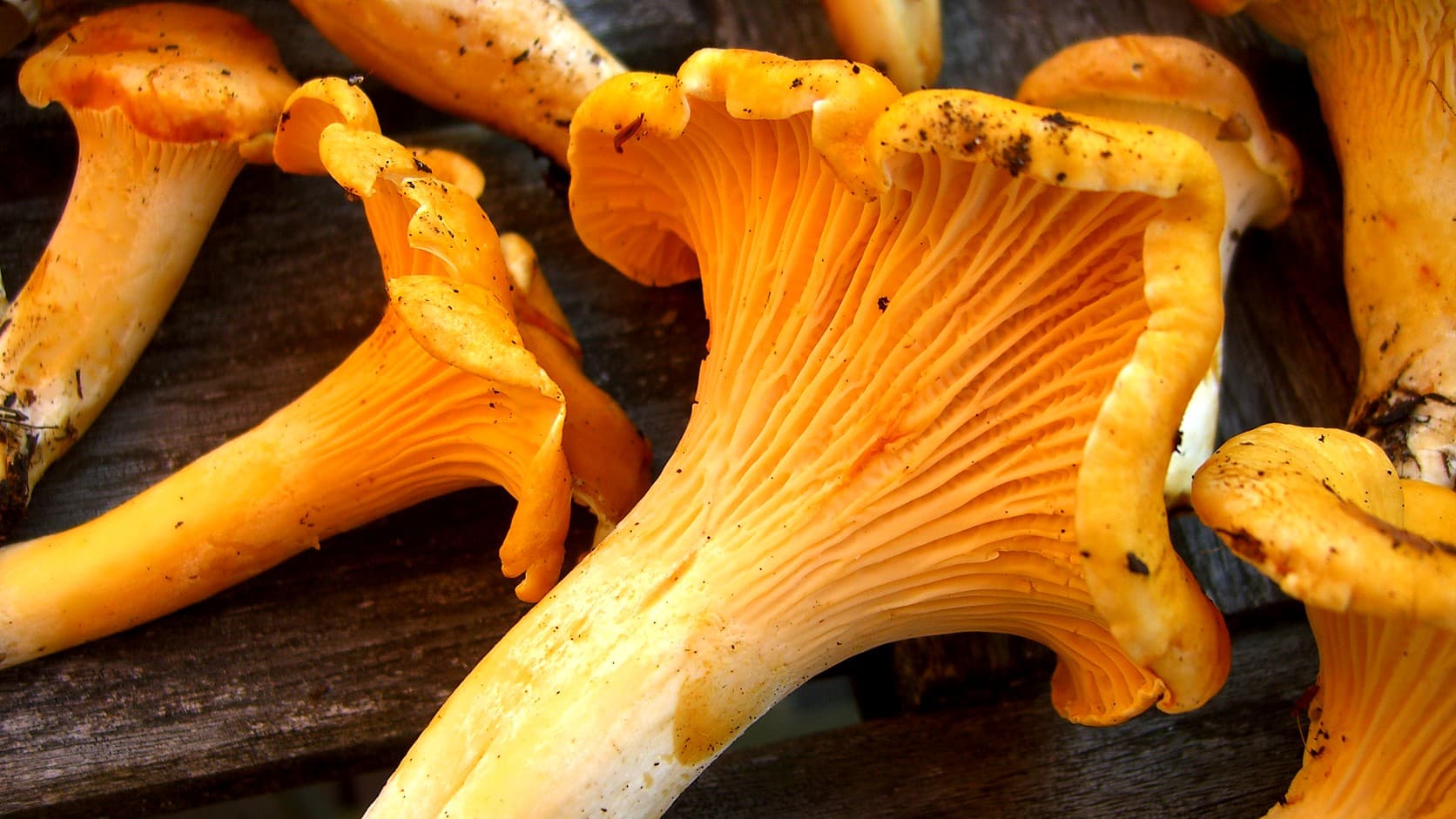
Need a mushroom picking permit in Washington? Near Enumclaw: a free forest permit, a gallon a day at Mount Rainier, two in state parks, a 5-gallon state line.
Washington does not license mushroom pickers, so whether you need a permit depends on whose land you are standing on. State law draws one line: picking, possessing or transporting more than five gallons of wild mushrooms takes a specialized forest products permit. Below that line, as of October 2026, the Mt. Baker-Snoqualmie National Forest east of Enumclaw requires a free permit to take mushrooms home, good for up to five gallons per household per year; Mount Rainier National Park lets each person pick a gallon a day with no permit; and Washington state parks allow two gallons per person per day.
The rule flips at the park boundary on Highway 410. In the national forest, the Forest Service lets you eat mushrooms in the woods without a permit; taking them out is what needs one. Its mushroom fact sheet puts it plainly: "Except where otherwise noted, it is not legal to remove products collected from the forest without a permit." Farther up the same highway, inside the park, picking a gallon a day for personal use needs no permit at all. By the two agencies' own limits, one person may gather as much in five days at Mount Rainier as the forest's free permit allows a whole household in a year.
Is there a Washington mushroom picking license?
Washington does not license pickers, and none of the agencies below sells a license. The nearest thing ran from 1989 to 1994, when a 1988 law charged mushroom buyers, who collected wild mushrooms from others for processors, $75 a year for a Department of Agriculture license, and processors, renamed dealers by a 1990 amendment, $375. Pickers needed none. The law asked only that recreational pickers and mycological societies, the mushroom clubs, be encouraged to report their finds, and it expired on June 30, 1994, as written.
What remains is chapter 76.48 RCW, a law meant, the Legislature says, to protect landowners from theft of goods that run from Christmas trees and cedar to salal. Its list of these specialized forest products includes "More than five United States gallons of wild edible mushrooms." Picking, possessing or transporting that much takes a specialized forest products permit, a Department of Natural Resources form that the picker and the landowner both sign and the county sheriff validates or keeps on file. Below five gallons, the law still requires the landowner's permission first. A violation is a gross misdemeanor: up to a $1,000 fine, 364 days in jail, or both.
The five-gallon line was not the Legislature's first try. When it first wrote mushrooms into the law in 1992, the permit line was three gallons of a single species or nine gallons in all, as its staff later summarized it, and the statute's wording ended on a generous note: "plus one wild edible mushroom." A 2005 rewrite replaced all of that with five gallons of a single species, and a 2009 rewrite made the line five gallons of wild edible mushrooms in all.
1. Mt. Baker-Snoqualmie National Forest, east of Enumclaw
The forest's rules are on its special forest products page, last updated April 17, 2026, and in a one-page mushroom fact sheet. Eating a mushroom where you find it counts as incidental use and needs nothing. Taking any home needs a free-use permit, a no-cost personal permit good for up to five gallons per household per year and valid for two weeks to a month, depending on the ranger district.
Past five gallons the forest sells personal charge permits, matsutake excluded: 12.5 gallons over two days for $25, 20 gallons over 10 days for $40, 30 gallons over 20 days for $60, or 62.5 gallons over six months for $125. Every one works out to $2 a gallon. Commercial picking is priced case by case at appraised value. Anyone carrying out more than five gallons should ask how the forest's permit squares with state law; the Puget Sound Mycological Society tells pickers that moving more than five gallons out of the forest takes a permit from the local sheriff's office.
The fact sheet requires cutting each stem at or above the ground with a knife or scissors, and it says raking ruins a patch for later years. Picking is banned in designated wilderness, research natural areas, experimental forests and other closed areas. The forest along Highway 410 is in its Snoqualmie Ranger District, which also takes in the Norse Peak Wilderness north of Chinook Pass and the Clearwater Wilderness on the national park's northern edge.
The permit page sends pickers to the nearest ranger district office. The district's Enumclaw office, at 450 Roosevelt Ave. E., is open, as of October 2026, Wednesdays and Fridays from 9 a.m. to 3 p.m., closed from noon to 1, at (360) 825-6585, and its page refers permit questions to the North Bend office, open Mondays, Tuesdays and Thursdays from 9 to 3, at (425) 888-1421; both close on federal holidays. Fee trailheads take a Northwest Forest Pass, priced in October 2026 at $5 a day or $30 a year. The forest's $10 Christmas tree permit is a separate purchase.
2. Mount Rainier National Park
Inside the park the limit is "one gallon of edible fungi per person per day for personal use or consumption," by the park's mushroom page, and no permit is involved. The rule itself sits in the superintendent's compendium, the park's list of local rules, which names edible fungi and eight kinds of berries as fit to gather by hand, caps collection at a gallon per person per day, and stays in effect until revised, for up to a year at a time. Selling is barred, by the page and by federal park regulations.
The park asks pickers to stay on trail at Paradise, Sunrise, the Tipsoo Lake meadows and the Ohanapecosh hot springs area. Among the places it suggests for seeing mushrooms are trails near White River, the area reached from Highway 410, and it says late summer and fall bring a great variety of fungi to its lowland forests. As of the park's road report of October 9, 2026, White River Road was open and scheduled to close for the season on October 26, a date the park says may change, and Sunrise Road was closed to vehicles because of wildfires; the park's alerts, last updated September 24, 2026, also list every trail in the Grand Park area and the Wonderland Trail from the Carbon River Suspension Bridge to White River Campground as closed. As of October 2026, entry is $30 per private vehicle for seven days, paid by card at the entrance.
3. Washington state parks near Enumclaw
State parks follow WAC 352-28-030, which allows mushrooms, berries and nuts up to two gallons per person per day unless a park posts a different limit, made up of one species or several. Picking is allowed on every class of park land but one: the natural area preserve, a designation for ground set aside to protect rare plants, animals or geology. Raking and commercial harvest are banned, and the agency's director may close an area to picking, with notice posted at its entrance and at the park office. The rule says it is not meant to curb tribal rights reserved under federal law, treaty rights among them.
Near town, Flaming Geyser, Kanaskat-Palmer and Nolte State Parks list hours of 8 a.m. to dusk all year. Federation Forest State Park, on Highway 410, closes for the winter: its page lists it closed from October 1 through April 30, while the agency's winter schedule gives October 15, 2026 for closing day use and May 1, 2027 for reopening. Call (253) 735-8839 before driving up. Parking at any of them takes a Discover Pass, which as of October 2026 costs $10 a day or $45 a year.
4. State trust land run by DNR
The Department of Natural Resources manages state trust land, and its recreation rule, WAC 332-52-115, forbids removing soil, rocks, plants, natural features or valuable materials from land the department manages without its written authorization, unless the law already allows it, and sends questions to a region office. It does not mention mushrooms, and DNR's forest products page deals only in permits and leases sold for revenue. DNR's South Puget Sound Region is based at 950 Farman Ave. N. in Enumclaw, on the street the town still calls Pickle Factory Road, and answers at (360) 825-1631; ask there before picking on state land.
The same office sells DNR's mushroom permits for Capitol State Forest, in Thurston and Grays Harbor counties, and DNR lists such sales among the ways it earns money for the schools, universities and local services its trust lands support. For 2026 a mushroom-only permit cost $400 per person per permit area, sold by mail to pickers 16 and older, with applications taken from January 5 through September 30, much the same window as in 2025. Parking on DNR recreation land takes a Discover Pass. The Department of Fish and Wildlife's land rules require a permit for taking artifacts, fossils, minerals, petrified wood or wood products and say nothing about mushrooms.
5. King County and Enumclaw city parks
King County Parks' rules page says moving or removing vegetation, wildlife or county property is not allowed on its land. The code behind it, KCC 7.12.515, extends that to any natural object, except for county employees or contractors on the job and whatever the law or the county's director of natural resources and parks authorizes. Neither names mushrooms, but read plainly a mushroom is a natural object, which would put a basket out of bounds at Pinnacle Peak, the county park Enumclaw calls Mount Peak, unless the county says otherwise. The parks office is at (206) 477-4527.
Enumclaw's city code, EMC 9.86.140, bars unauthorized cutting, removal or destruction of turf, trees, plants, shrubs or flowers on city property. Fungi are not on that list, so ask the city before picking in a city park.
6. Private land, timberland included
On private land the owner decides, and state law backs the owner. Picking any amount without permission is unlawful, and more than five gallons also requires the specialized forest products permit, which the owner signs. An owner picking on their own land for noncommercial use is exempt from the permit.
7. Olympic and North Cascades national parks
Olympic and North Cascades national parks set different limits in their compendiums. Olympic allows mushrooms to be collected by hand for personal consumption but caps edible fruits, berries, mushrooms and nuts together at one quart per person per day, a quarter of Rainier's gallon, and keeps pickers 200 feet back from nature trails, special trails and natural study areas. North Cascades' compendium page, last updated July 15, 2026, lists edible fungi among the things that may be gathered by hand for personal use, on condition that they be cut and not pulled; its one-quart daily limit is written for fruits and berries. The Puget Sound Mycological Society's rules page and its 2016 rule sheet list North Cascades as closed to mushroom picking; the compendium is the current rule.
Before you go
Check the land manager's page the morning you go. The forest's alert for the Enumclaw area, posted June 30, 2026, lists washouts or closures on Forest Roads 73, 74 and 7550, and the Forest Service warns that cell phones have limited coverage in the mountains. Mount Rainier posts a road status page and State Parks a winter schedule, and this site's pass guide sorts out which pass each parking lot takes.
Then comes the part no permit covers. The park's page warns, "Identifying wild mushrooms can be extremely difficult and consuming them can be deadly," and tells visitors not to collect any mushroom they are not 100 percent sure of. The Washington Poison Center answers at 1-800-222-1222 around the clock, and it asks foragers to photograph their finds from every angle before cooking, because its staff may ask for the pictures to identify what was eaten.
Story label: Original Story or Guide
Originally published: