

Feature
Ebey's Landing in winter, what is open and what needs a pass
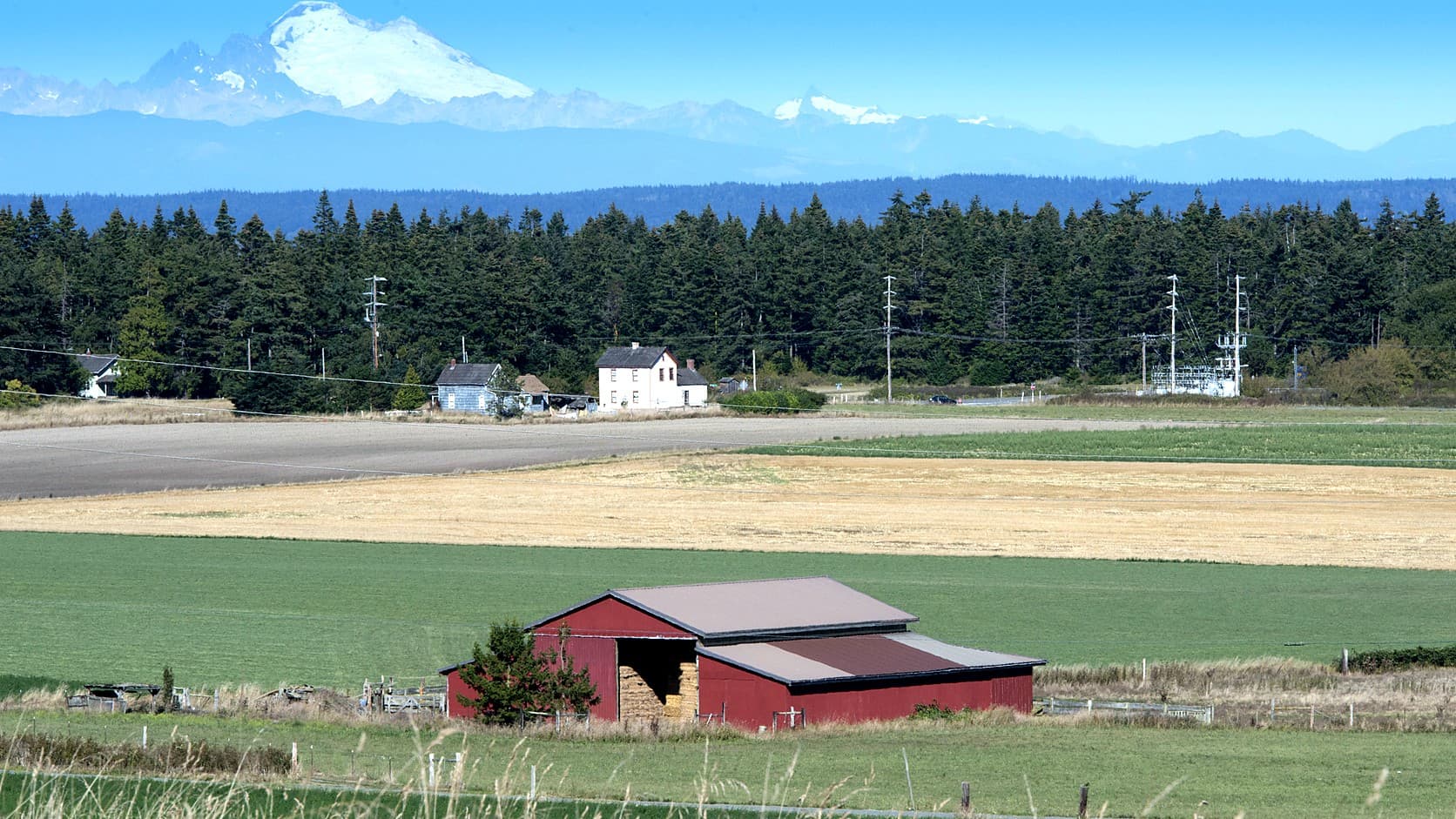
Ebey's Landing in winter: the reserve is free, parking at its three state parks takes a Discover Pass. Hours, closures, the ferry and the drive from Enumclaw.
Ebey's Landing National Historical Reserve on Whidbey Island is open in winter, and the reserve itself charges nothing, according to the National Park Service (NPS) hours page as of October 2026. Parking at the three state parks inside it, Fort Ebey, Fort Casey and Ebey's Landing, takes a Discover Pass, which Washington State Parks prices at $10 a day or $45 a year. From Enumclaw it is about 90 road miles to Coupeville by way of the Mukilteo to Clinton ferry, or about 134 by way of Deception Pass, so plan on a long day.
The view people come for is mostly somebody's farm. By the NPS count, more than 85 percent of the reserve's 17,500 acres is private land, so a Discover Pass covers parking at a few state lots, while the fields beside the trails are private working land and not for walking across. The prairie itself stayed open because people burned it on purpose: State Parks says archaeological records confirm that Indigenous stewards used controlled burning on Ebey's Prairie for at least 2,300 years.
Is Ebey's Landing open in winter?
The reserve is open year round, and the NPS says no entrance fee or pass is required. What changes from fall to spring is which buildings are staffed. The Pratt Cottage Visitor Center at 162 Cemetery Road in Coupeville is open Monday through Friday from 9 a.m. to 4 p.m. all year, with trail maps and walking-tour guides. The Jacob and Sarah Ebey House is open to visitors only from Memorial Day through Labor Day, on Saturdays and Sundays from 10 a.m. to 4 p.m., so it is shut from fall to spring. The NPS names the Coupeville Chamber of Commerce, at 905 NW Alexander Street, as the reserve's official visitor center and says its hours may vary. The NPS lists no hours for the Ferry House at Ebey's Landing.
State Parks lists 8 a.m. to dusk, year round, for Fort Ebey and Fort Casey. The NPS hours page carries an October 2, 2025 update date and its alerts page was last updated in June 2021, so the state parks' own alert banners are the better place to look for closures.
What is closed at Ebey's Landing in winter?
Mostly camping, water and a few restrooms. State Parks' winter schedule closes the Fort Ebey campground from November 1 through February 28 and its group campground through March 31, and turns the water off at both forts from November through March. At Fort Casey the campground stays open and takes reservations all year, but the picnic area parking and restroom, and the Wood Trail restroom, are closed from November 1 through March 31. The NPS adds that no drinking water is available at trailheads, so bring your own.
Admiralty Head Lighthouse at Fort Casey keeps short winter hours: noon to 4 p.m. on November 27 to 29 and on Saturdays and Sundays in December, then closed in January and February 2027, when State Parks plans a construction project around it.
Do you need a Discover Pass at Ebey's Landing?
Yes, to park at any of the three state parks. State Parks' Discover Pass page lists, as of October 2026, $10 for a day and $45 for a year, plus possible transaction fees, and says one pass covers two vehicles but works for only one at a time. Two NPS pages for the reserve print a $30 annual price, so trust State Parks' figure. Overnight campers do not need a pass in the park where they are staying. The Discover Pass site lists free days each year, when day-use parking costs nothing; its 2026 list ends with Veterans Day, November 11, and no 2027 list was posted when this was written. This site's guide to the passes near Enumclaw covers where to buy one.
How far is Ebey's Landing from Enumclaw?
By a mapping service's estimate, without traffic or ferry waits, Mukilteo's ferry terminal is about 61 miles and 1 hour 35 minutes from Enumclaw. Washington State Ferries (WSF) lists, on its Mukilteo to Clinton schedule page, a crossing of about 20 minutes to Clinton on Whidbey Island, and from Clinton the NPS gives about 28 miles to Coupeville, which a mapping service puts at about 42 minutes. That is roughly 2 hours 15 minutes of driving plus the boat. WSF publishes its schedules by season, and the fall 2026 schedule for this route runs September 20 through December 26, 2026; look for the next one on the same page.
The bridge route is about 134 miles and 3 hours 15 minutes by the same estimate. The NPS's directions take Interstate 5 to Burlington, then State Route 20 over the bridge at Deception Pass State Park. It passes through Skagit County, where snow geese winter on the river delta from fall into early spring.
From the Olympic Peninsula there is a third way. WSF's Port Townsend to Coupeville route, which lands at Keystone beside Fort Casey, lists a crossing of about 35 minutes (the NPS says 45), recommends reservations for all vehicles and warns that extreme tides may interrupt service. A WSF bulletin on that route's page says the release of vehicle reservations for the winter sailing season, December 27, 2026 through March 20, 2027, was postponed two weeks and is now set for Tuesday, November 10, at 10 a.m., so check the page for what is available now.
What is the Bluff Trail like in winter?
The reserve's Trust Board describes the Bluff Loop Trail as a moderate to difficult hike of about 3.5 miles round trip from the Ebey's Landing State Park trailhead, along the beach and the bluff, with some sections crossing a steep bluff edge. The Trust Board's home page asks hikers to use caution because of erosion and to stay on the trail. The NPS says trails in the reserve are unimproved dirt and gravel, that bicycles, e-bikes and horses are not allowed on them, and that dogs must be leashed. On beaches, it says, "Be cautious of rising tides and wind-driven waves when exploring beaches."
That matters more in a storm season. This site's guide to atmospheric rivers explains the AR 1 to AR 5 scale that forecasters use for the long plumes of moisture behind many of the region's heaviest rains; it is worth a look at the forecast before committing to a bluff.
Fort Ebey has 25 miles of wooded trails, by State Parks' count, and State Parks warns that jets from the Navy's air station on the island can fly over its campground for hours at a stretch, by day or night. The Trust Board says the county's Kettles trails next to Fort Ebey add more than 30 miles. There is no camping at Ebey's Landing State Park itself.
What can you see from Ebey's Landing?
The NPS answers this in its photo captions and alt text. The Bluff Overlook on the Bluff Trail looks out on the Strait of Juan de Fuca, and Admiralty Bay at Fort Casey has views of Mount Rainier and the Olympic Mountains. The NPS home page shows a photo with the alt text "Mt Baker and the historic Smith Barn," and its fees page captions a photo taken from the water "Mt. Baker rises above Penn Cove." Neither is a promise of a Baker view from the landing, and whether a given winter day offers any view is a matter of cloud. Whether a given winter day offers any of that is a matter of cloud. For the same Rainier seen from the ground, the site's winter guide to the mountain covers the one road open to cars.
What history does the reserve protect?
Congress established the reserve in 1978. State Parks calls it the first unit of its kind administered by the NPS, and the Trust Board calls it the nation's first national historical reserve. It works by partnership, with the NPS, State Parks, Island County and the Town of Coupeville sharing a trust board, and by scenic easements, which the NPS says are recorded on property deeds and restrict land to farming, grazing or conservation.
The NPS acknowledges central Whidbey as the homeland of the Lower Skagit People, who it says were compelled to sign the Point Elliott Treaty in 1855. Isaac Ebey, who took up a claim under the Donation Land Law of 1850, wrote to his brother on April 25, 1851, that Whidbey Island was "almost a paradise of nature." By State Parks' account, a Tlingit party of more than 100 from Kupreanof Island in Alaska came back on August 11, 1857, to avenge a chief and others killed at Port Gamble the year before; that night Ebey stepped out of his door and was executed. The blockhouse his father built stands above the prairie, and the Trust Board says the Ferry House at Ebey's Landing dates to 1866.
Before you go
Check State Parks' alert banner on the Fort Ebey and Fort Casey pages, which list (360) 678-4636 and (360) 678-4519, and the WSF route page, which carries service alerts, and call the NPS office at 360-678-6084 for the visitor center. Decide the pass before you leave the house: $10 for a day is the better price for one trip, and the $45 annual pass starts to pay off from the fifth visit to state parks in a year, a comparison made in this site's pass guide. Pack water and an extra layer, and look up the tide and the sunset for the day, since the forts' hours end at dusk.
Story label: Original Story or Guide
Originally published: