

Feature
Fort Columbia State Park in winter, hours and closures
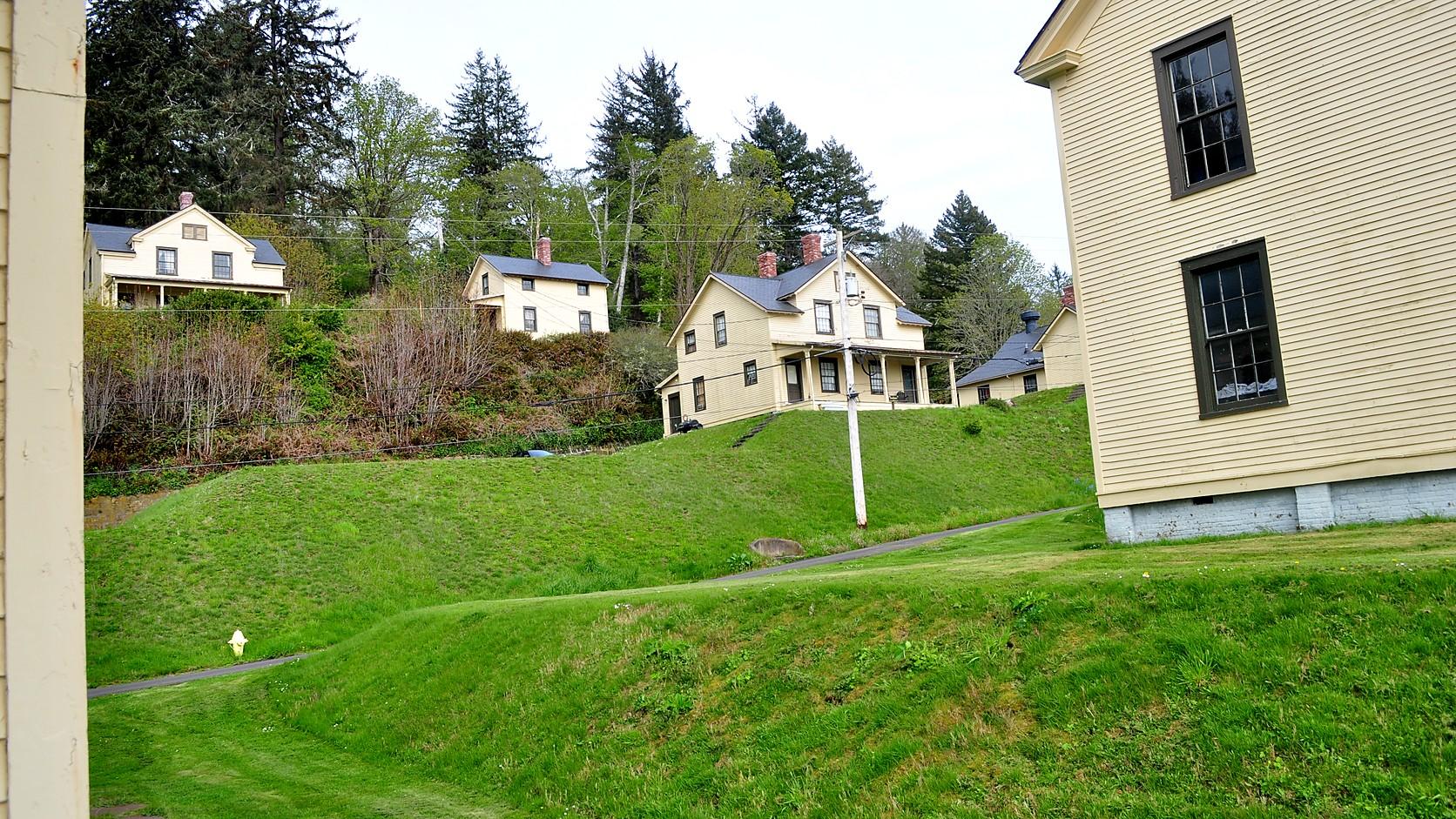
Fort Columbia State Park is open 8 a.m. to 5 p.m. in winter, but the museum and officer's house open only in summer. Pass, rules and history.
Yes, Fort Columbia State Park at Chinook is open in winter. As of November 2026, Washington State Parks lists winter hours of 8 a.m. to 5 p.m. and no winter closure for the park, so the gun batteries, the grounds and the trails are there to walk. The buildings are the catch: the Interpretive Center and the Commanding Officer's Historic House are listed open only Thursday to Sunday, June 1 to Aug. 31, from 11 a.m. to 3 p.m. The park is about 165 miles and four hours by road from Enumclaw.
Fort Columbia's guns were never fired against an enemy, by State Parks' own history of the place, and the fort was built anyway: concrete batteries on a hillside, officers' houses, a bowling alley. Its site had been a family farm before that. Before the Army arrived, a hawthorn tree on the slope served as a local landmark and navigation guide, and the Army cut it down in 1897.
Is Fort Columbia State Park open in winter?
The grounds are open, and the staffed buildings are not. The State Parks winter schedule, read on November 2, 2026, has a row for Fort Columbia that lists no closure dates. Its one note says the vacation houses take reservations all year. The Fort Columbia page said the same day that the Interpretive Center and the Commanding Officer's Historic House are open Thursday to Sunday, June 1 to Aug. 31, 11 a.m. to 3 p.m. The page gives no year with those dates, so treat them as a summer schedule and not as a promise about 2027.
The park page's alerts box showed one notice on November 2, 2026: a burn ban, with the text "No fires permitted at any time." The park rules list fires as not allowed in any case. The page links a live camera on the Columbia River, which is a quick check of the weather at the fort before a long drive.
What are Fort Columbia's winter hours?
The park page lists winter hours as 8 a.m. to 5 p.m. and summer hours as 6:30 a.m. to 9:30 p.m. That is the whole of what it says. It does not say on which dates winter begins or ends, so if you are driving in the shoulder weeks of October or March, call the park at (360) 642-3078. The park's listed contact email is a Cape Disappointment State Park address, cape.disappointment@parks.wa.gov. The State Parks Information Center at (360) 902-8844 answers questions about seasonal closures.
An old State Parks brochure for the park, revised in 2017 and still posted as a PDF on the park page, says "6:30 a.m. to dusk year round." That conflicts with the current page, and the page is the one to trust. The same brochure printed a $30 annual pass, which is also out of date.
Do you need a Discover Pass at Fort Columbia?
Yes, to park, unless it is a free day or you are staying overnight in the park. As of November 2026 the Discover Pass page lists $10 for one day and $45 for a year, and the Fort Columbia page matches. A single pass may be shared by two vehicles, though never both at once. Guests staying overnight in a state park do not need a pass to park in that park.
The annual price is set by law, in RCW 79A.80.020, which also tells the Office of Financial Management to review it every four years and recommend any change to the Legislature. A 2025 act, effective October 1, 2025, is why the statute now reads $45. The state picks free parking days a year at a time. On the Discover Pass free parking days page, the 2026 list ends with Veterans Day, November 11, so no free day falls between November 18 and the end of the year. For which pass fits which trailhead near home, see this site's pass guide for the Enumclaw area.
What is there to see at Fort Columbia when the buildings are closed?
The outdoor half of the fort, which is most of it. State Parks describes a self-guided historic walk, with interpretive panels near the gun batteries that carry historic photographs and blueprints. The 2017 brochure's map marks four batteries: Ord, 246, Murphy and Crenshaw. It also lists about 2.2 miles of trails, including a self-guided interpretive historic walk, and 6,400 feet of Columbia River shoreline. The brochure is old, so the trail conditions are the one thing to ask the park about.
Battery 246 has a detail worth finding. State Parks' history says two six-inch guns came from a military base in Newfoundland and were installed there in 1992, so visitors would get a feel for the fort as it looked when active. Battery Ord was named for a lieutenant killed leading Black soldiers of the 10th Cavalry at San Juan Hill in 1898. An Army Corps of Engineers captain had suggested naming it for the Chinook leader Comcomly, and was overruled.
State Parks calls Fort Columbia "one of the most intact historic coastal defense sites in the U.S." The comparison with the Puget Sound side is in this site's guide to the Triangle of Fire forts, which covers Fort Worden, Fort Casey and Fort Flagler.
Why is there a fort at Chinook Point?
Because the point looks straight down the mouth of the Columbia. The park's history page says Congress authorized a gun battery on Chinook Point on June 6, 1896, that hand excavation began in March 1897, and that two 8-inch guns went in on April 25, 1898. President McKinley named the post Fort Columbia on July 13, 1899, and it was fully garrisoned on July 1, 1903. The old brochure gives the span of construction as 1896 to 1904, and HistoryLink says only that the property became Fort Columbia in 1898; none of the three explains the difference.
The ground had a history already. The same page says Captain Robert Gray anchored off the point on May 12, 1792, and named the river for his ship. The Lewis and Clark party reached Chinook Point on November 15, 1805, and made a base camp there for ten days, after heavy rain, in shelters built from planks taken from the Chinooks' empty Middle Village. Mid-November is the anniversary of that arrival.
What did the Army cut down at Fort Columbia?
A hawthorn tree, by HistoryLink's account, and the cutting caused a local uproar. HistoryLink's essay on the Scarborough claim says James Scarborough, an Englishman who worked for the Hudson's Bay Company, set out a hawthorn on the hillside in about 1848, and the tree guided local navigation and marked the place until the Army cut it down in 1897. Locals took slips from it, and HistoryLink says hawthorns descended from it are still visible around the area.
Scarborough and his wife Ann Elizabeth, a Chinook, filed a 643-acre claim there in 1850, by both State Parks and HistoryLink. A guardian for his sons sold the land to another man, and after a legal tangle over that estate the United States bought it from his heirs in 1864. The hill is still called Scarboro or Scarborough Hill. After World War II the Army declared the fort surplus, and the Washington State Parks Commission took 285 acres on May 11, 1950, after the Chinook Progressive Club pushed for a park in 1947. The park was dedicated on June 17, 1951.
Can you stay overnight at Fort Columbia in winter?
Yes, in one of the two historic vacation houses, which State Parks says take reservations all year. The Steward's House sleeps up to four and the Scarborough House up to 12, according to the vacation house page. Check-in is 4 p.m. and check-out is 11 a.m., pets are not allowed in the houses, and bookings open up to nine months ahead. State Parks discount passes do not apply to the rentals. The page lists no rates itself and sends readers to State Parks' Overnight Roofed Accommodation Fees page, or you can call (888) 226-7688.
Can you bring a dog to Fort Columbia?
On a leash, yes. The park page lists dogs as allowed on leash and horses as not allowed, and the 2017 brochure adds that pets must be under physical control on trails and in day-use areas, and that owners must clean up after them. Dogs are not allowed inside the vacation houses.
Before you go
The drive from central Enumclaw is roughly 165 miles and four hours in dry conditions by an OpenStreetMap-based routing service (OSRM), computed on November 2, 2026, so treat both numbers as approximate and check current road conditions on the day. The address is 475 State Route 101, Chinook.
The same trip can include other stops at the river's mouth. The Cape Disappointment lighthouses and what their operators say about winter access are in this site's guide to Washington lighthouses you can visit, and the Long Beach cranberry guide covers the harvest season on the peninsula, which its sources put in autumn. Another river fort, run by the National Park Service rather than the state, is in the Fort Vancouver winter guide.
On the day, check three things: the park's alerts box, the live camera and, if you want to go in a building, the dates for the Interpretive Center. Bring the Discover Pass or $10 for the automated pay station the park lists, and dress for coastal rain.
Story label: Original Story or Guide
Originally published: