

Feature
Washington cranberry harvest, when and where to watch it
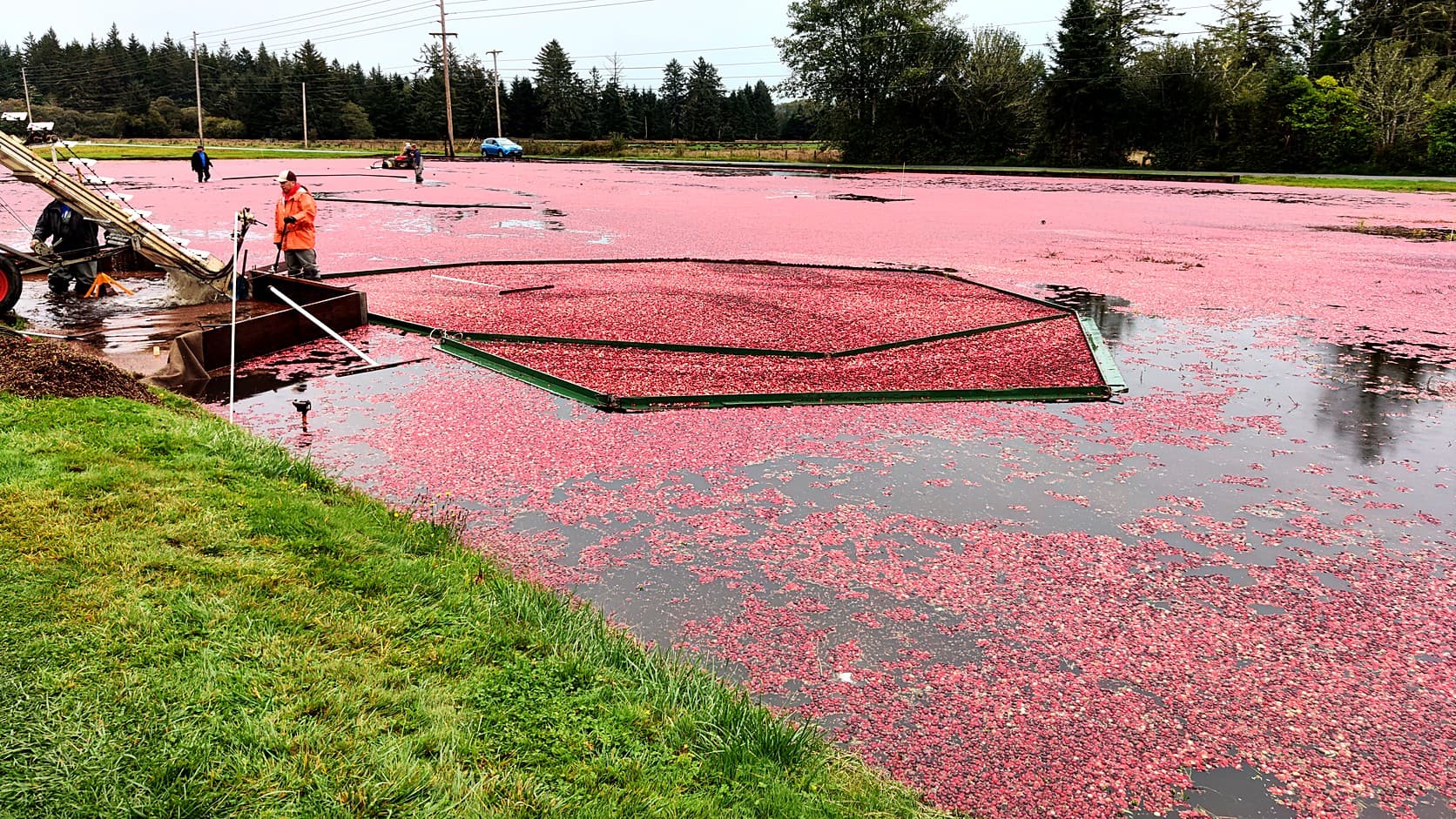
Washington cranberry harvest typically runs late September to early November, by the Cranberry Museum's page. Where to watch at Long Beach and the drive.
Washington's cranberries are picked on the Long Beach Peninsula and around Grayland, and the Cranberry Museum's page says visitors "may be able to see harvesting around the peninsula from late September through early November." As of October 2026 the museum, at 2907 Pioneer Road in Long Beach, posts a self-guided walk through its bogs open from 8 a.m. to dusk. From Enumclaw the museum is roughly 160 miles and close to four hours by road, so a late-October trip is inside that typical window, but no posted schedule promises a bog will be under water on a given day. Call the museum first.
The industry was slow to get going. A 1983 history, quoted by HistoryLink, says early demand was confined to the Thanksgiving-Christmas holidays, and that the peninsula's isolation made marketing costly. Today Washington State University counts about 15 million pounds of Washington cranberries for 2025, and half of them end up as the fresh berries in bags at the grocery store.
When is the cranberry harvest in Washington?
The museum's page puts it from late September through early November, and it notes that October is National Cranberry Month. That is a typical window, not a promise: the page carries no year, and the date any one bog is picked depends on when its berries color up and on the weather. An Associated Press report from October 11, 2013, which cited WSU's Long Beach extension unit on that year's crop, described a harvest that began in September and would continue into early November, which is the same shape.
The two public festivals sit on the second weekend of October. The museum's page lists a wet-harvest demonstration for October 10 and 11, 2026, from about 10 a.m. to 1 p.m. The Westport-Grayland Chamber of Commerce runs the other, in Grayland, and as of October 2026 its page lists the 34th Annual Cranberry Harvest Festival for October 9 and 10, 2027. The museum's weekend has passed by the end of October 2026, and the chamber's page now shows only the 2027 festival. The rule to carry forward: the festival is the second weekend of October, the chamber announces it, and the berries keep coming for a few weeks after.
Where can you watch a cranberry harvest near Long Beach?
At the Cranberry Museum, which is the one place that posts a public invitation. It is run by the Pacific Coast Cranberry Research Foundation, and its page says visitors can tour the farm and, during October, "see the crop being harvested." The outdoor bog tour is self-guided, a brochure is kept in a mailbox in the parking area, and the walk follows a grassy path between the bogs.
Other farms on the peninsula and in Grayland are working farms, and none was found that posts an invitation to watch. The Long Beach Peninsula's visitors bureau, Washington's Evergreen Coast, lists the museum and its festival on its site, and it is the place to ask about anything else. Staying on public roads and on the museum's path is the safe reading of what is posted.
What are the Cranberry Museum's hours and what does it cost?
As of October 2026 the museum's pages disagree with each other, so confirm by phone at 360-642-5553. The home page and museum page carry the header "Open 10-5 daily," and the bog walk is posted for 8 a.m. to dusk every day of the year. The history and about pages instead say the museum and gift shop are open Friday through Monday, 10 a.m. to 4 p.m., in winter. No admission fee, and nothing about dogs or restrooms, appears on the pages read for this guide, so ask when you call. Group tours are arranged by message at the same number.
What is wet harvesting, and what is the flooded bog in the photo?
In a wet harvest the bog is flooded and the berries float. The Seattle Times described it in 1997 as diking and flooding the field, with the wind pushing the floating berries to one side, where they are scooped up with a rake or a boom. In the lead photograph, taken at the museum, the berries are crowded inside a floating frame beside a conveyor.
The method is newer than the farms. The museum's history page says most growers moved from dry to wet harvesting in the 1940s, which it calls a significant change. WSU's cranberry fact sheet says that today the fruit headed for juice and dried berries is typically wet harvested, which takes less labor, while most fresh-market fruit is dry harvested with hand rakes or a machine called a Furford picker. A grower the Times profiled in Grayland, Chris Johnson, picked dry. The paper described flooding as the way other growers at Long Beach did it, and Johnson's comment, in its words, was "So easy it ought to be illegal."
That picker has a Grayland origin story. The Times credited it to Julius Furford, then 89, who got the idea while pruning his own bog in a driving rain, and it likened the notebooks of invention sketches in his machine shop to "Pacific County's own Codex Leicester."
Is there a cranberry harvest festival in Grayland?
Grayland holds one, and it is a community festival rather than a farm visit. The chamber's page describes a tour of a working bog, a cook-off, a pancake breakfast and a Firefly Parade after dark, centered on Grayland. In 2021 the Daily World reported that bog tours ran twice on the Saturday, tickets were sold at the Grayland Community Hall, and the tours were sponsored by the Washington Cranberry Alliance. Format and ticketing change, so read the chamber's event page for the year before planning around a tour.
How far is it from Enumclaw?
About 160 miles and roughly 3 hours 50 minutes to central Long Beach, and about 123 miles and 3 hours to Grayland, from a routing service's no-traffic estimate for the drive from Enumclaw. Treat both as approximate, and use a mapping service for the museum's exact route and the day's traffic. Anyone planning a day trip should expect most of the day behind the wheel.
The coast has other autumn reasons to go, and Enumclaw.com has covered two: the razor clam digs that wait on two toxin tests and how Dungeness crab season dates move.
How did cranberry farming start on the peninsula?
HistoryLink dates the start of commercial harvesting on the Long Beach Peninsula to 1883, with vines imported from New Jersey, on land owned by Anthony Chabot, who lived in California. The sources do not agree on the start. The museum's history page says four entrepreneurs bought more than 1,600 acres of peninsula land between 1872 and 1877. WSU says a gardener named Chebot planted about 35 acres, that extensive planting waited until 1912 and that the first commercial harvests came in 1915.
The trouble was the market and the pests. HistoryLink quotes a 1983 article in the Pacific County Historical Society's journal listing five reasons for slow growth: demand "confined to the Thanksgiving-Christmas holidays," marketing costs raised by the peninsula's isolation, a first-year investment that took four to six years to repay, eastern vines that arrived infested or mildewed, and absentee owners who let their bogs go back to marsh. The plant pathologist D. J. Crowley came to study local conditions in the early 1920s; HistoryLink dates his arrival to 1922 and WSU dates the start of his work to 1923. WSU adds that in 1925 he proposed overhead sprinklers to protect the vines from frost, and that the practice is still widely used.
When WSU decided in 1992 to close its research station, the museum's history page says, cranberry growers formed the foundation and bought the station and 40 acres. WSU continues to support the research staff, by the same page, while growers farm the bogs together.
How big is the industry, and how does it compare with Enumclaw's farms?
Small. WSU's fact sheet lists over 100 growers and more than 1,500 acres in production, and puts 2025 production at 15 million pounds. In 1997 the Seattle Times counted about 120 growers and a crop it put at about 160,000 barrels; WSU's Grays Harbor page uses 100-pound barrels, which makes that about 16 million pounds, so the two sources put the crop in the same range after 28 years. The same article quoted a Grayland grower, Rob Hitt, saying 10 or 11 acres was enough to raise a family.
Enumclaw has a farm history of its own, told in the guide to the plateau's dairy history, and a harvest closer to home is the choose-and-cut season in the guide to Christmas tree farms near Enumclaw.
Before you go
Call the museum at 360-642-5553 on the morning of the trip and ask three things: whether it is open, whether a bog is being harvested that day, and whether the walk is open. Check the coast forecast as well; October weather on the Washington coast can turn, and the guide to how Washington rates atmospheric rivers explains the storms that arrive in fall. Wear shoes for wet grass and keep to the museum's path.
The museum's page says fresh cranberries go on sale in its gift shop during the festival, so whether any are for sale on an ordinary day is another question for the phone call.
Story label: Original Story or Guide
Originally published: