

Feature
Studded tires in Washington are legal Nov. 1 to March 31
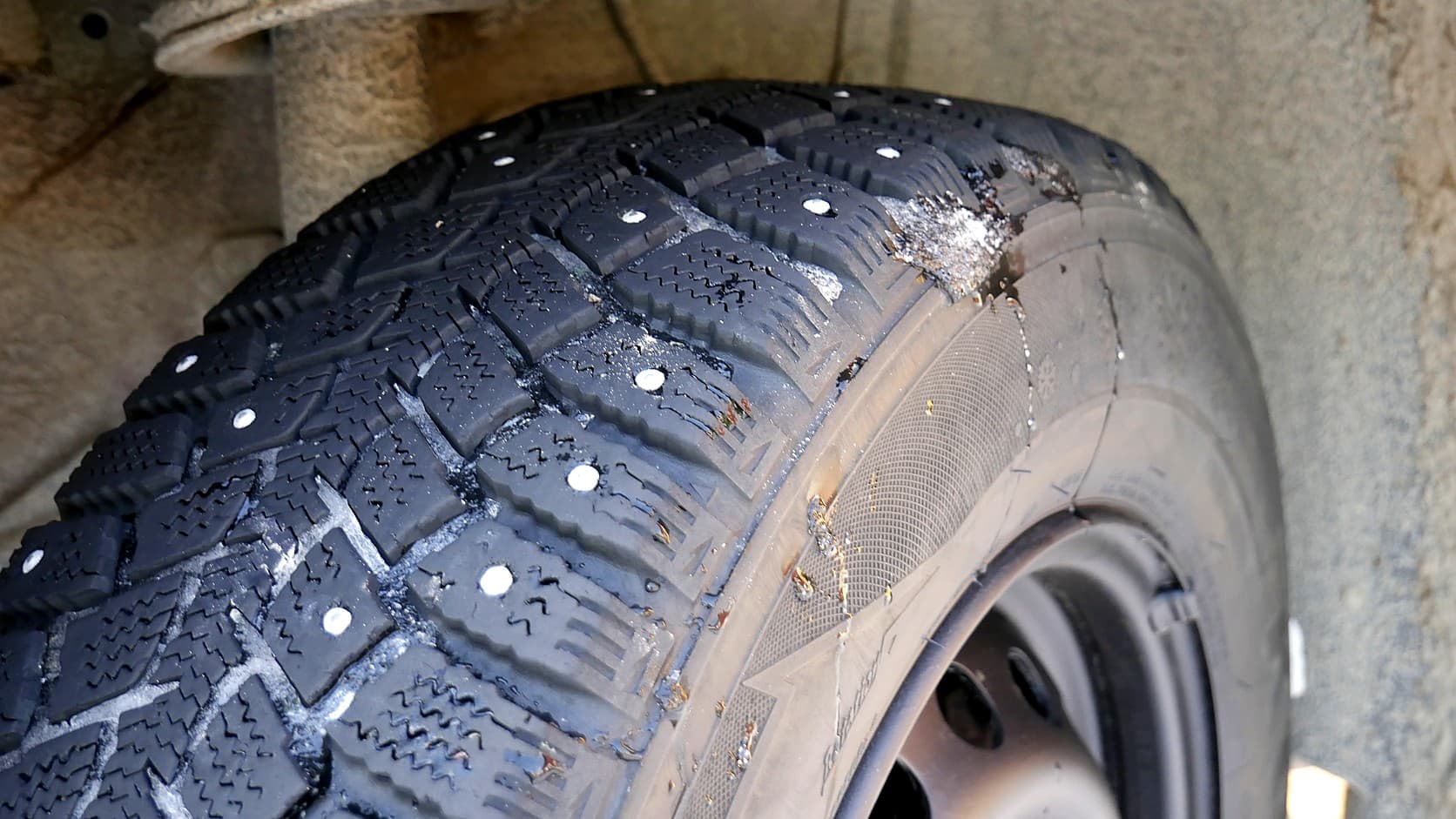
Studded tires in Washington are legal Nov. 1 through March 31. What the fine is, when WSDOT extends the deadline and why studs never count as chains.
Studded tires are legal in Washington from November 1 through March 31, on Enumclaw's streets the same as on Snoqualmie Pass. State law, RCW 46.37.420, makes metal studs unlawful "between April 1st and November 1st," and as of October 2026 the Washington State Department of Transportation (WSDOT) says drivers who still have them on after the end of the day on March 31 risk a $137 ticket from the State Patrol. WSDOT can add days to the season when conditions call for it, as it did in 2012, 2018 and 2020.
The deadline is the easy part. WSDOT estimates the damage studs do to state-owned roads at $20 million to $29 million each winter, with more on city and county roads. The $5 fee on every new studded tire sold since July 2016 brought in an average of about $315,000 a year over five years, the Washington State Transportation Commission reported in January 2025: by this site's arithmetic, less than 2 percent of the low estimate. The commission, a citizen board that advises the governor and Legislature, has recommended phasing studs out in 14 straight annual reports. Bills to ban them got hearings in 2009 and 2019 and went no further.
When can you put studded tires on in Washington?
On November 1, whatever October does on the passes, unless WSDOT uses its power to declare an extra period. The statute permits studs "when required for safety because of snow, ice, or other conditions tending to cause a vehicle to skid," then rules them out from April 1 to November 1. WSDOT and the Washington State Patrol both call November 1 through March 31 the legal season, with no individual exceptions or waivers, visitors from other states included.
Studless winter tires have no season. WSDOT says stud-free winter traction tires, which have a more aggressive tread than all-season tires, are legal all year. So are retractable studs, provided they pull back below the tire's wear bar, the tread-wear indicator in the grooves, when not in use and are engaged only from November 1 to April 1.
When do studded tires have to come off, and what is the fine?
March 31 is the last legal day. From April 1 the State Patrol, not WSDOT, can ticket drivers still using them. WSDOT's March 30, 2026 reminder put the fine at $137. The courts' infraction schedule sets a $48 base penalty for equipment violations it does not list separately, studs among them, and state law adds fees and assessments on top. A House bill analysis from February 2026 says those bring a $48 base penalty to $150, and one from March 2025 put the total at $145, both more than the $137 in WSDOT's March releases from 2023 on; those releases said $136 as late as 2022.
Oregon runs on the same calendar, November 1 through March 31, and as of October 2026 its transportation department puts the fine for breaking it at nearly $200.
Can WSDOT extend the studded tire deadline?
It can: the statute lets it declare additional periods when studs are lawful. WSDOT says it extends when circumstances call for it, most often when a forecast shows widespread snow and ice, and by its 2018 account it makes the call with meteorologists and maintenance supervisors. Its releases document extensions to April 16 in 2012, with winter weather forecast through Easter weekend; to April 15 in 2018, on long-range forecasts of snow; and in 2020 to April 30 and then May 15, because of the pandemic stay-home order.
Every one of those moved the spring deadline. WSDOT's March releases for 2021 through 2026 each said no extension was coming, and until the agency announces one, March 31 stands.
Do studded tires count as chains or traction tires?
They count as traction tires, never as chains. The State Patrol's traction rule, WAC 204-24-040, lists studded tires among approved traction devices, so they satisfy a sign requiring traction tires. When WSDOT posts a chains-required sign, state law applies the requirement to "all types of tires including studded tires" (RCW 47.36.250). A front- or rear-wheel-drive car on studs has to chain up.
All-wheel and four-wheel-drive vehicles under 10,000 pounds get one allowance: they may pass a chains-required sign with all wheels in gear on approved traction tires, studs included, if chains for one set of drive tires ride along. When the sign escalates to chains on all vehicles, the chains go on. Ignoring a posted requirement carries a $500 penalty, assessments included, under the same statute.
An approved traction tire, under the Patrol's rule, has at least 4/32 of an inch of tread, an eighth of an inch, a pattern built for snow and ice, and a sidewall marked M+S, for mud and snow, or with the three-peaked mountain-and-snowflake symbol for severe snow. WSDOT's October 2025 winter release mentioned only the symbol, not M+S. Chains, or an approved chain alternative, turn any tire into a traction tire.
Which studs are legal, and what does the fee cost?
Since July 1, 2001, studs sold in Washington have had to be lightweight ones, capped by law at 1.5, 2.3 or 3 grams by industry size; a later amendment also allowed retractable ones. State Patrol rules add the rest: studs tipped with tungsten carbide, set only into a new or newly recapped tire with molded pin holes before it has been driven, and installed by the manufacturer or a tire dealer. A tire needs 70 studs when sold and at least 56 to keep counting as studded. Studs are barred on vehicles of 10,000 pounds or more, except school buses and fire department equipment.
Since July 1, 2016, every new studded tire has carried a $5 fee; the seller keeps 50 cents and the rest goes to the state's motor vehicle fund. On January 1, 2026, the separate fee on every new replacement tire rose from $1 to $5, so a new studded tire carries $10 in state fees, the Department of Revenue says. The Legislature sets both.
What changes on SR 410 east of Enumclaw?
The tire rules are the same, but the road out of town is written into them. The State Patrol's chain rule lists a dozen routes where vehicles and combinations rated over 10,000 pounds must carry chains from November 1 to April 1, and SR 410 (Highway 410) from Enumclaw to Naches, one of the four state highways out of Enumclaw, is on the list. WSDOT counts vehicle, trailer and load together, commercial or not; its tires page ends that season on March 31, a day short of the rule.
WSDOT's Crystal to Greenwater pass report for the stretch traditionally runs November 1 to April 1 as well. Beyond Crystal Mountain Boulevard, near the national park boundary, the highway closes for the winter on a date WSDOT sets each fall (when Chinook Pass closes has the history), and the Enumclaw to Crystal Mountain drive guide covers chains on the way up. Mount Rainier National Park is stricter: every vehicle in the park must carry chains from November 1 to May 1, "regardless of tire type or weather conditions," its road status page says, a month after studs come off.
On the plateau itself, this site's comparison of Enumclaw and Seattle snow found the winter trouble is more often ice than depth: about a foot of snow a year in both places' long weather records, but twice as many freezing nights on the plateau as at Sea-Tac.
When did Washington legalize studded tires?
Washington wrote them into its tire law in 1969. Until then the statute listed studs, along with blocks, flanges, cleats and spikes, among the protuberances barred from any tire on a Washington highway, though a map the Highway Research Board published in 1967, reprinted in a 1999 WSDOT research report, shades Washington among the states where studded tires could be used on January 1, 1967, without saying how. Engrossed Senate Bill 4991 struck the word stud from that list, allowed metal studs of a state-approved type when snow or ice made them a safety need, and barred them from April 1 to November 1, the dates still in the law in 2026. Dan Evans, then governor, signed it on April 1, 1969, the day the new law set for studs to come off each spring.
The same act created the road signs, in three levels: chains or studded tires recommended, chains or studded tires required, and chains required. Studs never counted on the top rung, and under the law in 2026 they still do not.
Will Washington ban studded tires?
That would take a new law, and the Legislature has not taken up a stud bill since 2019. The Transportation Commission has called for a phase-out in every annual report since its 2012 edition, issued in January 2013, and its January 2026 report asks lawmakers to raise the fee to $50 a tire, rename it the "pavement impact fee," and prohibit studs within five years of the increase. Its 2018 and 2019 reports argued that all-weather tires do better than studs in most winter conditions, solid ice excepted.
Lawmakers have heard the case and let it drop. Senate Bill 6066, in 2009, would have banned the sale and use of studded tires. House Bill 1309, in 2019, would have raised the fee to $100, made selling studded tires an infraction from 2020 and ended their use on July 1, 2025. Each got a committee hearing and never came to a vote. The Legislature's index of bills by the laws they would change shows none touching the stud statutes in the 2021 through 2026 sessions.
Before you leave Enumclaw
Check the calendar first: before November 1 or after March 31, studs risk a ticket unless WSDOT has announced an extension. For the drive east, check the Crystal to Greenwater report or the WSDOT app for the requirement in force, carry chains that fit, studs or not, and use WSDOT's tires and chains page to read the signs. Bound for Mount Rainier National Park between November 1 and May 1, carry chains whatever is on the wheels. If the trip ends in the park, at a trailhead or at a Sno-Park, one of the state's permit-only winter lots, which pass you need near Enumclaw covers the fees and permits.
Story label: Original Story or Guide
Originally published: