

Feature
Centralia Massacre of 1919, what happened and who died
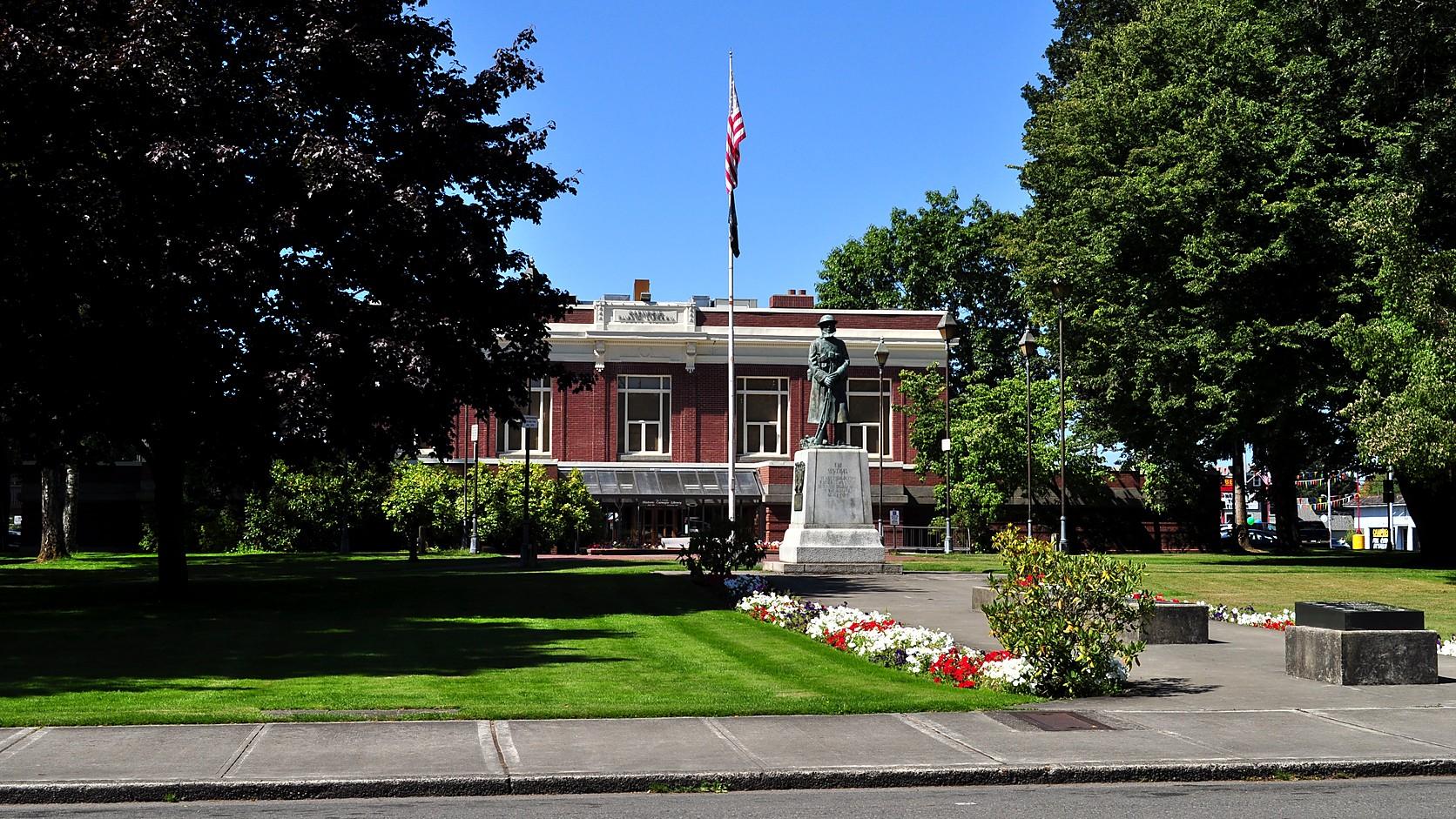
The Centralia Massacre of November 11, 1919: five dead, a lynching, a disputed first shot, a trial and two monuments in one Washington park.
The Centralia Massacre was a gunfight and a lynching in Centralia, Washington, on November 11, 1919, the first Armistice Day parade the town held after World War I. According to HistoryLink, the state's online encyclopedia, four members of the American Legion died in the shooting: Warren Grimm, Arthur McElfresh, Ben Casagranda and Dale Hubbard. That night a mob took a member of the Industrial Workers of the World (IWW), Wesley Everest, from the city jail and hanged him from a bridge over the Chehalis River, which makes five deaths in all. The town lies in Lewis County, south of the Enumclaw plateau.
The date was not an accident of the calendar. According to the Department of Veterans Affairs, President Woodrow Wilson proclaimed November 11, 1919, as the first commemoration of Armistice Day, and the day did not become Veterans Day until Congress changed the word in 1954. When Veterans Day falls on Wednesday, November 11, 2026, it will be the 107th anniversary of the one the Legion marched on in Centralia. The sources still disagree about who fired first, and the town's George Washington Park holds two monuments, one for each side's dead.
What happened in Centralia on November 11, 1919?
A parade of Centralia and Chehalis veterans, Elks, Boy Scouts, nurses, Red Cross workers and a band marched down Tower Avenue and paused briefly outside the IWW hall in the Roderick Hotel, HistoryLink's essay by Alyssa Burrows says. The IWW, whose members were nicknamed Wobblies, was a radical labor union. The newly elected head of the local Legion post, Lieutenant Warren Grimm, ordered his men to halt. According to that essay, some of the veterans rushed the hall. Shots rang out and Grimm was hit.
The union had been warned that its hall would be raided, as other IWW halls had been since the autumn of 1917, according to the same essay. Its lawyer, Elmer Smith, had advised members they were entitled to defend their property, so volunteers took places in the nearby Arnold rooming house, the Avalon Hotel and on Seminary Hill, within firing range. The essay says they did not expect a raid during the parade.
Who died in the Centralia Massacre?
Five men died, by HistoryLink's count. Warren Grimm, a lawyer and the Legion post's new leader, was shot at the hall. Arthur McElfresh, a veteran who had taken cover and looked around a corner, was shot in the head. Ben Casagranda was shot by Wesley Everest as he ran down an alley, the essay says. Dale Hubbard, a serviceman who chased Everest to the bank of the Skookumchuck River and ordered him to surrender, was shot by Everest and died in the hospital that night.
The fifth death was Everest himself. Counts differ in the telling because Hubbard died hours after the shooting: a HistoryLink overview written for the 2019 centennial says three Legionnaires died in the shootout, while the essay on the event and the one on the later trial say four Legionnaires died, five men in all with Everest.
How was Wesley Everest killed?
Everest, a World War I veteran and IWW member, was caught after the shooting and led to the city jail on Maple Street, followed by a growing crowd that kicked and punched him, according to HistoryLink. Someone threw a rope over a spike on a telephone pole and hauled him off his feet before the parade's marshal persuaded the crowd to stop, and he was locked in a cell.
By HistoryLink's account, a crowd of roughly a hundred assembled at the Elks Club that evening. Someone cut the power near the jail, the crowd broke in and took Everest to the bridge over the Chehalis River, and hanged him. One witness, Bob Burrows, put the shots fired at or around the body at about 20. Other witnesses said the body had been mutilated; the coroner's report the next day, as HistoryLink quotes it, listed no scars outside the rope's mark on the neck. The National Guard arrived by train at 11:25 p.m. and prevented further violence. Vigilantes had meanwhile destroyed the IWW hall, the essay says, and were rounding up suspected members.
Who fired first at Centralia?
The sources do not agree, and this article does not choose. In the American Legion's account, the marchers were on a peaceful parade when they were shot at. The IWW's account is that the Legion planned a raid on the hall and its members fired to defend it. A 2024 Daily Chronicle report states the two versions the same way and notes it is still debated what started the violence.
HistoryLink's essay on the trial adds that Centralia business leaders had been planning a raid for weeks after a meeting at the Elks Club, and that it was unclear whether the Legionnaires broke open the hall's doors before the first shots. The essay on the event itself says the veterans rushed the hall before the shot that hit Grimm. The National Register of Historic Places nomination for the Sentinel statue records that some Legion posts elsewhere would not give money for the memorial, and that one Montana commander said the Wobblies had acted in self-defense after an unprovoked attack.
What happened at the trial of the Centralia IWW members?
The trial began in Montesano on January 26, 1920, in the Grays Harbor County courthouse, after a change of venue out of Lewis County meant to secure a fair hearing, HistoryLink reports. Eleven defendants were charged in the death of Grimm. Elmer Smith, the Centralia lawyer, was charged as an accessory. Seven weeks and 271 witnesses later, on March 13, 1920, the jury found seven men guilty of second-degree murder: Eugene Barnett, Bert Bland, O. C. Bland, John Lamb, James McInerney, Ray Becker and Britt Smith. Elmer Smith and Mike Sheehan were acquitted, and Loren Roberts was found not guilty by reason of insanity; charges against the eleventh defendant, Bret Faulkner, had been dropped earlier in the trial.
HistoryLink says the jury asked for leniency, but Judge John M. Wilson sentenced the seven to 25 to 40 years, the maximum then for second-degree murder. The essay raises concerns about the trial itself: the original judge was replaced after a conflict of interest, the replacement had delivered eulogies at the Legionnaires' funerals, and 100 soldiers stood on the courthouse lawn. Governor Clarence D. Martin commuted the sentences in 1933. McInerney had died in prison, and Becker declined to leave without a full pardon. Elmer Smith died in 1932, before the release.
Why is it called both a massacre and a tragedy?
Each name carries a side. HistoryLink gives the event's usual name as the Centralia Massacre and records two other names from the time: the Armistice Day Riot, or, in another telling, the Armistice Day Tragedy. The Daily Chronicle reported in 2024 that "massacre" is offensive to IWW members and others who dispute the Legion's account.
The 1924 statue and the 2023 plaque show the split. The Sentinel's base carries a tribute that, per the National Register nomination, says the four were slain "on peaceful parade". HistoryLink notes that the memorial's committee left the IWW off the inscription and that the description has been disputed.
Where are the Centralia memorials, and can you visit?
George Washington Park, at 110 S. Silver St. in downtown Centralia according to the Daily Chronicle, holds both monuments. The Sentinel is a bronze infantryman by the sculptor Alonzo Victor Lewis, dedicated on Armistice Day, November 11, 1924; HistoryLink gives its National Register listing date as December 17, 1991.
The IWW's "Union Victims" monument stands just northwest of it. The union unveiled its bronze plaque there on November 11, 2023, and the granite base went in on June 18, 2024, the Chronicle reported, and the union held its dedication there on June 23, 2024, according to a later Chronicle report. The union's release, as the paper quotes it, says the monument is for the men who were hanged by a mob or sent to prison after defending the hall. The park is public ground, and this article has not found the city's posted hours.
The Lewis County Historical Museum, 599 NW Front Way in Chehalis, sits in a 1912 Northern Pacific depot. As of October 2026, read on its website on October 28, it is open Tuesday through Friday 10 a.m. to 4 p.m. and Saturday 10 a.m. to 2 p.m. in winter, with longer summer hours from Memorial Day through Labor Day, and charges $5 for adults. Its exhibit page lists logging, rail and pioneer displays and rotating quarterly displays, but no Centralia exhibit, so call (360) 748-0831 first if the 1919 events are the reason for the trip.
Why was a union hall in a lumber and coal country a target?
HistoryLink's overview says the IWW organized in Washington's lumber towns and met violent opposition elsewhere, including the 1916 Everett shootings and the 1917 vigilante attack on the Hoquiam hall. The Chronicle adds that several of the Centralia defendants belonged to the United Mine Workers as well, having worked in the coal mines. Lumber and coal were industries of this plateau too. The White River Lumber Company mill and the coal town of Carbonado belong to the same economy, though this article found no record of an IWW hall on the plateau. A railroad disaster of the same decade, the Wellington avalanche of 1910, struck a Great Northern line near Stevens Pass, not the Northern Pacific and Milwaukee Road lines that hauled the plateau's lumber. How the plateau itself marked Armistice Day in 1919 is a question for the Courier-Herald's archive; this site has not found it.
Before you go
Veterans Day is Wednesday, November 11, 2026, a federal holiday, and the memorials in the park may hold ceremonies that day. Check the Daily Chronicle or the Centralia Downtown Association for any, and the museum's page before driving to Chehalis. The museum sets its own hours.
Story label: Original Story or Guide
Originally published: