

Feature
Wellington avalanche of 1910 and the 96 who died
Wellington avalanche, March 1, 1910: two Great Northern trains swept down a Stevens Pass slope, 96 dead. What happened, who was blamed, and how to visit.
The Wellington avalanche was a snowslide that swept two stalled Great Northern Railway trains off the tracks at Wellington, a railroad town just west of Stevens Pass, in the early hours of March 1, 1910, and killed 96 people. The Museum of History & Industry's finding aid for the railroad's legal files counts 35 passengers and 61 railroad employees, and HistoryLink ranks it the worst natural disaster in Washington by deaths. The site, about 108 road miles from Enumclaw, lies on the abandoned railroad bed now called the Iron Goat Trail.
The trains were put on a siding, a side track, that looked safe: in 17 years no slide had been known to reach it, the Washington Supreme Court noted in 1914. They waited more than four days beneath the slope while passengers asked to be moved. Afterward the railroad renamed the town, covered miles of track with snowsheds, roofs that carry slides over the rails, and in 1929 replaced the whole climb with a tunnel.
What happened at Wellington in 1910?
The sequence follows the court's findings and the National Register nomination for the Stevens Pass Historic District. No. 25 was a passenger train out of Spokane that HistoryLink calls the Spokane Local and the finding aid the Seattle Express; No. 27 was a mail train, the Fast Mail. A blizzard and a slide stopped them on February 23 at the east end of the old Cascade Tunnel. On the evening of February 24 the railroad took them through the tunnel to a siding at Wellington, at its west end, where they waited while crews cleared slides below. HistoryLink says the trains waited six days, which fits a count from February 23; by the court's dates the wait at Wellington itself was a little over four days. The telegraph failed on February 26, HistoryLink says. The snow shovelers quit over pay. On the last day of February the snow turned to rain, with thunder and lightning. The court puts the slide at about 1:30 a.m. on March 1; the nomination, citing a survivor, says a little after 1. It broke loose on Windy Mountain several hundred feet above the siding and carried both trains into the gorge of the Tye River, about 100 feet below the tracks by the court's account and 150 by HistoryLink's.
Why did the trains stay under the slope?
By the Supreme Court's account, slides had closed the line both ways and the railroad's officers judged the siding the safest ground on the mountain. The court found it undisputed that no slide had been known to reach that siding, and that passengers and railway men slept on the trains rather than in the nearby hotel, which had room, because everyone regarded them as safe. The nomination adds that a slide had swept away the cookhouse at the tunnel's east end, killing two, and that passengers asked to be moved into the tunnel or under a snowshed. The Cascade Division superintendent, James H. O'Neill, refused, it says, because the tunnel was cold, damp and short of fresh air and the shed could not hold a whole train. The court granted that the accident would not have happened had the train stood elsewhere, but held that no one could have known.
How many people died at Wellington?
Ninety-six people died, in every account opened for this article that gives a final count. The finding aid counts 35 passengers and 61 railroad employees; HistoryLink reaches the same total with 58 employees asleep on the trains and three in cabins. Early reports ran both ways: HistoryLink records 30 feared dead on March 1 and a headline of 118 on March 3. HistoryLink and Britannica say 23 people were dug out alive; the nomination says 22. The finding aid says the last of the dead was not recovered until the end of July.
What caused the Wellington avalanche?
Rain and thunder fell on a slope already loaded with days of snow, by HistoryLink's account, though sources differ on the trigger. HistoryLink calls the rain and thunder the immediate cause and adds that clear-cut logging and fires started by locomotive sparks had opened the slopes above the tracks. The finding aid says either thunder or lightning cracked the heavy top slab of snow and the weaker layers beneath gave way. The court recorded a hillside sloping about 30 degrees under nine to twelve feet of snow, and a break 1,500 to 2,000 feet wide along the track.
Who was blamed for the Wellington disaster?
A coroner's jury looked first, and the sources describe its verdict differently. The finding aid says it put the cause "beyond human control" yet criticized the railroad on three points: the coal supply, low pay for the laborers and where the train had been placed. The nomination says the jury found the railroad guilty of contributory negligence on much the same grounds. The verdict itself was not found for this article. A civil suit reached a King County jury in 1913, which awarded $20,000 to a child whose father, Edward W. Topping, 30, died aboard No. 25. On August 11, 1914 the Washington Supreme Court ruled the avalanche an act of God with no negligence shown, ending: "The judgment is therefore reversed, and the cause ordered dismissed." A majority of the full court held to that on rehearing in 1915.
Why was Wellington renamed Tye, and what did the railroad build?
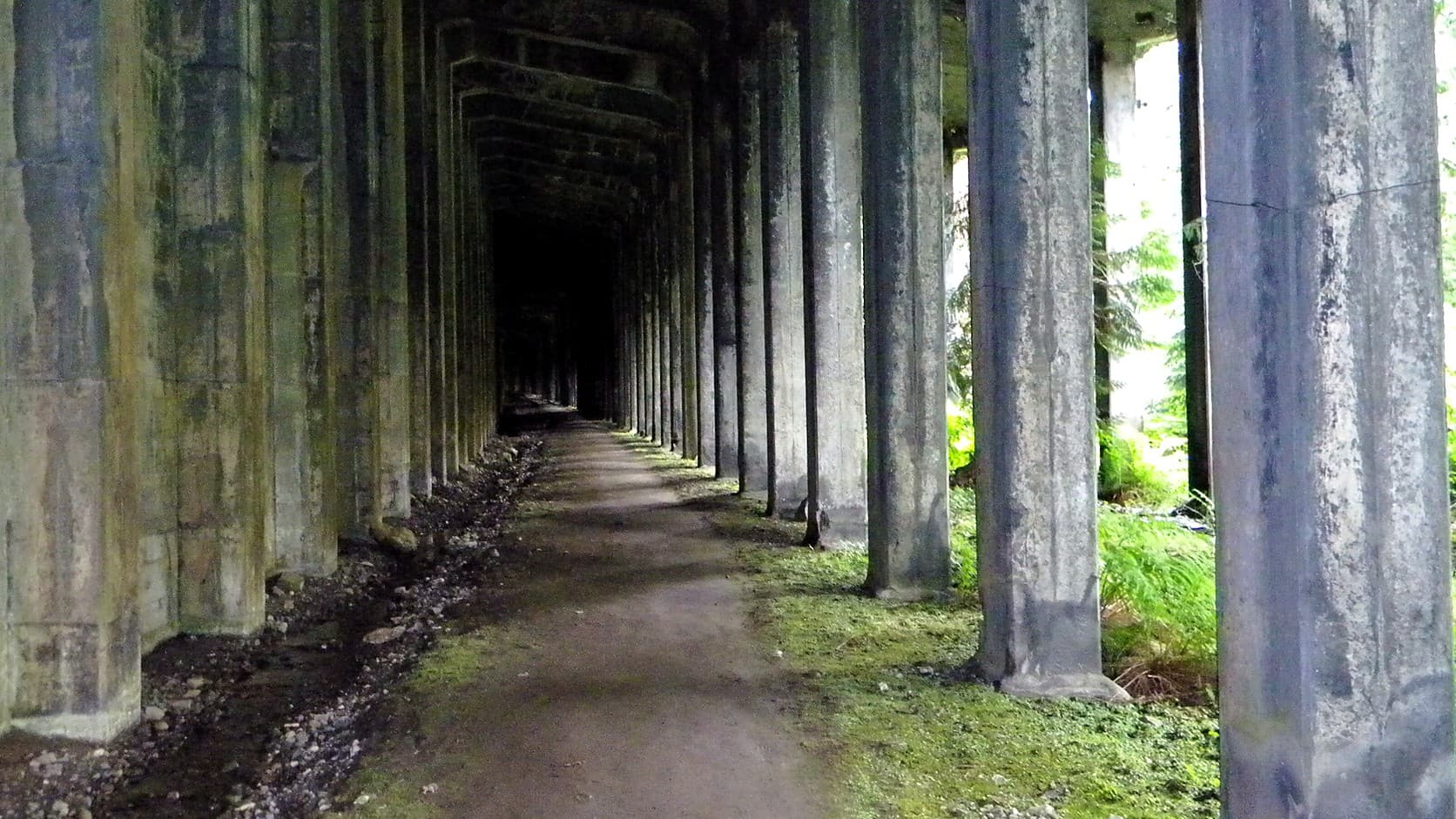
The Great Northern renamed the town Tye after the disaster, the finding aid says, to escape the old name's associations. On the Wellington site it built a double-track concrete snowshed 3,900 feet long in 1910, clearing away what the slide had left of the town, the nomination says, and the nomination calls the great shed "a permanent monument to one of the nation's largest railroad disasters." HistoryLink counts snowsheds over nine miles of track between Tye and Scenic, a station farther down the line, by 1913. Slides went on: HistoryLink records one near Corea, another station below Tye, on January 22, 1916 that killed eight passengers. The 7.8-mile Cascade Tunnel opened in 1929 at a lower elevation; Britannica says the disaster necessitated it. The old line became the Iron Goat Trail, named for the railroad's mountain goat emblem.
Was it the deadliest avalanche in U.S. history?
Several sources call it that. The Seattle Times wrote in 2010: "It was the most deadly avalanche in U.S. history. A century later, it still is." Britannica agrees, and Gary Krist's 2007 book on it carries "America's Deadliest Avalanche" in its subtitle. HistoryLink words it more narrowly: "the worst natural disaster (with the greatest number of fatalities) in Washington." No federal ranking turned up, so the national title is theirs. For scale, our volcano guide counts 57 killed or missing at Mount St. Helens in 1980, by the U.S. Geological Survey's count, and our earthquake guide eight deaths in the 1949 earthquake, by the federal count.
Where is Wellington, Washington, and how far is it from Enumclaw?
Wellington stood at the west end of the Great Northern's original Cascade Tunnel, in King County at about 3,100 feet. The nomination says little remains of the town or of Tye, its successor; Wikipedia calls it a ghost town, and our guide to Washington's ghost towns covers six other ghost towns you can visit. A routing engine puts the Forest Service's Wellington Trailhead about 108 road miles from Enumclaw City Hall, roughly two hours and 45 minutes without traffic.
Enumclaw had a railroad story of its own. The nomination says the Northern Pacific's tunnel at Stampede Pass had seemed the only possible way across the central Cascades, and that in 1890 and 1891 John F. Stevens surveyed Stevens Pass for the Great Northern; the Northern Pacific's main line once ran through Enumclaw. The Washington State Department of Transportation (WSDOT) runs winter-long avalanche control on U.S. 2, firing howitzer shells into 12 avalanche paths; on State Route 410 it closes Chinook Pass for the winter because control work there would be too hazardous, as our Chinook Pass closing dates guide explains.
Can you visit the Wellington site from Enumclaw?
You can, in the snow-free months: the Iron Goat Trail passes the old townsite, the Seattle Times reported in 2010, and the Forest Service says its signs tell the history of the disaster. As of October 2026 the Forest Service lists the Wellington Trailhead, at 3,120 feet, as open for day use from sunrise to sunset. The October 2026 listing puts the day-use fee at $5 per vehicle per day, or $30 annual, and honors a Northwest Forest Pass, an interagency pass or a digital pass; a Washington Discover Pass is not valid, and the agency suggests loading the recreation.gov app before you leave so you can pay on site. From U.S. 2 turn north at milepost 64.4 onto Old Stevens Pass Highway, drive 2.8 miles and turn right on Forest Service Road 050; eastbound drivers should turn around at the pass and come back, because sight distance at the turn is limited.
Winter is the catch. The Washington Trails Association does not recommend winter use of the trail because of avalanche danger and scarce parking, and says the Scenic interpretive site closes for the season. The Forest Service pages read for this article give no closing dates and tell visitors to treat each recreation-site page as the authority on closures, so call the Skykomish Ranger Station at (360) 677-2414, open Wednesday to Friday by its page, before you go. Hiker reports to the association describe a rockslide on the upper trail toward Windy Point that blocked the way in May 2026 and took some scrambling by September; the association also warns that the old tunnels are unsafe to enter.
Story label: Original Story or Guide
Originally published: