

Feature
Dungeness crab season in Washington, and why the dates move
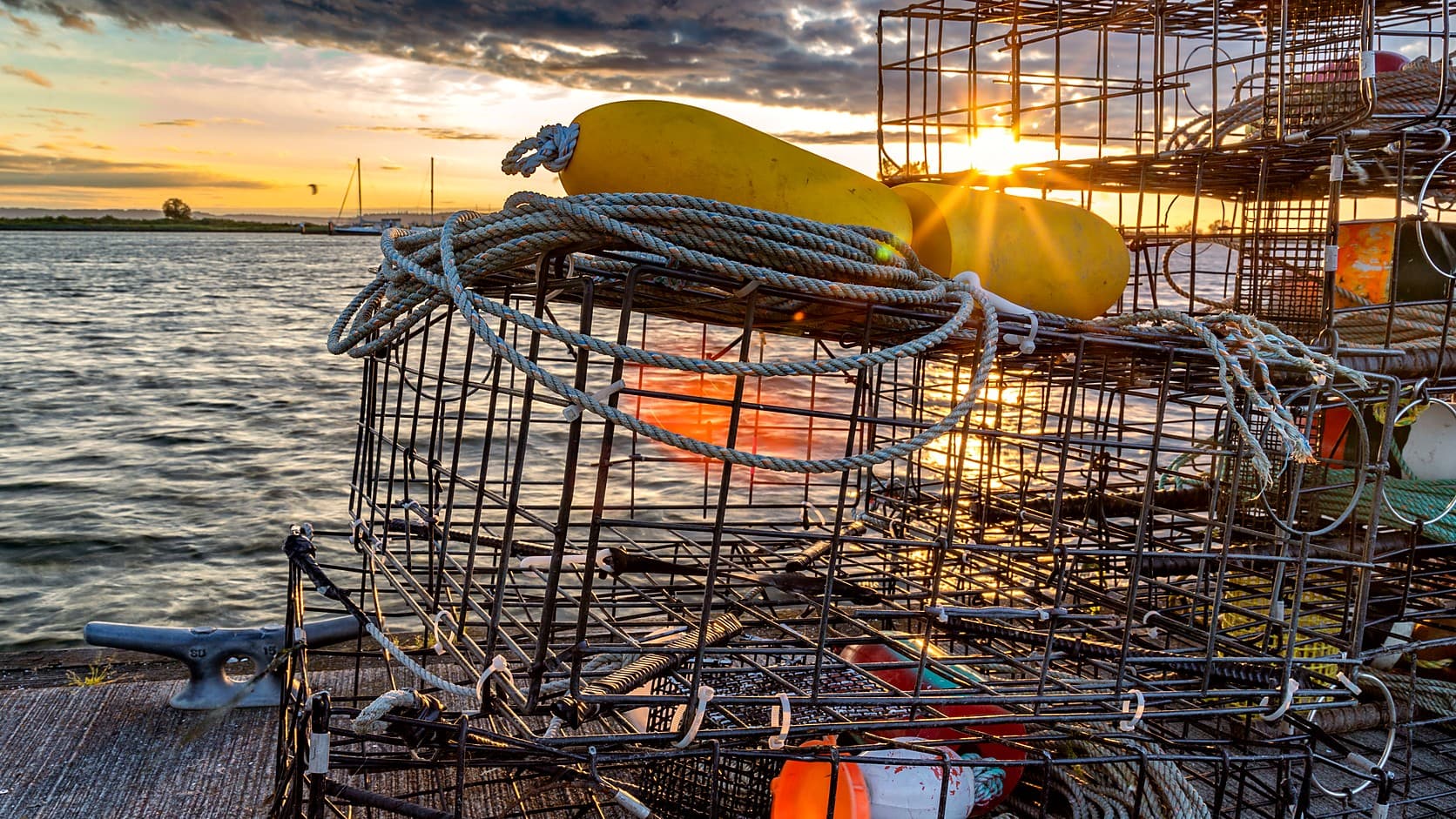
Dungeness crab season in Washington: as of Oct. 21, 2026, open in most of Puget Sound, closed off Seattle and Tacoma. Why dates move, the license, the limit.
As of October 21, 2026, Washington's winter Dungeness crab season is open daily through December 31 in most Puget Sound marine areas, but not in Marine Area 10 (Seattle and Bremerton), Marine Area 11 (Tacoma and Vashon Island), Marine Area 13 (South Puget Sound) or Hood Canal south of Ayock Point. The Washington Department of Fish and Wildlife (WDFW) says it needs final summer catch estimates before deciding whether Area 10 or Area 11 gets any winter season, and it has closed the other two for the rest of 2026. From Enumclaw, the nearest open water is around Edmonds, about 57 road miles away.
The dates move partly because the state and the treaty tribes each have a right to half of the crab and the total has to be estimated, and partly because seasons wait for crab shells to harden. WDFW put it on a slide for commercial crabbers in February 2025: "Collectively, both parties are targeting 50% of an unknown number." The state's half is tracked partly through catch cards from recreational crabbers, and WDFW said on September 4, 2026 that over the previous two years 43 percent of summer card holders had reported their catch.
Which Puget Sound crab areas are open in October 2026?
WDFW divides the water into numbered marine areas and posts each one's status on its crab seasons and areas page. Read on October 21, 2026, it lists Area 4 east of the Bonilla-Tatoosh line, Areas 5, 6 and 9, Area 7 North and South (San Juan Islands), and Area 12 north of Ayock Point in Hood Canal as open daily from October 1 through December 31. Area 8-1, covering Deception Pass, Hope Island and Skagit Bay (this site's Deception Pass State Park guide covers the park), and Area 8-2, Port Susan and Everett, are open daily from October 10 through December 31. WDFW's September 29 release held those two back over soft-shell crabs, and its October 9 emergency rule, a temporary change to the sport fishing rules, opened them after sampling that ended October 2 confirmed enough legal-size males had hardened.
Areas 10 and 11 are closed with no winter season announced. Area 13 (South Puget Sound) and Hood Canal south of Ayock Point are closed too, and WDFW says they stay closed for the rest of 2026.
When does Washington crab season start and end?
In Puget Sound the permanent rule, WAC 220-330-040, lists only a summer season: July 1 through Labor Day, Thursday through Monday, in most areas. It lists no winter season. WDFW opens one by emergency rule, and it used the same tool to cut Areas 10 and 11 to Sundays and Mondays in summer 2026. WDFW says it usually announces summer dates in June and winter dates in September, and that Puget Sound is closed to recreational crabbing in the other months.
The coast is different. Areas 1 to 3 and western Area 4 are open all year with no catch card, though under the same rule pots are banned from September 16 through November 30 (November 14 in Willapa Bay), except on the Columbia River.
Why are Seattle and Tacoma closed for winter crabbing?
WDFW's September 29, 2026 release gives as the reason "the limited number of crab remaining in the catch quota following the summer recreational fishery." A quota is the pounds of crab the state's share allows an area. Summer 2026 crabbing in both areas ran Sundays and Mondays only, ending September 7 in Area 10 and August 17 in Area 11, but the 2024 and 2025 summer rules also gave the two areas only those two days. The October 9 rule says, "Additional time and final catch estimates are needed to determine whether Marine Area 10 (Seattle-Bremerton) and Marine Area 11 (Tacoma-Vashon Island) can offer any winter recreational opportunity."
The record shows how late an answer can come. In 2022 WDFW opened both areas on November 15. In 2024 it opened Tacoma's area on November 4, then Seattle's on December 6 after state and treaty managers agreed to raise the quota. In 2025 its rule opened Seattle's area on October 1 while Tacoma's was held back. WDFW's notices give no date for the 2026 decision.
Why does the state split the crab with the treaty tribes?
The Stevens treaties of 1854 and 1855 reserved the western Washington tribes' right to take fish at their usual and accustomed places. A 1974 federal ruling, the Boldt decision, held that the right meant up to half of the harvestable fish; this site's story of the Muckleshoot Indian Tribe tells it. In December 1994 Judge Edward Rafeedie ruled in the same case that shellfish count as fish under the treaties; the state attorney general's office described the result in 1999 as rights to half of all deep-water shellfish. In an August 2023 column, Ed Johnstone, chairman of the Northwest Indian Fisheries Commission at the time, wrote that since that ruling "state and tribal co-managers have a legal obligation to share equally in the harvest of Dungeness crab."
WDFW's emergency rules say the openings will help meet 50/50 harvest goals with the treaty tribes, and its slides show the state's half going first to recreational crabbers under a commission policy revised in 2010, with no state commercial crab fishery in Areas 10 through 13. What summer leaves is what winter gets.
How many crabs can you keep, and why not females?
The limit is five male Dungeness crabs a day, each at least 6 1/4 inches across the shell and in hard-shell condition, WDFW says. State rule, WAC 220-330-010, bars keeping any female Dungeness or any soft-shelled crab. WDFW's slides call the method size, sex and season: the size limit gives males time to reproduce, the male-only rule lets females reproduce without harvest pressure, and seasons follow molts to avoid soft crab. WDFW says a soft-shelled crab, one still hardening after a molt, yields less than 20 percent of its weight in meat, against 25 percent for a prime hard-shell crab.
Each person may fish two units of gear, such as two pots or ring nets, and unattended gear needs a half-red, half-white buoy marked with the owner's name and address. Gear may not be set or pulled from a boat from an hour after official sunset to an hour before official sunrise.
What license do you need to crab in Puget Sound?
WDFW says anyone 16 or older needs a Washington fishing license, and a crabber of any age in Puget Sound needs a Puget Sound crab endorsement, an add-on to the license, and a catch record card, on which each crab kept is recorded. State law, RCW 77.32.430, makes the license valid for Dungeness crab in the Sound only with a card endorsed for it. As of October 2026, WDFW's fee table lists a resident adult shellfish/seaweed license at $21.58 and the endorsement at $11.89, or $33.47 together; the card is free. WDFW says a 2025 law raised fishing fees 38 percent from July 1, 2025, so check the table before you buy.
The shellfish/seaweed license also covers razor clams, the subject of this site's razor clam guide, but unlike a combination license it carries no Vehicle Access Pass, the free WDFW parking pass that comes with most annual licenses, so parking at a WDFW water access area takes a Discover Pass, which the guide to which pass you need near Enumclaw covers. WDFW's dealer search lists one dealer in Enumclaw, Work-Sports & Outdoors at 840 Roosevelt Avenue, and WDFW says anyone who needs a card at once should use a dealer, since online and phone orders come with no temporary card.
When is the crab catch card due?
Summer cards, which covered crab kept through Labor Day, were due October 1, 2026. Winter cards are valid through December 31 and due February 1, 2027, and WDFW says its website takes winter reports only from January 1 to February 1. State rule, WAC 220-310-020, has each crab entered at once, in ink or in WDFW's mobile app. The card must be reported even if no crab were taken, and a crabber who does not report pays $10 with the next endorsement.
WDFW's crustacean program leader, Katelyn Bosley, said on September 29, 2026 that card data "plays a critical role in determining both the areas and duration of winter crabbing seasons." Johnstone's column went further: "We think recreational harvest is being underreported," a view of the tribes, not a count.
Where is the nearest open water to Enumclaw?
As of October 21, 2026, the closest Puget Sound shore to Enumclaw is in closed areas. By WDFW's marine area map, the Des Moines Marina pier (about 26 road miles from Enumclaw City Hall) and Tacoma's Les Davis Pier (about 31) are in Area 11, which ends at the Tacoma Narrows Bridge (this site's story of the 1940 collapse covers the original span). Seattle's Seacrest Park pier (about 41) is in Area 10, and the South Sound beyond the bridge is Area 13. The first open water by road is Area 9 at the Edmonds fishing pier, about 57 miles and an hour and a half without traffic, ahead of Mukilteo and Everett in Area 8-2 at about 61 and 65 miles.
As of October 2026, the City of Edmonds says the pier is open to the public 24 hours a day, every day of the year. Its page lists no fee; a July 2026 column by the city's parks director names crabbing among the pier's uses. WDFW says piers are often crowded and offer limited opportunity for Dungeness crab, and that a boat is the preferred way to reach many of the most productive crab waters. Distances are approximate road miles from a routing service.
Before you go
On the day you plan to crab, read WDFW's crab seasons page and its emergency rules page again and match your spot to its area by name, because the table changes when WDFW posts an emergency rule. Carry the license, the endorsement and the card, or the WDFW app that holds them, and bring a crab caliper: WDFW calls estimating size with a ruler or a dollar bill unwise, and an undersize crab can mean a fine.
Story label: Original Story or Guide
Originally published: