

Feature
Razor clam digs in Washington wait on two toxin tests
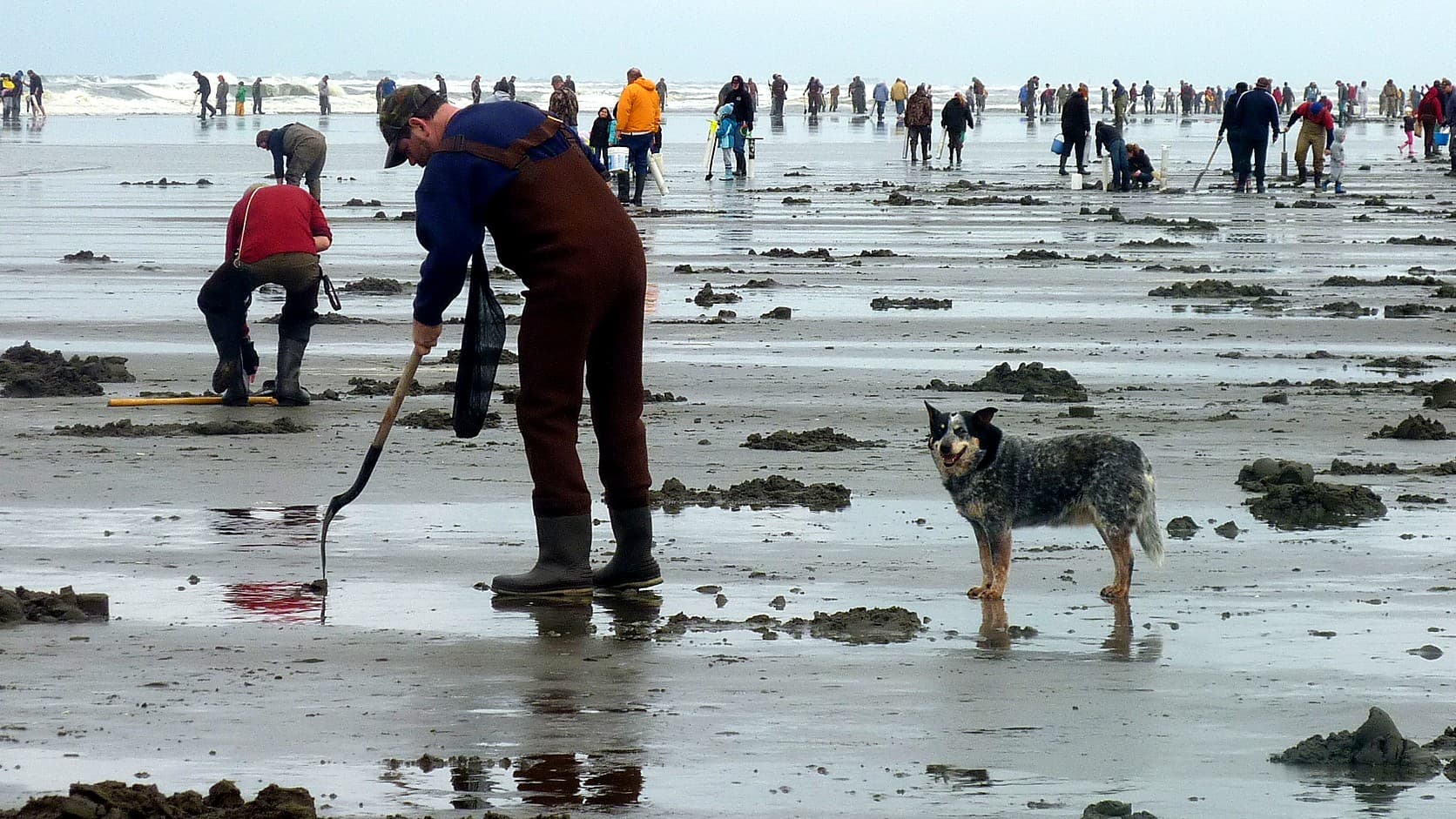
Razor clam digs in Washington were postponed Oct. 6, 2026. How WDFW sets dates, the toxin tests, the license, the 15-clam limit and the drive from Enumclaw.
As of October 19, 2026, Washington's razor clam season has not opened. The Washington Department of Fish and Wildlife (WDFW) said on October 6, 2026 that the digs planned to begin October 9 on four coastal beaches were "postponed until further notice" because of a marine toxin. New dates are announced only after the state Department of Health clears the clams, usually about a week or less before a dig, so check WDFW's razor clam page before making the drive from Enumclaw, about three hours to Ocean Shores and longer to Long Beach.
The odd part is that the clams were not the problem. WDFW's summer 2026 count found Long Beach and Twin Harbors still above average, and the agency had pencilled in 40 days of digging from October 9 to December 27. A domoic acid bloom working its way up the coast, with closure-level samples at Long Beach, Twin Harbors and Oregon's Clatsop Beach, put the whole plan on hold before the first tide.
When is the next razor clam dig in Washington?
Nobody can say yet, and that includes WDFW. Its razor clam seasons and beaches page carried the October 6, 2026 postponement notice as its latest word when it was read on the evening of October 19, 2026, with no new dates. The page says new digs will be announced once toxin tests show they are safe, and that shellfish staff keep digging test samples in the meantime.
The rule behind that answer will outlast the 2026-27 season. Every date WDFW publishes in advance is tentative. A dig becomes real only when the WDFW director has approved the dates and the Department of Health's analysis of recent clam samples says the clams are safe to eat. The Department of Health also runs a recorded Marine Biotoxin Hotline for closures at 1-800-562-5632, listed on its recreational shellfish page.
Why were the 2026-27 razor clam digs postponed?
The cause was domoic acid, a toxin that certain marine algae make and that razor clams absorb. WDFW's coastal shellfish biologist Bryce Blumenthal said in the notice that a bloom was "working its way up the coast" with elevated and closure-level samples at Long Beach, Twin Harbors and Clatsop Beach in northwestern Oregon, and that it was beginning to break through north of Grays Harbor, so WDFW paused all beaches "out of an abundance of caution."
WDFW's domoic acid page explains why nobody argues with the test. State health officials treat 20 parts per million or more in the clam meat as unsafe. Cooking and freezing do not destroy the toxin, there is no antidote, and the illness it causes, amnesic shellfish poisoning, begins with vomiting, nausea and cramps within 24 hours. In severe cases, WDFW says, neurological symptoms follow within 48 hours.
How are razor clam dig dates decided?
Dates come at the end of a chain that starts the summer before. WDFW counts the clams on each of five beaches, estimating how many are under three inches and how many are over. It then sets a Total Allowable Catch, the most it will let diggers take, for each beach. That is a harvest rate of 30 to 40 percent of the over-three-inch clams, higher when the population is strong. Kalaloch is the exception, fixed at 25.4 percent, according to WDFW.
On Copalis, Mocrocks and Kalaloch, the state shares the resource with coastal tribes. The Quinault Indian Nation has fishing rights covering all three, and the Hoh and Quileute tribes have rights at Kalaloch. WDFW says the catch is split 50 percent to the state fishery and 50 percent to tribal fisheries.
Only then does WDFW schedule digs. It tries to offer some every month from October to May, holds clams back for later months, and starts with the best low tides around weekends. It adds weekday tides when it can. Weather that keeps diggers home does not lose the clams; they stay in the catch for future digs.
The last gate is the toxin test. Before a beach can open, WDFW says, the Department of Health requires "two test samples seven to 10 days apart" with domoic acid under the guideline. That requirement is why a season that looked settled in September can stall in October.
Why are fall razor clam digs in the evening?
The tides decide it. WDFW says the best low tides on the Washington coast fall in the afternoon and evening from October to mid-March, and in the morning after mid-March. A fall dig is therefore a dusk or after-dark affair, and the agency's page says thousands of diggers "dig by lantern or flash light" in fall and winter.
Spring is the crowded season. The same page says "as many as a thousand people per mile" is not unusual on a nice spring weekend day, and WDFW sets seasons for both the daylight spring tides and the fall and winter tides, when diggers face the elements but are fewer. It also warns that fall beaches still hold a lot of soft sand. Drivers are asked to stay on the uppermost hard-packed sand near the high tide line, keep to the 25 mph limit and avoid parking on beach approaches.
Which razor clam beach is which?
WDFW divides the harvest into five management beaches, and the boundaries matter, because digging on a closed beach can bring a fine. From south to north:
Long Beach runs from the Columbia River north to the mouth of Willapa Bay. Twin Harbors runs from Willapa Bay north to the Grays Harbor entrance's south jetty. Copalis starts at the north jetty at the mouth of Grays Harbor and ends at the Copalis River. Mocrocks picks up there and ends at the Quinault Indian Reservation's south boundary. Kalaloch is the northernmost, between the South Beach campground and Olympic National Park's Beach Trail 3.
WDFW asks diggers on Copalis and Mocrocks especially to read the signs, because one beach can be open while its neighbor is not. Razor clams live on the stretch of beach exposed at low tide, from about a +3 foot tide level down to -2 feet, per WDFW.
What license do you need to dig razor clams, and what does it cost?
You need a razor clam license, or a shellfish and seaweed license or a combination license, which also covers razor clams. As of October 2026, WDFW's fishing license fee table, headed "Effective January 1, 2026," lists an annual razor clam license at $17.44 for residents aged 16 to 69 and $28.07 for non-residents. A three-day razor clam license is $11.79 in every column of the table except the one for 15-year-olds, which lists none. The table says its prices include all applicable fees.
The prices rose by legislation that took effect July 1, 2025, WDFW says, and they are set by the state, so confirm them on that page before buying. The license must be in your possession on the beach. It is a separate paper from the passes that park entrances ask for, which is the subject of the guide to which pass you need near Enumclaw. Harvest rules differ by land and by catch, as the mushroom permit guide shows for mushrooms.
How many razor clams can you keep?
The daily limit is 15, with no minimum size, under state rule WAC 220-330-010. WDFW's razor clam species page adds the part diggers forget: you must keep the first 15 you dig, whatever their size or condition, and razor clams may not be returned to the beach. A digger may not harvest any part of another person's limit, except with a Designated Harvesters' Card, so each person keeps count of their own.
WDFW's page on how to dig razor clams covers the practical side, from spotting a "clam show," the dimple or hole a clam leaves in the sand, to transporting clams dry and cool.
Has Washington ever lost a whole razor clam season?
Three times, according to WDFW's domoic acid page: the 1991-92, 1997-98 and 2002-03 seasons were cancelled outright after toxin outbreaks. The state has managed the coastal recreational fishery since 1929, and the toxin was first detected on the West Coast in 1991.
Recent seasons have mostly held. WDFW's notice lists the 2020-21 season as closed early, the 2022-23 season as closed in late fall and winter, and a short closure at Mocrocks at the start of 2023-24. The 2021-22, 2024-25 and 2025-26 seasons stayed open throughout.
How far is the coast from Enumclaw?
A routing service puts Ocean Shores, near the mouth of Grays Harbor, about 123 miles and three hours' drive from downtown Enumclaw. That figure is approximate and from a map service, not from WDFW, and it counts no beach traffic. Long Beach is farther, and WDFW's page does not give distances.
Because fall digs happen on evening tides, the drive home is in the dark, and from November 1 to March 31 the studded tire dates apply to the trip. The plateau's own fall hunting dates are on a separate calendar, laid out in the hunting season guide for hikers.
Before you go
Open the WDFW razor clam page on the day, and again before leaving the house, since an approved dig can still be cancelled if a test comes back high. Check the Department of Health hotline at 1-800-562-5632 for closures. Confirm the beach you plan to use against the boundaries above, bring a clam shovel or tube, a container and your license, and check the weather and surf forecast, which WDFW advises for fall and winter trips.
If the beaches stay closed through the fall, another winter day out is the winter eagle watch on the Skagit, covered in the bald eagle guide.
Story label: Original Story or Guide
Originally published: