

Feature
Fort Spokane history, and what is open in winter
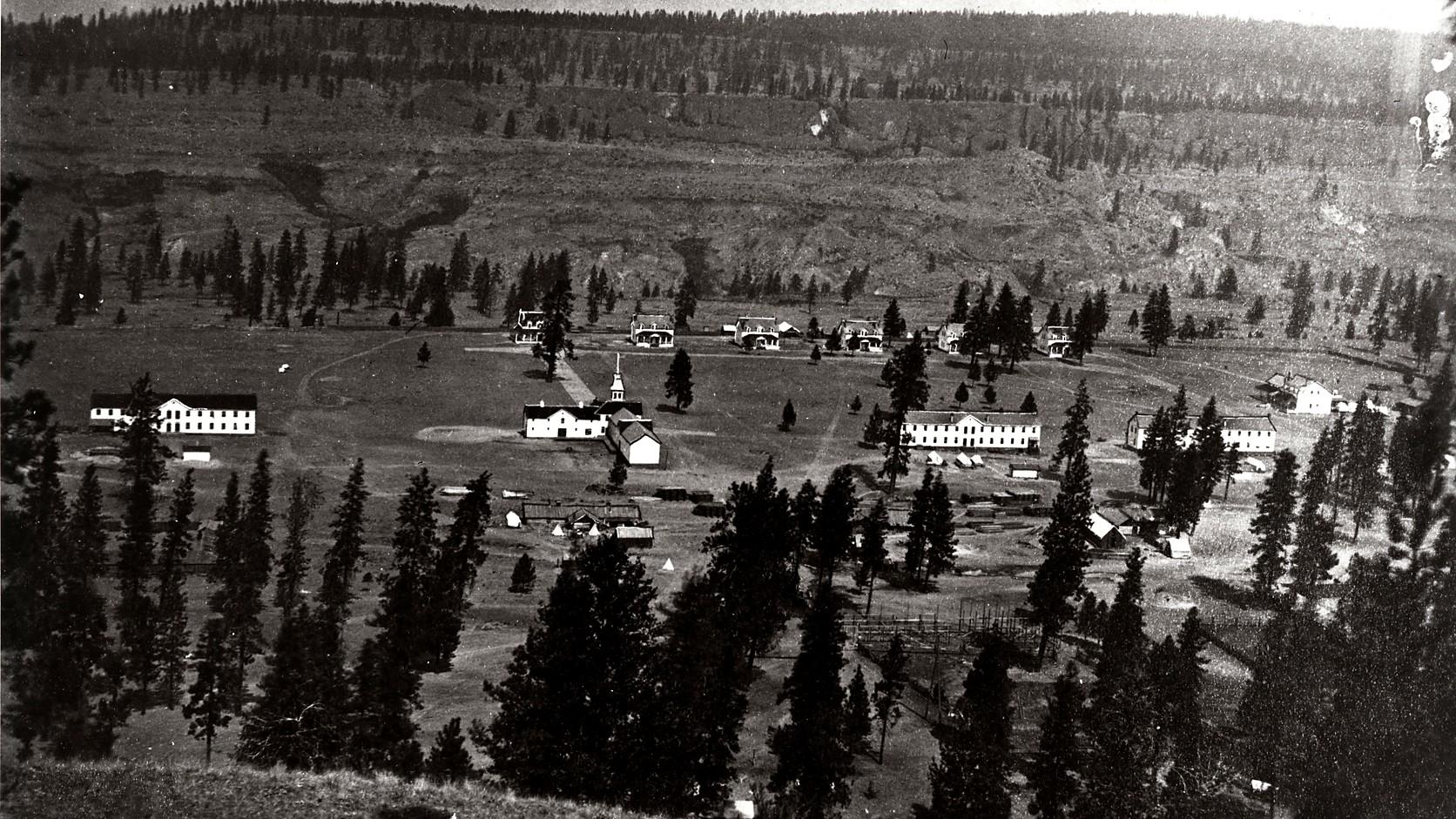
Fort Spokane was an Army post, then an Indian boarding school. As of November 2026 the grounds are open, free and the visitor center is closed.
Fort Spokane was a U.S. Army post above the meeting of the Spokane and Columbia rivers from 1880 to 1898, then an Indian boarding school and later a tuberculosis hospital, and its surviving buildings now belong to Lake Roosevelt National Recreation Area. As of November 2026 the National Park Service lists the grounds as open year round with no entrance fee, but the visitor center and museum in the old guardhouse are closed, so a winter visit means walking outdoors. It sits on the far side of the state from Enumclaw, so treat it as an overnight trip, not a day trip.
The history is the reason to go. HistoryLink calls Fort Spokane the last frontier post the Army built in the Northwest and says its troops "never fired a shot in battle." The building that held soldiers in its cells later held children, and the Park Service says Fort Spokane is the only former federal Indian boarding school it owns and manages.
Is Fort Spokane open in winter?
The grounds are, with limits. The Park Service's history page says they are open year round with accessible walking trails, and its hours page says the recreation area is open "24 hours per day, 365 days per year." The same agency says that while the guardhouse is under repair only portions of the parade grounds are open, parking is limited, and parking along the access road is not allowed.
The alerts box on the park's conditions page, read on November 2, 2026, carried two items that touch Fort Spokane. One, posted August 14, 2026, says the day-use area and boat launch are open and the campground has reopened with some sites closed for fire damage and hazard trees. The other, posted October 6, is a prescribed fire notice. It lists a large pile burn northeast of Fort Spokane, near Miles Road and Cougi Lane, and warns that smoke can linger for up to two weeks after a burn. Burns were planned for early October through December, so smoke on a late November visit is possible.
Can you go inside the visitor center and museum?
Not as of November 2026. In a normal year the Park Service opens the guardhouse as a visitor center and museum from Memorial Day to Labor Day, so a late-November visit would find it shut either way. In 2026 a repair project closed it from March 30, with a reopening expected in July, though the hours page lists the construction closure through September 30. The Park Service describes the work as critical historic preservation repairs to the porch and roof, the windows, outside brick and inside plaster, paid for from the Great American Outdoors Act Legacy Restoration Fund.
The hours page still shows the building closed every day through the off season, which it lists as September 3 to May 22, and it does not say whether the repairs finished. Its holiday table lists the center closed on Christmas Day, December 25, 2026, and on New Year's Day, January 1, 2027. The rule to remember is the season: exhibits, a ten-minute park film and ranger talks belong to summer, and the page to check is the visitor center page on nps.gov/laro. The park phone is 509-754-7800, and the Park Service asks callers to leave a message because rangers are often out in the field.
Why was Fort Spokane built?
To keep two tribes on their reservations and away from farmland that settlers wanted. That is HistoryLink's account, drawn from a booklet by David H. Chance published by the Pacific Northwest National Parks Association: the Colville Reservation lay across the Columbia and the Spokane Reservation across the Spokane, and the post stood between them and the growing towns of Spokane Falls and Cheney. Lt. Col. Henry Clay Merriam's troops first occupied the site in 1880 as Camp Spokane. In early 1882 President Chester A. Arthur set aside a military reservation and the post took the name Fort Spokane.
By the summer of 1884 workers had put up about 25 buildings, including six barracks, a schoolroom and a two-story administrative building with a glass-sided cupola. The post eventually grew to about 50. The Park Service's own page gives 1880 as the year the Army established the fort, and HistoryLink gives both 1880 and 1882, so the dates depend on whether you count the camp or the formal reservation. The lead photograph, an NPS archive print labelled as the fort under construction about 1884, comes from that building boom.
What happened to Fort Spokane after the soldiers left?
It became a boarding school for Native children. When the Spanish-American War began in 1898 the garrison was withdrawn, and the Park Service says the buildings and land went to the Office of Indian Affairs for a school that ran from 1900 to 1907. (The same Park Service page elsewhere says the military left in 1899.) A tuberculosis hospital used the buildings until 1929.
A Park Service article by the historian Nicole Martin describes the school, drawing on the 1988 National Register registration form and on conversations with Colville, Spokane and Nez Perce tribal members. It says the Colville Indian Agency closed the local reservation day schools and threatened to jail parents who would not send their children, some as young as five and as far as sixty miles away. Children were made to change their names, clothes and hair, and were forbidden their own language. Girls spent long hours indoors on domestic work such as laundry. The guardhouse served as the laundry room, and the article says cells built to punish soldiers were used to lock children in solitary confinement. Illness took many young lives, it adds, without giving a count.
Over time, the article says, parents on both reservations stopped sending their children, which forced the school to close. Tribal members quoted there say the boarding school era policy "tore the very fabric of tribal society." The Park Service now tells this story in an exhibition called Home and Homelands, and its Fort Spokane page says all exhibits and programs are free.
What is left of the fort today?
When the Park Service took over the site, only four buildings remained from the fort, by HistoryLink's count. Grand Coulee Dam backed the Columbia up into Lake Roosevelt and flooded the Spokane River canyon below the old fort, and the Park Service took over the site afterward. In 1946 the Secretary of the Interior named the Park Service manager of what was then the Coulee Dam National Recreation Area, a name changed to Lake Roosevelt National Recreation Area in 1997.
The guardhouse is the one most visitors come for. The Park Service gives two dates for it: its 2026 closure notice says the building dates to 1880, while its accessibility page says it was built in 1892. For the dam that made the lake, see this site's Grand Coulee Dam Visitor Center guide, and for the park's place among the state's federal sites, the guide to national parks in Washington.
Where does Fort Spokane fit among Washington's forts?
It is the late chapter of a long list. Closer to Enumclaw, the story of the coastal and Puget Sound defenses is told in this site's piece on the Puget Sound forts and its Discovery Park guide, which covers Fort Lawton. At the mouth of the Columbia, the Fort Columbia State Park guide covers another Army post. Those were built to face the sea. Fort Spokane faced the people who already lived inland, and the Park Service now tells the boarding school story in its Home and Homelands exhibition.
Can you camp at Fort Spokane in winter?
Yes, in one loop, by reservation. The Park Service says every vehicle campsite in the recreation area must be reserved through recreation.gov. Campgrounds can all be reserved from April 1 through November 30, and from December 1 through March 31 a single loop at each of Spring Canyon, Fort Spokane and Kettle Falls is available. As of November 2026 a Fort Spokane site costs $30 per night, half price with an eligible senior or access pass. The agency sets the fee and posts it on its fees page, so check that page and the recreation.gov listing for the night you want.
Do you need a pass, and can you bring a dog?
No entrance pass is needed, since the recreation area charges no entrance fee. A boat launch pass is required year round at Park Service launches: $10 for seven days or $60 for an annual pass good until December 31 of the year printed on it, as of the fees page updated March 18, 2026. Dogs are allowed on a leash no longer than six feet, except at developed swim beaches. Lake levels vary, and the Park Service says the lake is usually brought near full pool by the Bureau of Reclamation between mid-June and Labor Day, so check the launch elevation before a fall or winter boating trip.
Before you go
Read the Lake Roosevelt alerts and conditions page on the morning you leave, because the campground closures and fire notices change without a date. Then check the Fort Spokane visitor center page for whether the repaired guardhouse has reopened, and the Park Service's Fort Spokane history page for the exhibits. The address is 44150 District Office Lane N, Davenport. The Park Service's directions say to leave Interstate 90 at exit 277 near Spokane, take US-2 toward Davenport, turn right on State Route 25 and drive about 23 miles north.
The visitor center's restrooms were closed during the repairs, and the Park Service pointed visitors to facilities in the day-use area near the bridge. The Park Service's accessibility page says the flush-toilet comfort stations in its campgrounds and day-use areas open only in the summer season, while its pit and vault toilets stay open year round, so expect basic toilets in winter and ask by phone about the day-use area. Pack for cold and wind, and keep a leash handy.
Story label: Original Story or Guide
Originally published: