

Feature
Grand Coulee Dam Visitor Center hours and what is free
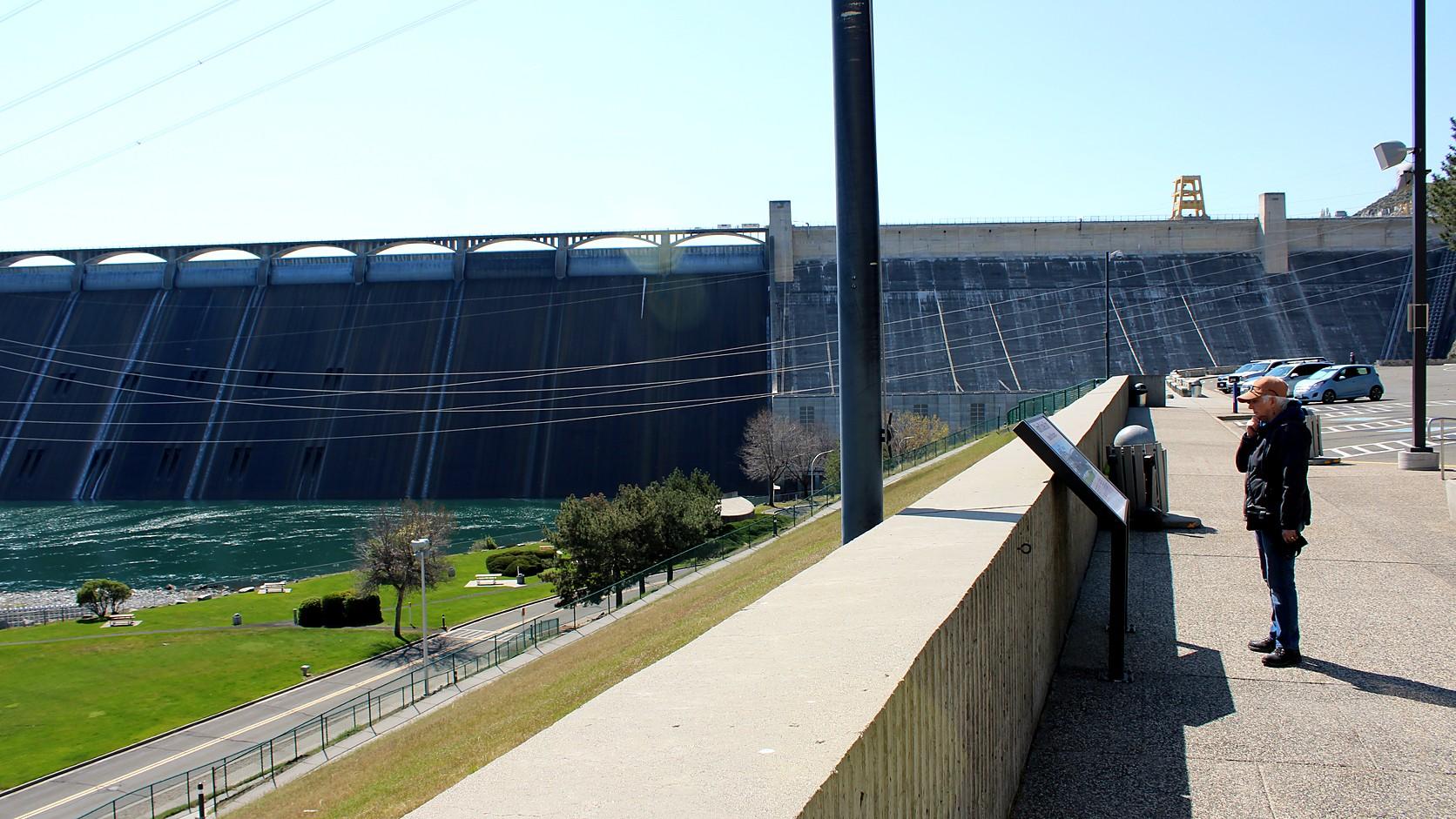
Grand Coulee Dam Visitor Center hours: as of November 2026, free and open daily 8:30 a.m. to 5 p.m., closed three holidays. Laser show, tours and the drive.
As of November 2026, the Bureau of Reclamation lists the Grand Coulee Dam Visitor Center as open every day from 8:30 a.m. to 5 p.m. Pacific Time, free to enter, and closed on Thanksgiving, Christmas and New Year's Day, plus any dates it posts for facility use. Its mailing address is Grand Coulee, Washington, and it sits beside the dam, about 232 miles from Enumclaw by road and a little under five hours one way by a routing service, so it is a trip with an early start or a night away, not an afternoon errand. The evening laser show and the free pump-plant tours are seasonal, and Reclamation's schedule has both off until May 2027.
The building has a better pedigree than most free attractions. Reclamation says the architect Marcel Breuer designed it "to resemble a generator rotor." And the thing a first-time visitor expects to do, walk across the top of the dam, is not on offer: Reclamation's own FAQ says "The top of Grand Coulee Dam is closed to public access, both vehicular and pedestrian." The center is the way in.
When is the Grand Coulee Dam Visitor Center open?
Every day, 8:30 a.m. to 5 p.m. Pacific Time, by Reclamation's visitor center page and its hours sheet dated March 11, 2026. The sheet names the closures as the federal holidays Thanksgiving, Christmas and New Year's Day. The rule behind the dates is the federal calendar: Thanksgiving is the fourth Thursday of November, which makes it Thursday, November 26, 2026, and Christmas and New Year's Day both fall on Fridays, December 25, 2026 and January 1, 2027.
The same pages carried a public notice that the center would be closed on Wednesday, October 14 and Wednesday, October 28, 2026 "for scheduled facility use," reopening the next day. Both dates come before this article's publication and the notice names no later one. Reclamation posts such notices at the top of the center's page, and the page was stamped as last updated October 14, 2026 when it was read on November 2. A closure announced after that would not be in this article, so the page, or the center's number, 509-633-9265, is the last check before a five-hour drive.
Is the Grand Coulee Dam Visitor Center free?
Admission is free, and Reclamation's page says so in plain words. Its pages mention no pass and say nothing about parking, so treat parking as a question for the phone call. The laser show needs no ticket by the hours sheet, and the plant tours charge nothing, but both are seasonal.
Is the laser light show on in winter?
No. The show, called "One River, Many Voices," runs only from late spring through September. Reclamation's laser page gives the 2026 season as nightly from Friday, May 22 through September 30, with a 10 p.m. Pacific start through the end of July, 9:30 p.m. from August 1 and 8:30 p.m. in September, and lasting about 30 minutes. It says the show then ends for the year and resumes in May 2027, that start times can change, and also warns that "in rare circumstances beyond our control" the show can be canceled without notice.
The 2027 start date is not posted. Reclamation's FAQ describes a start on the Saturday of Memorial Day weekend, while its 2026 pages give Friday, May 22, a day earlier than that rule would. Check the laser page in spring for the date.
Reclamation's visitor center page says an evening laser show was added in 1989, the original equipment was replaced in 2013, and "One River, Many Voices" premiered in 2014.
Can you tour Grand Coulee Dam in winter?
Not on Reclamation's public schedule. The tours are of the John W. Keys III Pump-Generating Plant, the plant that lifts water from the reservoir toward the irrigation canals, and they were scheduled for Fridays, Saturdays and Sundays from May 22 through October 31, 2026, at 9, 10 and 11 a.m. and 1, 2 and 3 p.m. Pacific Time. They are free, first come and first served, about an hour long, and a bus carries visitors from the tour parking lot to the plant and, at the end, over the top of the dam. That bus ride is the only way the public pages describe getting on top of it.
Reclamation says availability is limited, everyone passes through a metal detector, and bags, backpacks and packages are not allowed. The hours sheet says the tours resume in May 2027. For a winter visit, that leaves the visitor center and the views of the dam's face from outside it.
How far is Grand Coulee Dam from Enumclaw?
About 232 miles and 4.9 hours from central Enumclaw by the OSRM routing service on OpenStreetMap data, with no stops and no traffic, so both numbers are approximate. The router's route runs State Route 169 and State Route 18 to Interstate 90, about 125 miles of it on the interstate over Snoqualmie Pass, then State Routes 283, 28 and 17, US 2 and State Route 155. In winter the pass is the variable; the Enumclaw to Yakima winter guide covers the Snoqualmie chain-sign rules and where to check conditions before leaving.
The stop that shares a road with this one is Dry Falls, about 34 miles and 50 minutes short of the dam by the same router. Reclamation's FAQ explains why the two belong together: an Ice Age ice sheet once blocked the Columbia where the dam stands, pushing the river into the coulee, and later floods carved the canyon deeper. The Dry Falls guide has the cliff, and it also records that State Parks says the Dry Falls Visitor Center is closed for renovation through the end of 2026.
What is inside, and are dogs allowed?
Reclamation describes the center as fully accessible, with hands-on exhibits and an auditorium, and says service animals may come in. The page says nothing about other pets, so ask before bringing one. The exhibits, installed in 2006, cover irrigation, flood control, power and the dam's effects on people, including Native Americans and early settlers. Reclamation's exhibit page lists titles such as "We Built this Dam: Oral History" and "Our Stories: The Tribal Viewpoint."
One caution sits on that exhibit page. It says some hands-on exhibits are out of use for now, citing support of the Centers for Disease Control and Prevention, with no date, while the visitor center page lists the hands-on exhibits without qualification. The two have not been reconciled by Reclamation in anything read for this article. If the hands-on part is the reason for the drive, ask.
How does it compare with the dams near Enumclaw?
The dam nearest Enumclaw makes the useful contrast. Mud Mountain Dam is the Army Corps of Engineers' 432-foot rock and earth dam on the White River, finished in 1948, with a reservoir that is normally empty and fills only to hold back a flood. Grand Coulee is concrete, about 550 feet high above bedrock by Reclamation's fact sheet and 401 feet above the original streambed, and holds a lake 151 miles long behind it. The heights are measured from different bases, so they are not a clean comparison.
The plateau's own power story is the White River diversion, whose turbines stopped on January 15, 2004. Grand Coulee generates more than 21 billion kilowatt-hours a year, by Reclamation's fact sheet, which calls it the largest hydropower producer in the United States. Reclamation's FAQ says it also irrigates approximately 670,000 acres, a figure HistoryLink gives as of 2021, though Reclamation's older history page says approximately 600,000.
What is the history behind the dam?
Reclamation dates the main dam's construction to 1933 through 1941, and a third powerhouse to 1967 through 1974. HistoryLink, the Washington state history encyclopedia, says it was hailed as the "Eighth Wonder of the World" when completed in 1941. Its essay on the dam also records that in May 1941 the Bonneville Power Administration hired the folksinger Woody Guthrie, who wrote 26 songs in 30 days, for a total payment of $266.66. HistoryLink also quotes Guthrie calling the dam "the biggest thing yet built by human hands." One of those songs, "Roll On Columbia, Roll On," became the state folk song.
The cost is in the same sources. Reclamation says 77 men were killed building the dam between 1933 and 1941, and four more during the later powerhouse work. HistoryLink says the reservoir forced about 400 farms and 10 small communities to move and counts about 2,000 people from the Colville Confederated Tribes and about 250 from the Spokane tribe among those displaced, and that the dam, built without a way for fish to pass, ended the wild salmon runs on the upper Columbia. Reclamation counts 11 towns affected, nine of them relocated, and says the number of people moved is unknown. It says the dam built, and continues to fund, three hatcheries at Leavenworth, Winthrop and Entiat to offset the lost fish.
Before you go
Read the center's page the morning you leave, and call 509-633-9265 if the hours, the hands-on exhibits or parking matter to the trip. The hours here are as Reclamation's pages stated them on November 2, 2026. The Enumclaw to Yakima winter guide shows where to check Snoqualmie Pass before leaving. If the plan includes state parks on the way, remember that the which pass guide covers parks near Enumclaw only, so look up the rules for any park in Grant County itself.
Plan to arrive well before 5 p.m., because the posted hours end then and the drive back is the same five hours. The laser show and the plant tours are the seasonal parts: Reclamation's schedule has both returning in May 2027, and it posts each season's dates on the center's pages in spring.
Story label: Original Story or Guide
Originally published: