

Feature
Snoqualmie Pass ski area history and the 1938 Ski Bowl
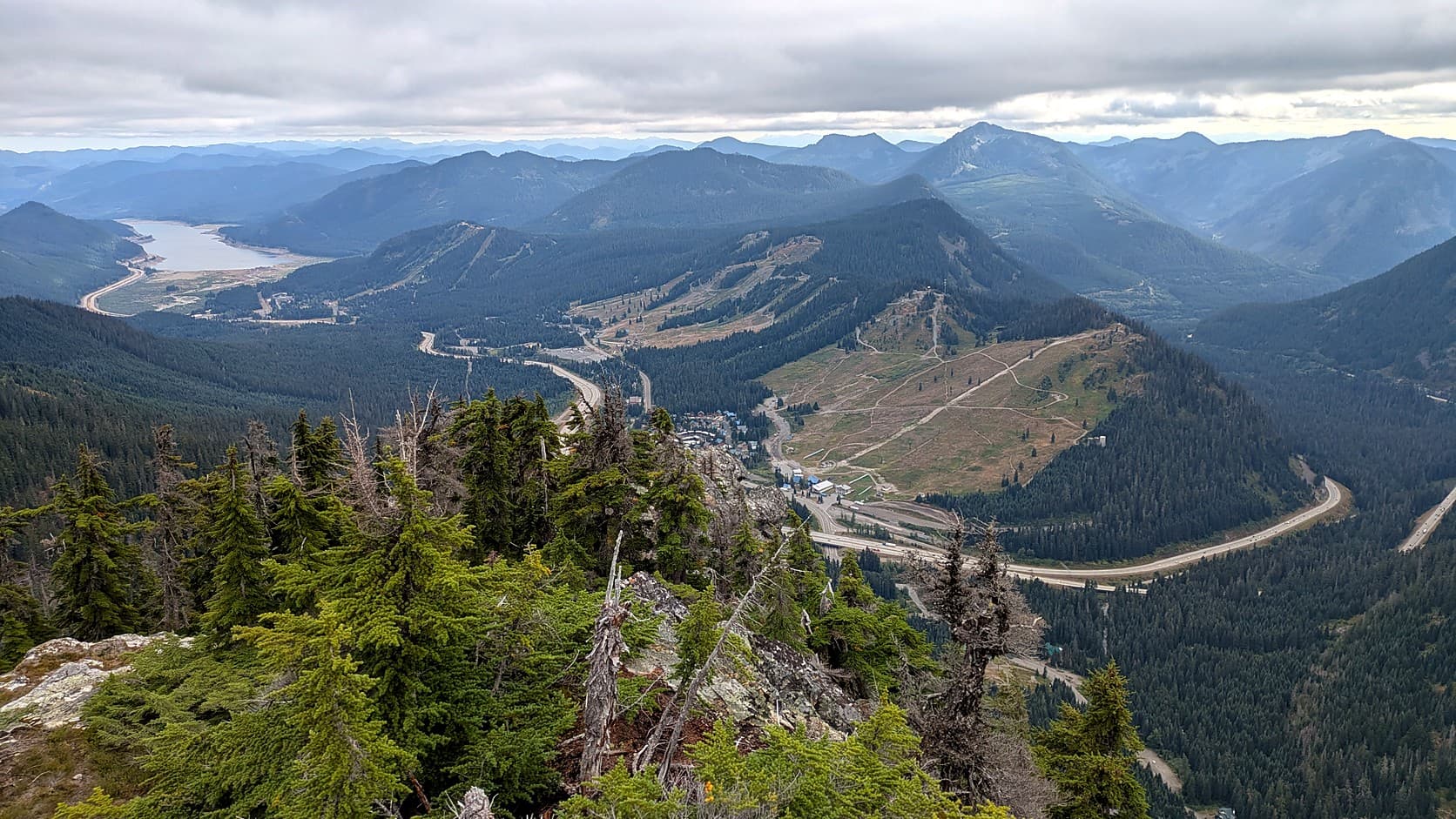
Snoqualmie Pass ski area history: the Milwaukee Road's Ski Bowl opened at Hyak in 1938 with night ski trains and closed in 1950. How The Summit followed.
Skiing at Snoqualmie Pass, the pass about 53 to 56 road miles from Enumclaw on the route this site's guide to ski areas near Enumclaw measured, began in club lodges and jumping hills. The Milwaukee Road railroad opened the Snoqualmie Ski Bowl at Hyak on January 8, 1938, according to HistoryLink Essay 10060, written by John W. and Stephen J. Lundin. It was renamed the Milwaukee Ski Bowl in 1946 and closed for good after the 1950 season. A new area opened at Hyak in 1959, in or near the old Ski Bowl's location, and the four areas of today's Summit at Snoqualmie were put under one name in 1997.
The strange part is how people got there. The railroad sold the trip as a package and ran night trains from Tacoma and Seattle with a car for dancing, and the Lundins write that it was determined to be the first night ski train in America. A Seattle student in 1938 could ride a ski special to a lit slope instead of making the drive up an icy highway. Twelve years later the railroad walked away from skiing altogether.
When did skiing start at Snoqualmie Pass?
It started in the first decades of the 1900s, centered on lodges built by private clubs, HistoryLink says. In 1914 The Mountaineers had a lodge on the pass, a little west of the top. Members of the Seattle Ski Club, founded by Norwegian jumpers, built a jump at Beaver Lake Hill in 1929, and in 1934 the Seattle Park Board opened a city-run ski area called Municipal Park at Snoqualmie Summit, on a hill a Civilian Conservation Corps crew had cleared the year before under a Forest Service permit.
There were no tows then. Skiers climbed with skins, strips of material fastened to the bottom of the skis so they grip going uphill, and then skied down. The Lundin essay adds that a drive up in icy conditions was always an adventure.
When did the Snoqualmie Ski Bowl open?
The Ski Bowl opened on January 8, 1938, with 1,200 skiers, according to HistoryLink Essay 10060. The Lundins write that it "revolutionized skiing in the Pacific Northwest." The Milwaukee Road, formally the Chicago, Milwaukee, St. Paul, and Pacific Railroad, built it at Hyak, at the east end of its tunnel under the pass. It had 200 acres, a two-story lodge with a 94-foot lunch counter, and five runs named for the railroad's trains: the Olympian, Hiawatha, Pioneer, Arrow and Chippewa.
Sources disagree about the year. A separate HistoryLink essay by Heather MacIntosh, Essay 1685, says the railway established the Ski Bowl in the winter of 1937-1938, and Wikipedia says it operated from 1937. The Lundin essay gives a way to read both: news of the Ski Bowl was in Seattle papers in the fall of 1937, and the opening day it gives is January 8, 1938. Opening day was messy by the Lundins' account. The Lundins write that skiers' enthusiasm derailed the lift's cable twice, though the lift still gave 1,584 rides.
Was it really the first ski lift in the Northwest?
The Lundins say so, in a HistoryLink People's History that the site notes it has not verified, but it depends on what counts as a lift. The Lundin essay calls the Ski Bowl's 1,800-foot cable a "Sun Valley type lift," named for the Idaho resort, later called a Poma lift, and says it was the region's first. John Lundin's 2016 history for the Mountains to Sound Greenway puts a different first in the same year: a mechanized rope tow, installed in 1938 by a private company, Ski Lifts, Inc., at Seattle's Municipal Ski Park, at Mount Baker and at Mount Rainier. Wikipedia's article on The Summit at Snoqualmie dates rope tows at the Municipal Park to 1937.
Those accounts can all be right at once, since a rope tow and an overhead cable are different machines; HistoryLink and Lundin both date their machines to 1938, and only Wikipedia's rope-tow date of 1937 falls earlier. This article does not rule on "first." Whether the first tows came in 1937 or 1938 depends on which account is followed.
How did the ski trains work?
The railroad ran trains from Seattle on winter weekends, and sold them with the line "Let the Engineer do the Driving," HistoryLink reports. The trains had a baggage car for skis and a recreation car for dancing. Parents and school officials who had worried about teenagers traveling to the mountains came around, the Lundins write, and high school ski clubs formed to use the service. The Seattle Times sponsored free lessons, and Ken Syverson, an assistant to the Austrian instructor Otto Lang, taught them.
The night train left Tacoma at 4:45 p.m. and Seattle at 6:00, reached the Bowl at 8:00 and started back at 10:00, reaching Seattle at 1:00 a.m. The Lundins write that it was determined, after "profound research," to be the first night ski train in America. The first season ended March 17, 1938, after about 11,000 skiers over 11 weekends. By 1941 the Lundins list the adult fare at $1.25 and the student fare at $1.
What was the ski jump?
The jump is why the Ski Bowl turns up in national ski records. For the 1940 National Four-Way Championships, the railroad spent $15,000 on a Class A jump, and Alf Engen of Sun Valley took the overall title on form points, according to the Lundins. On March 3, 1941, Torger Tokle of New York jumped 288 feet in front of about 5,500 people, a North American record by the essay's count. In March 1947 the Ski Bowl hosted tryouts for the 1948 Olympic jumping team, and in 1948 the National Jumping Championships.
Tokle died in Italy in 1945, on duty with an Army ski patrol, the essay says. The 1948 championship trophy carried his name.
Why did the Milwaukee Ski Bowl close?
The war shut it first, then a fire. Wartime orders from the Office of Defense Transportation barred sports special trains, and in December 1942 the Milwaukee Road shut the Ski Bowl, HistoryLink Essay 10060 says. It reopened in 1946 under the new name Milwaukee Ski Bowl, chosen to avoid confusion with the Snoqualmie Summit ski area. Essay 1685 puts the reopening in the winter of 1946-1947, and Lundin's 2016 history in 1947.
On December 2, 1949, the lodge burned to the ground; only the fireplace stood. The Lundin essay says the railroad ran a 1950 season from a temporary building and train cars on a new spur, then closed the Ski Bowl for good, deciding not to rebuild and "to get out of the ski resort business." The other two accounts read as though the fire ended it. Essay 1685 adds the railroad's reasons: the rising cost of running the trains, and growing competition from ski areas along the newly completed highway through the pass. This site's guide to the Snoqualmie Tunnel covers the 2.3-mile Milwaukee Road tunnel the ski trains came through, and its east end at Hyak is where the Ski Bowl stood.
How did the Ski Bowl become The Summit at Snoqualmie?
By slow accretion. HistoryLink says the Hyak Ski Area opened in the Ski Bowl's location in 1959 and never matched its excitement. Wikipedia says that area continues as Summit East, and its infobox lists the resort's base elevation as 2,610 feet at Summit East. Meanwhile Ski Acres opened one mile east of Snoqualmie Summit in 1948 with the first chairlift on the pass, and Alpental opened in 1967 as the fourth area, per Lundin's 2016 history.
That history says Ski Lifts, Inc., owned by the Moffett family, bought Ski Acres in 1980, Alpental in 1983 and Hyak in 1992, and so owned all four. Lundin dates the Booth Creek Holdings purchase of the four to 1997, though Wikipedia gives 1998 and slightly different years for the earlier purchases, and they were renamed as the Summit's West, Central and East areas plus Alpental. In 2007 Boyne Resorts became manager and lease-holder. The resort's own history page returned a not-found error when opened for this article, so none of this rests on it.
Where do Enumclaw's own ski and railroad stories fit?
The plateau's own mountain has a separate origin, told in this site's Crystal Mountain ski area history. The Cascade railroads also have a harder winter story: the Wellington avalanche of 1910, which swept two stalled Great Northern trains off the tracks west of Stevens Pass. The Ski Bowl is the same railroads and the same mountains in a gentler chapter.
Before you go from Enumclaw
The Summit's hours page says "Opening day for the winter season is to be determined," and shows an update date of September 27, 2026, as of October 2026. It adds that hours are subject to change without notice, so check the resort's hours page before driving, since a season opening depends on snow. Its home page was selling 26/27 season passes and lesson programs, which is not the same as a date.
The Hyak exit, number 54, is about 56 road miles from Enumclaw City Hall by the routing estimate in this site's tunnel guide, which ignores traffic and snow. For the drive, WSDOT posts conditions on its mountain pass reports. The old Ski Bowl neighborhood has a winter permit of its own: State Parks says, per this site's tunnel guide, that the Hyak Trailhead becomes a Sno-Park from December through March, and the Sno-Park permit guide explains what that needs. The tunnel itself is scheduled to close November 1, 2026.
Story label: Original Story or Guide
Originally published: