

Feature
Washington Soldiers Home in Orting, open since 1891
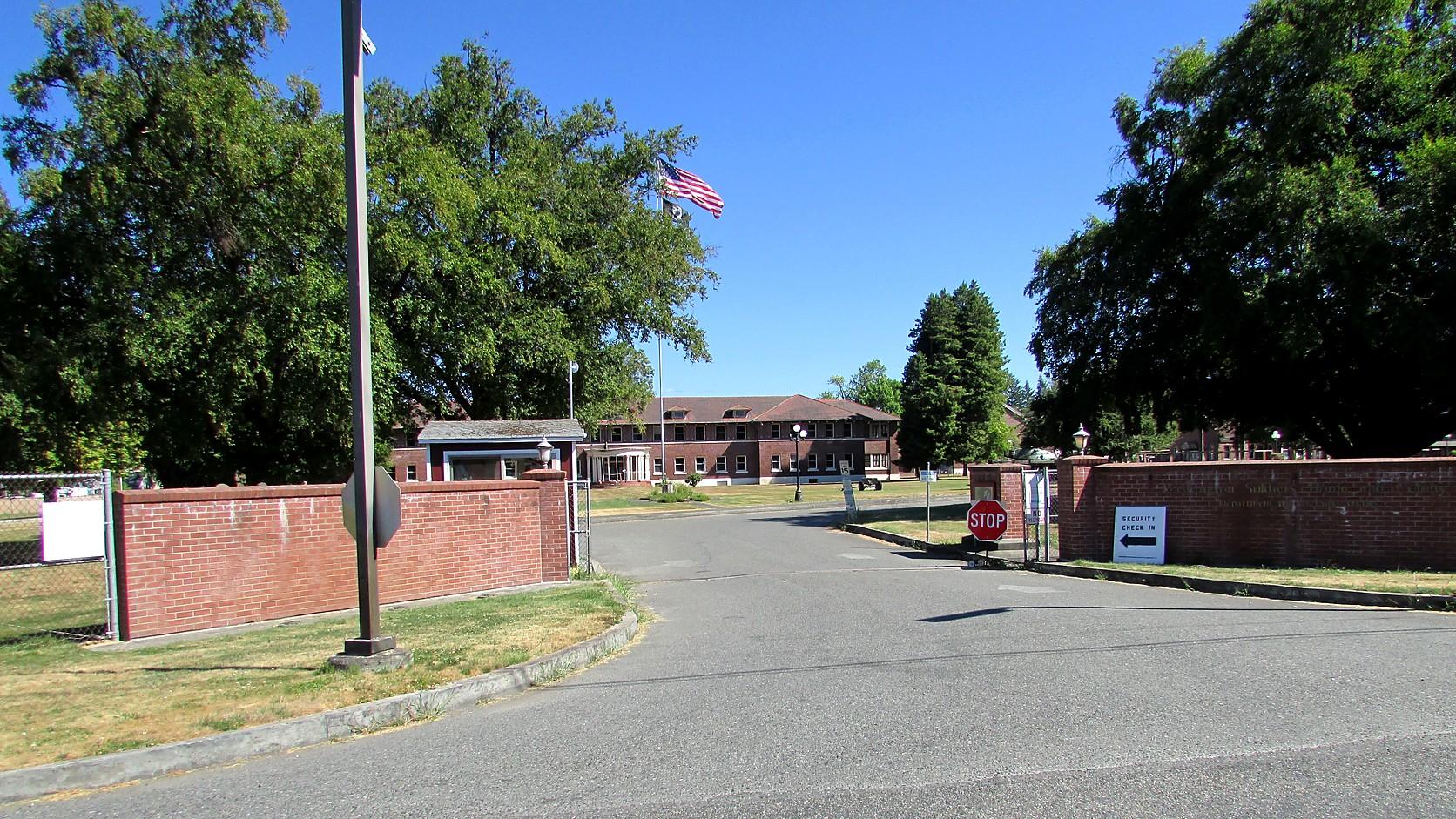
The Washington Soldiers Home near Orting dates to 1891. Its founding, the constitution, the moved cemetery and who can live there, per state records.
The Washington Soldiers Home is one of the state's four veterans homes, at 1301 Orting Kapowsin Highway, in the Puyallup Valley near Orting. As of November 2026, the Washington State Department of Veterans Affairs (WDVA) says it was established in 1891 as "the first of four homes built for Washington state veterans," serves 128 residents on 174 acres, and provides nursing home level care only. It is a working nursing home, not a museum or a park.
Ask when it opened and the state's own papers disagree. A law creating it was signed on March 26, 1890. A legislative report says the Legislature dedicated it in May 1891. The home's centennial history puts the dedication ceremony on June 25, 1891, and says the first veteran did not move in until July 4. The home was also written into the state constitution before it existed.
Why does Washington have a Soldiers Home at all?
Because the men who wrote the state constitution put it there. Article X, Section 3 says the legislature "shall provide by law for the maintenance of a soldiers' home for honorably discharged Union soldiers, sailors, marines and members of the state militia disabled while in the line of duty and who are bona fide citizens of the state." Washington became a state on November 11, 1889, a date covered in the statehood guide, so the state's founding day and Veterans Day fall on the same date.
The centennial history, compiled by the home and edited in 1991, explains the need. After the Civil War, it says, many Union veterans went west on promises of railroad and timber work and found the good land taken. The disabled felt it most. Veterans' organizations and legislators, many of them veterans themselves, wanted a place for them.
When did the Soldiers Home open?
It depends on which event you count, and the sources are not shy about their own dates. The centennial history says Governor Elisha Ferry signed the bill on March 26, 1890, and that it took effect on June 24, 1890, when five trustees held their first meeting in Seattle. A 2010 Senate bill report says the home was "dedicated by the Legislature in May 1891." The WDVA's 2018 cemetery write-up says the home has existed since June 1891, and the history puts the dedication ceremony on June 25, when the Grand Army of the Republic, Department of Washington, held it on the porch of the first barracks, with a special train from Tacoma.
The history adds that residents were not enrolled for several weeks, because more buildings were still going up, and it names July 4, 1891 as the day the first veteran entered. The WDVA page and the Washington State Archives both say simply 1891, which is the safe answer. The first veteran left in May 1892 at his own request, saying he could support himself.
How was Orting chosen?
By water, according to the history. The trustees advertised in seven newspapers for sites of at least 40 acres at a price of no more than $10,000. Puyallup, with Ezra Meeker presenting its offer for the citizens (more on him in our Meeker Mansion guide), proposed 40 acres, later raised to 60. Goldendale and Vashon Island also made offers. Orting's backers offered a 25 acre donation and the chance to buy more.
The final vote came on January 18, 1891. By the history's account, one trustee who had favored Whidbey Island changed his vote because he believed Orting's water was better and more plentiful. The first contract was for a main building and ten cottages for $10,000, to be finished within 90 days of staking out the site. Acreage has been reported three ways: 185 acres in the centennial history's account of 1891, 188 acres in a 2010 Senate bill report, and 174 acres on the WDVA page as of November 2026.
Who lived there in the early years?
Civil War veterans, mostly, and they kept arriving. The history counts 37 residents in 1892, 99 when a federal inspector visited in 1895, and 110 by 1897. In 1898 the state added a Colony, which let veterans with families live in the town of Orting and still receive the home's medical care, with the federal government paying the state $100 a year for each home resident, as the history tells it.
Crowding followed. The history says a committee appointed by the governor found 385 men in a home built for less than half that number, and recommended a second home. The Washington Veterans Home at Port Orchard opened on February 22, 1910, and registered 127 residents on its first day. The WDVA lists four state veterans homes: Orting, Port Orchard, Spokane and Walla Walla.
The residents changed with the wars. By the end of World War II, the history says, the last Civil War soldier at the home had died. It records the first woman veteran admitted in 1969. The state's Department of Veterans Affairs took over from the Department of Social and Health Services on June 24, 1976.
What happened to the Soldiers Home Cemetery?
It moved to higher ground. The WDVA's cemetery write-up, which cites local historians, says the first burial ground sat in the floodplain of the Puyallup River, which carries runoff from Mount Rainier. The state bought hillside land in 1907 and relocated the burials. The centennial history is blunter about the old site: graves there "had to be 'bailed out as dug,'" and it counts about 200 veterans buried on the low ground.
A monument went up in the new cemetery in 1909. The write-up quotes its inscription: "Erected by the Women's Relief Corps of the Department of Alaska, June 23, 1909." The same write-up lists 2,265 people interred on 8 acres, among them four Civil War Medal of Honor recipients who had lived at the home. One of them, according to HistoryLink and the write-up, was at the Unknown Soldier's funeral on November 11, 1921, and the write-up, citing the Military Times Hall of Valor, says that when he died in 1938 he was the last surviving Civil War Medal of Honor recipient. HistoryLink and the write-up name them; this page names no one who lived at the home.
The cemetery's size has changed in the record too. The history says more than 1,500 veterans were buried there by 1950, on four acres. Whether the cemetery is open to the public is not stated on the WDVA's home page or in its write-up, and this page does not guess.
Who can live at the Soldiers Home?
The WDVA page lists the rules, and they are wider than the 1889 constitution. An applicant must need nursing home level care, and must have served in the U.S. armed forces, any branch, including the National Guard. The page also requires an honorable discharge or existing eligibility for federal VA monetary benefits, with a stated exception for certain separations, and Washington residency. The page lists the spouse of a resident and the widow of an eligible veteran as eligible, and so do Gold Star Parents who lost a child in service. The WDVA's FAQ says admissions are made when space is available, and that there is not always a waiting list. The page lists an admissions line at (877) 838-7787 and a main number at (360) 893-4515.
The home also keeps a paper trail. The State Archives holds "Orting Soldiers Home, Member Files, 1891-1987," 9,183 records of veterans or spouses who lived there, and says they are open for research. They are the place to start for anyone tracing a relative who lived at the home between 1891 and 1987.
Where does Enumclaw fit in?
Mostly through the ground the home stands on. The Puyallup Valley around Orting lies downstream of Mount Rainier, the same mountain whose old mudflows run under Enumclaw; the lahar zone guide explains where the federal hazard maps put the plateau and where the lahar zone begins. The WDVA's write-up blames river flooding for the 1907 move, not a lahar, so the shared thread is the mountain, not a shared hazard.
There is one documented tie to the plateau's neighbor. The centennial history says residents took part in a Foster Grandparent program, visiting children at the nearby Rainier State School in Buckley; the Rainier School history tells that institution's own story. The WDVA's history, cemetery write-up and home page do not mention Enumclaw, and a search for an Enumclaw veteran, post or burial tied to the home turned up nothing, so this page claims no more. Drive time was not checked with a mapping service. For a federal cemetery within the same region, see the Tahoma National Cemetery guide.
Before you go
The WDVA page, read on November 2, 2026, gives a street address and phone numbers but no visiting hours for the home, and no access rules for the cemetery. The home is a medical facility with residents in its care, and the page lists a main number, (360) 893-4515, for questions. Check the WDVA's Washington Soldiers Home page for changes. Its COVID-19 updates page carries letters to families, and the most recent Soldiers Home item there as of that date was an end-of-outbreak notice dated July 24, 2025.
Phone numbers, eligibility rules and resident counts are set by the WDVA and can change, so the page, not this article, is the authority.
Story label: Original Story or Guide
Originally published: