

Feature
Wild turkeys in Washington, where they live and the rules
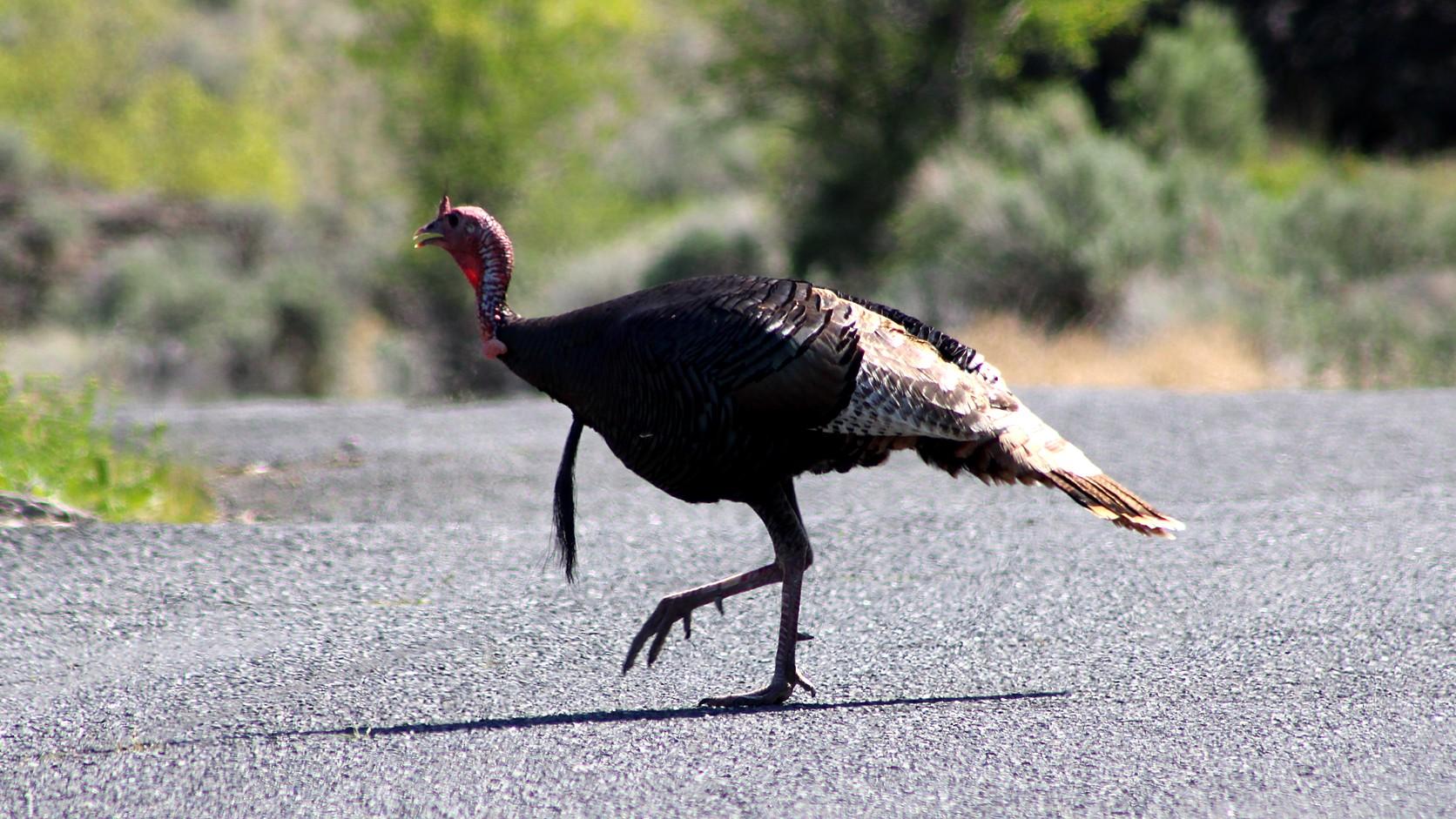
Where wild turkeys live in Washington by county, whether they are native, what the rules say near Enumclaw and what to do in your yard. As of Nov 2026.
Wild turkeys are found in most of eastern Washington and along the Cascades' eastern foothills, with small populations scattered thinly through the west, according to the Washington Department of Fish and Wildlife (WDFW). None of them are native to the state. Turkeys are a game bird, so, as of November 2026, hunting one takes a small game license and a turkey transport tag, and the fall season is closed in the 400-series and 600-series game management units, which include the units on either side of Enumclaw.
The Thanksgiving bird of Thursday, November 26, 2026 has a short history as a wild Washingtonian. WDFW's 2005 management plan says the state released its first wild-trapped turkeys in 1960, birds from Arizona and New Mexico, with Wyoming birds following in 1961, and held its first turkey hunting season in the fall of 1965, a day and a half long and confined to the northeast corner. By 2004 the state counted more than 15,000 turkey hunters, up from 689 in 1984. The most recent releases came in 2003.
Are wild turkeys native to Washington?
No. The species page says the bird is native to parts of North America, but people began bringing it into Washington in the early twentieth century. People tried as early as 1913, and those efforts did not produce sustainable breeding populations until the 1960s.
The 2005 plan takes up the obvious worry about a non-native bird crowding out native wildlife. It reports that studies elsewhere in the United States, in native and introduced range alike, had not shown population-level harm to plants, animals or other birds. That is a 2005 summary, a 2005 finding, so read it as the state's position then and not as a current survey.
Where do wild turkeys live in Washington?
East of the Cascades, in the southwest, and sparsely elsewhere, and WDFW sorts the birds into three subspecies by county. Merriam's turkeys occupy parts of the northeast, with Ferry, Stevens and Pend Oreille counties on the list along with Spokane, and a second group of counties running from Okanogan and Chelan south through Kittitas and Yakima to Klickitat and Skamania. Rio Grande turkeys are listed for Whitman, Walla Walla, Garfield, Asotin, Columbia and Lincoln counties, concentrated in the southeast corner, and WDFW says some have hybridized with Merriam's birds in the northeast. The Eastern subspecies, the only one west of the Cascades, is listed for Cowlitz, Lewis, Thurston and Wahkiakum counties.
WDFW calls ideal habitat a mix of trees, shrubs and grass, and adds that "turkeys also thrive in urban areas."
How can you tell the three kinds apart?
By the tips of the tail feathers, WDFW says: white on a Merriam's, tan on a Rio Grande, chestnut brown on an Eastern. Size is easier to judge. Adult males weigh more than 20 pounds, which WDFW says makes turkeys the largest game bird in North America, and its physical description opens with the phrase "Reminiscent of plump, feathered dinosaurs."
A beard, a tuft of modified feathers, marks age in males: a longer one means an older bird in good condition. WDFW adds that 10 to 20 percent of females grow one, usually smaller, so a beard alone does not settle the question.
Are there wild turkeys near Enumclaw?
Possibly a few, but nothing the desk opened documents a flock on the plateau. Enumclaw is in King County, which does not appear on WDFW's species page at all. The page does say Eastern turkeys can occasionally be found in Pierce County, and that Eastern is the only subspecies present in western Washington, so any bird here would by WDFW's account be an Eastern.
The 2005 plan explains part of the gap. WDFW chose not to propose a winter count in western Washington because Eastern turkeys do not typically gather in large flocks and dense forest makes adequate counts hard. A thin record is not proof of an empty woodlot, and a few sightings are not a population. For wildlife with a long local record, the field guide to Enumclaw's elk herd is the better start.
Can you hunt wild turkeys in Washington?
Yes, in two seasons, with the right license and tag. WDFW lists turkeys as game animals, and the season dates are written into WAC 220-416-010, the state's small game rule. A hunter needs a small game license, sold alone or with a big game license, plus a turkey transport tag, both through WDFW's licensing site.
Spring has a youth week, April 1 to 7, and a general season from April 15 to May 31, the same in the rule's columns for 2026 and 2027; the legal bird in spring is a male or a turkey with a visible beard. The fall general season runs September 1 to December 31 in 2026, but only in the listed units, and the limit is one to four birds depending on the unit. It includes Thanksgiving Day wherever the unit is open.
The method rules are strict. Dogs, bait and live birds as decoys are unlawful, and the Game Bird pamphlet adds electronic calls and electronic decoys. Rifles are barred in both seasons; legal weapons include bows, crossbows and shotguns with number 4 or smaller shot. Hunting hours run from half an hour before sunrise to sunset, a carcass must keep its fully feathered head and beard attached until it is processed or stored for eating, and every tag bought requires a hunting activity report.
Is turkey hunting open near Enumclaw?
Not in fall, and in spring only where hunting is otherwise allowed. The 2026 to 2027 Game Bird pamphlet says "The following GMUs are closed to fall turkey hunting" and then lists units 157, 328 through 381, 407 through 490, 501 through 564 and 601 through 699. A GMU is a game management unit, one of WDFW's numbered hunting districts.
Two of those units meet at Enumclaw. The boundary descriptions in WAC 220-410-040 and WAC 220-410-060 run unit 454, Issaquah, and unit 652, Puyallup, along State Routes 410 and 164 at the town. Unit 653, White River, takes over to the east, and unit 485 is the controlled-access Green River watershed, the gated watershed behind Tacoma's pipeline. All four numbers fall inside the closed ranges. The guide to hunting seasons for hikers covers the deer and elk dates around town, and WDFW's Hunt Planner map shows which unit a given spot is in.
Spring is different. For the spring limit the pamphlet defines western Washington as everything on the west side of the Cascade Crest Trail, with the dividing line in Klickitat County drawn at the Big White Salmon River, and a spring hunter there may take one turkey, apart from Klickitat County. The pamphlet excludes areas closed to hunting, and it points to WAC 220-413-180 for restricted areas.
Do the turkey season dates change every year?
Not across 2024 through 2026: the fall dates in the WAC are September 1 to December 31 in all three years, and the spring dates are the same through 2027. The rule behind the numbers is that WDFW sets some seasons in three-year packages, and the current one covers 2024 through 2026.
WDFW's season-setting page lists turkeys among the species in the 2027 to 2029 round. It shows a formal proposal in December 2026 and final decisions by the Fish and Wildlife Commission or the WDFW director in March 2027. Dates and limits can differ in the next package, so read the pamphlet, which WDFW says is effective July 1, 2026 to June 30, 2027, and the current text of the WAC before planning any later hunt.
What should you do about turkeys in your yard?
Do not feed them. WDFW's reasons are that feeding habituates birds to people, can spread disease among crowded flocks and draws predators; the page asks people not to and cites no law against it. It says turkeys typically avoid people but may act aggressively toward pets or people when they are fed, cornered, sick or injured, defending young or food, or during mating season, and that they peck at reflective windows and screens.
For deterrence, WDFW lists nonlethal hazing with water, spotlights and motion-sensing sprinklers, plus covering reflective surfaces. It advises adults to keep children within arm's reach and pets leashed in turkey habitat. Trapping and moving birds is not a homeowner's option: capturing and relocating wildlife is unlawful without a permit from WDFW's director, and wildlife control operators may not trap or relocate wild turkeys under their certification.
If damage continues, the page says to contact a Wildlife Conflict Specialist through a WDFW regional office. Per WDFW's regional offices page, King County is served by North Puget Sound Region 4 in Mill Creek, 425-775-1311, and Pierce County by Coastal Region 6 in Montesano, 360-249-4628, both open weekdays 9 a.m. to 4 p.m. except legal holidays. Killing turkeys outside a hunting season takes a WDFW damage prevention permit under WAC 220-440-200, which requires a cooperative agreement with the department.
Before you go
Anyone planning a hunt should check three things: the current Game Bird pamphlet's wild turkey page for the season and closed-unit list, the Hunt Planner for the unit, and the license status. Parking at a State Parks or Department of Natural Resources site takes a Discover Pass, which WDFW says is also valid on its own lands.
Anyone who only wants to watch turkeys has WDFW's advice: spring is the best time to see their behavior, when a gobbling tom can be heard as far as a mile off in good weather, and a turkey seen sitting on a nest should be left alone. For wild birds in winter, the Nisqually National Wildlife Refuge guide has hours, tides and the fee.
Story label: Original Story or Guide
Originally published: