

Feature
Bigfoot in Washington, and the county law behind it
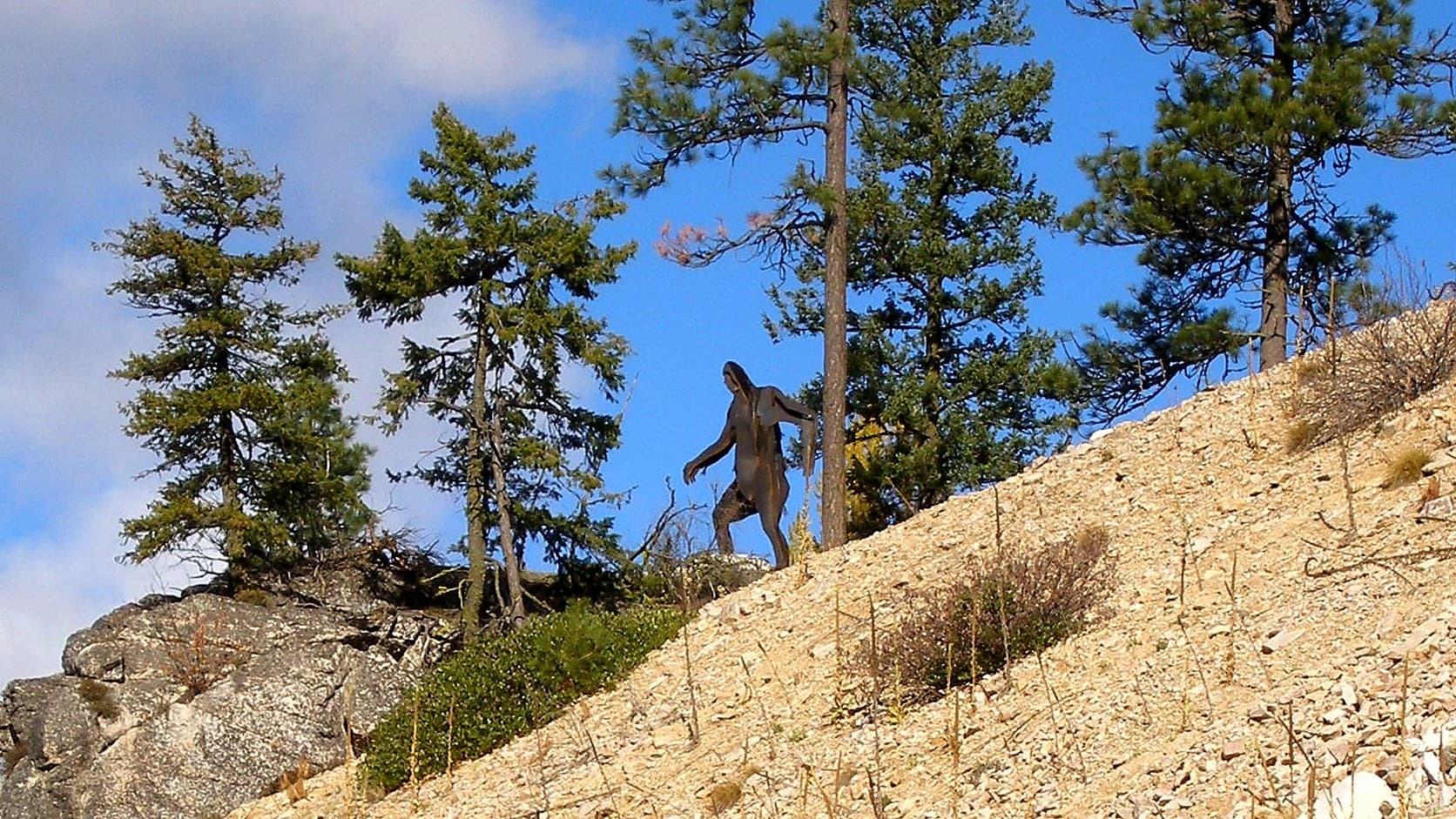
Bigfoot in Washington: a Skamania County ordinance made killing Sasquatch a crime in 1984. What it says, its penalties, and what the record leaves open.
In Skamania County, Washington, a premeditated, wilful or wanton killing of Sasquatch was made a county crime by Ordinance No. 1984-2, adopted on April 16, 1984: a gross misdemeanor with up to one year in the county jail and a $1,000 fine, or a misdemeanor with up to six months and a $500 fine. The ordinance says it was written because specific national and state laws restricting the taking of specimens were absent, and whether it is still in force could not be confirmed from the desk as of October 2026. For readers in Enumclaw and across Washington who type "is it illegal to kill Bigfoot in Washington," this is the county's own paper, read from the page.
The strangest part is the county's own doubt. The 1984 ordinance recites that an earlier law, Ordinance No. 1969-01, made the killing a felony punishable by five years in prison, and then says that law "may have exceeded the jurisdictional authority" of the commissioners who passed it. It also tells the prosecutor what to do if the coroner decides the victim was humanoid, in which case the case goes forward under homicide law, and what to do if the coroner decides it was an anthropoid, an ape-like creature. Everything below keeps the record, which is real, apart from the creature, which is a legend.
What did Skamania County's 1969 Bigfoot ordinance do?
It made the killing a felony. That is how the 1984 ordinance describes it, in a recital that gives the penalty as five years in prison. The 1969 text was read in a third-party scan, described below, and the 1984 recital is the county's own account of it.
Courthouse Libraries BC, a legal research library in British Columbia, writes that the county commissioners adopted it on April 1, 1969, as Ordinance No. 69-01, that the local weekly, the Skamania County Pioneer, published it on April 4 and April 11, 1969, and that the publisher had the notice notarized on April 12 because readers did not take it seriously. KUOW, the Seattle public radio station, quotes the 1969 wording as a felony with a fine of up to $10,000 and, or, up to five years in jail. A one-page scan of Ordinance No. 69-01, linked from the KUOW item and hosted on the Bigfoot research site washingtonbigfoot.com, shows the felony clause: any premeditated, wilful and wanton slaying of such a creature "shall be deemed a felony punishable by a fine not to exceed Ten Thousand Dollars ($10,000.00) and/or imprisonment in the county jail for a period not to exceed Five (5) years." The scan is dated "this 1st day of April, 1969", says the ordinance took effect immediately as an emergency measure, and carries handwritten signatures over the titles of chairman of the Board of County Commissioners and Skamania County prosecuting attorney, with no names typed. It shows no county seal or filing stamp, and it is a third-party copy, not the county's own file, so this article could not confirm that it matches the county's record. The 1984 ordinance's recital describes the same penalty as five years in prison, where the 1969 scan says county jail. The same KUOW item also attaches a $1,000 fine and up to a year in jail to the 1969 law, which is the 1984 gross misdemeanor penalty and does not match the 1969 scan, and it says the law forbade any harming of a Sasquatch, where the scan covers a premeditated, wilful and wanton slaying.
What does the 1984 Bigfoot ordinance say, section by section?
Ordinance No. 1984-2 is three scanned pages, titled as partially repealing and amending Ordinance No. 1969-01. Its opening clauses say that evidence continues to accumulate pointing to the possible existence in the county of "a nocturnal primate mammal variously described as an ape-like creature or a sub-species of Homo Sapiens." They list the names Sasquatch, Yeti, Bigfoot and Giant Hairy Ape as interchangeable. They say publicity had brought an influx of scientific investigators and casual hunters, most of them armed, and that this endangered both people and the animals. The ordinance repeals only the part of the 1969 law that made a killing a felony and enacts four sections in its place.
Section 1, titled Sasquatch Refuge, declares the creature an endangered species of Skamania County and creates a Sasquatch Refuge whose boundaries are "co-extensive with the boundaries of Skamania County." The refuge is the whole county.
Section 2, Crime and Penalty, makes the premeditated, wilful or wanton slaying of Sasquatch unlawful. If the killer acts with malice aforethought, the act is a gross misdemeanor, punishable by one year in the county jail and a $1,000 fine, or both. If the act is premeditated and wilful or wanton but without malice aforethought, it is a misdemeanor, punishable by a $500 fine and up to six months in the county jail, or both.
Section 3, Defense, says that an accused killer's insane delusions, diminished capacity, or an act that was "the product of a diseased mind" shall not be a defense.
Section 4, Humanoid/Anthropoid, is the coroner clause. If the county coroner determines the victim to have been humanoid, the prosecuting attorney pursues the case under existing homicide laws. If the coroner finds an anthropoid, the prosecutor proceeds under the ordinance.
The ordinance covers killing only. The sections as typed say nothing about photographing, trapping, searching for or disturbing the animal.
Who passed it, and when?
The commissioners reviewed the ordinance on April 2, 1984, and set a public hearing for April 16, 1984, at 10:30 a.m. Page 3 records it as duly passed and adopted into law on April 16. An emergency clause, which calls the situation an emergency, makes it effective immediately on passage.
Courthouse Libraries BC says the revised ordinance went into effect on April 2, 1984. The ordinance's own pages put April 2 as the review date and April 16 as adoption, so this article follows the ordinance. The number is also written two ways: typed 1984-2 on page 1, handwritten 1984-2 in the footers of pages 2 and 3, and handwritten 1984-02 in the adoption line on page 3.
The pages carry the signatures of the Board of County Commissioners' chairman and two commissioners, and of the county auditor, who was also the board's clerk, attesting. The signatures are handwritten and no names are typed beside them, so this article names no one.
Is the Skamania County Bigfoot law still on the books?
Not confirmed. Skamania County's code publisher keeps an ordinance list and disposition table, a table that lists each ordinance and what became of it, and its page says the code includes legislation through June 23, 2026. When opened on October 26, 2026, the table did not load any readable entries, so its line for Ordinance 1984-2 could not be read. Courthouse Libraries BC says only that the 1969 ordinance "has been partially repealed and amended since." Nothing opened shows the 1984 ordinance repealed, and nothing opened shows it in force, so this article does not say either. The county's clerk of the board is the office to ask.
The copy used here is the Wayback Machine's capture, dated October 11, 2019, of the county's own file at skamaniacounty.org. The live county site refused automated requests.
Is there a Bigfoot law in Whatcom County, or near Enumclaw?
Whatcom County has a resolution, which is a council's formal statement and not an ordinance. The county's records system lists Resolution 1992-043, a resolution naming the county a Sasquatch protection and refuge area, with an approval date of June 9, 1992. The resolution's own text could not be read on that page, so what it requires is not stated here. KUOW also reports a 1992 resolution.
The two counties on the record are Skamania and Whatcom. Nothing opened says whether any other Washington county has such a law, and this desk did not search the codes of King or Pierce counties, the two nearest Enumclaw. The animals the plateau does document are another matter: see this site's guide to cougar sightings in Washington and the story of Enumclaw's elk herd.
What is the Ape Canyon Bigfoot story at Mount St. Helens?
A well-known Washington episode is Ape Canyon, on the southeast side of Mount St. Helens. The Mount St. Helens Institute says the canyon takes its name from a well-known clash, in the early 1920s, between miners and what it calls supposed creatures. Wikipedia, citing a 2018 Oregonian retrospective that this desk could not open, dates the story to the summer of 1924. The Forest Service's own page for Ape Canyon Trail #234 describes the trail's views east into the canyon and, in the distance, Mount Adams, and does not tell the story. The altercation is legend. The canyon is a place on the map.
Ape Cave, on the south side of the same mountain, is a separate place, a lava tube the Forest Service says is 2.5 miles long. The Forest Service page does not say how it was named. As of October 2026, the page gives the season as May 18 through October 31, with timed tickets from recreation.gov, and says the area is closed to the public from November 1 to May 17. For the mountain's documented history, the 1980 eruption, see this site's guide to volcanoes in Washington. For Enumclaw's own mountain, there is the Mount Rainier viewpoints guide.
Did the FBI really have a Bigfoot file?
Yes, and it is a federal record anyone can open. The FBI Vault, the bureau's online library of released records, lists a file titled Bigfoot Part 01, 22 pages, filed under Frequently Requested. The file is scanned images, and the vault's server would not hand over readable text to a script, so this desk did not read the pages. The Daily Beast reported on June 5, 2019 that the documents date from 1976 to 1977 and show a researcher in The Dalles, Oregon asking the FBI laboratory to test 15 hairs. The Daily Beast quotes the bureau's reply: "It was concluded as a result of these examinations that the hairs are of deer family origin." Those words are the Daily Beast's quotation, not a page this desk read in the file.
Before you go
To read the ordinance, use the Wayback Machine capture linked in the sources below and read all three pages; the typed text is short. To find out whether it still stands, ask the Skamania County clerk of the board, or check the county code's ordinance disposition table on the code publisher's site when it loads. Treat any retelling, this one included, as a pointer to those pages. If you head to Ape Canyon Trail #234, check the Forest Service's trail page for conditions before you leave, since the agency sets the closures.
Story label: Original Story or Guide
Originally published: