

Feature
Ravensdale mine explosion of 1915 and where to learn more
The 1915 Ravensdale mine explosion killed 31 men near Black Diamond. The count, the unsettled cause, the memorial, and the museum's hours as of November 2026.
The Ravensdale mine explosion of 1915 killed 31 men on Tuesday, November 16, in the Northwestern Improvement Company's coal mine at Ravensdale, a few miles northeast of Black Diamond and roughly 12 miles north of Enumclaw. HistoryLink puts the blast at 1:25 p.m.; the Seattle Times of November 17 wrote 1:30. Nobody established what set it off. Monday, November 16, 2026, is its 111th anniversary.
Two men selling accident insurance were standing at the mine's main entrance when it went off, and the blast knocked them off their feet, HistoryLink writes. The Seattle Times named one of them as an accident-department official of Pacific Mutual Life, and said he had an interpreter with him. Underground, a breakdown that morning had already cut the crew. HistoryLink says the toll would have been much greater without it, and the accounts give different numbers for how many men were sent home.
How many people died in the Ravensdale mine explosion?
Thirty-one, by HistoryLink's essay and by a centennial write-up posted on Patch, which reports the coroner's jury's finding of 31 dead. The figure took a day to settle. A Seattle Times headline of November 17, 1915, said 34 were dead, according to the sources HistoryLink lists. The Seattle Star that same day, in a report from the town, guessed the total would come to between 35 and 40. By HistoryLink's list of sources, Seattle Post-Intelligencer headlines of November 17 and 18 had it at 31.
The men were not anonymous. Thomas J. Kane, the mine foreman, was also a city councilman, HistoryLink says. Jack Muncie managed the local baseball team. Jack Storey had served as a justice of the peace. Dominick Novarra, in HistoryLink's spelling, led the local miners' union; the 1915 Times spelled him Novara and the Patch list says Domenick Novaria. Many were immigrants, and the spellings drifted from paper to page. Two researchers rechecked all 31 names for the 2015 centennial, Patch reports, and their list does not match HistoryLink's name for name. This article prints only names that both lists carry.
The tally of families differs too. HistoryLink says 23 of the men were married and had families; the Patch write-up says 20 widows and 55 dependents.
What time did the Ravensdale mine explode, and where is the site?
HistoryLink gives 1:24 p.m. for the last count of men below and 1:25 p.m. for the explosion. The Seattle Daily Times of November 17, 1915, as transcribed by Black Diamond History, put the accident at 1:30, and the Star's report said the same. A few later retellings give November 15; the 1915 papers, dated Wednesday the 17th, say the blast came the day before, which is the 16th, a Tuesday.
The mine had a main slope and an auxiliary one, both pitched at 45 degrees, and three levels, of which the lowest was where most of the men were working. Sources disagree on the depths. The mine's owner was a subsidiary of the Northern Pacific Railroad, which also owned the town, as this site's Gracie Hansen Community Center story explains. How many men were below depends on the source: 36 by HistoryLink, 37 by the Times, and in the Patch version 150 miners at work with all but 34 sent home.
What caused the Ravensdale mine explosion?
Nobody settled it. HistoryLink says the mine was a dry one, with coal dust filling the passages, and that a sprinkler system installed to dampen the air was not enough. What ignited the dust, it says, was never determined; a misplaced charge of dynamite, known to miners as a windy shot, and a cigarette lit carelessly by one of them are its two guesses.
On November 17, 1915, the company's general manager, C.C. Anderson, told the Times that the only apparent explanation was a small pocket of gas tapped by one blast and set off by a second, or a cloud of dust thrown up by a shot and then ignited. The reporter added, "The cause of the explosion probably never will be known." The same article said dust explosions had occurred at the mine several times in the past few years.
The coroner's jury, by the Patch write-up, found that the 31 died "by reason of an explosion of firedamp and coal dust." Firedamp is the methane that coal gives off. The state mine inspector at the time, James Bagley, was at the mine within a day, the Times reported, and the Star reported him saying the mine was among the best equipped in the state and that the company had met every provision of state law. His written report on the cause was not found online for this article, so what the state concluded is not stated here.
How long did the rescue take?
HistoryLink counts about 10 hours of attempts to reach the third level, hindered by poison gas, smoke and broken timbers, with crews in oxygen helmets working 90-minute shifts. The main shaft had caved in, so the effort moved to the auxiliary slope. Miners from Black Diamond arrived inside an hour. By nightfall crews had also come from Roslyn, on the far side of the Cascades. Matt Starwich, then a former deputy sheriff running a saloon in town, helped; this site's Matt Starwich story follows him to the sheriff's office in 1921.
Above ground, the Times reported, women and children waited at the mouth of the slope in the rain. A dog stayed by the entrance, and a miner told the reporter, "His boss is down there." Rescuers concluded that night that no one on the third level could be alive, and the bodies came up slowly over days.
What happened to the town of Ravensdale?
It faded. HistoryLink says many miners left to fight in the First World War, and that as oil and natural gas replaced coal in the 1920s the county's mines shut, Ravensdale's among them. Sometime in the 1920s the town disincorporated; HistoryLink says the records are lost and calls it the only town in King County to do so. The Black Diamond Historical Society's newsletter, in a 2021 article by the local researcher Michael Brathovde, says the disaster nearly turned Ravensdale into a ghost town. For the other places the coal industry left behind, see this site's guide to Washington ghost towns.
Coal did not leave Ravensdale all at once. The same society's newsletter reports that the Rogers No. 3 mine, near the 262nd block of Southeast Kent-Kangley Road, was closed with dynamite at 2:30 p.m. on December 17, 1975, ending underground coal mining in Washington. This site's Lulu Kombol story touches on 1915 from the schoolhouse side: by her memoir, her husband had worked that shift until the day before.
Where are the Ravensdale miners buried, and is there a memorial?
HistoryLink says many were buried in Ravensdale Cemetery, while the bodies of others went home to the places they had come from. The cemetery is not a visitor stop. The Black Diamond Historical Society's 2014 newsletter, reprinting a 2012 site visit, says the company gave one acre for it in 1908, that there are almost no burial records and that vandals damaged it from the 1950s. A 2007 survey on Interment.net found it fenced, overgrown and inside a housing development. None of the pages opened says it is open to the public. The Patch write-up says a plaque went into the cemetery for the centennial.
Some of the dead may lie in Black Diamond. The city's burial index and a 2000 federal nomination, as this site's Black Diamond Cemetery guide reports, give different counts of men who died that day.
The public memorial is the History Trail. On November 16, 2015, according to the King County Council's release, a ceremony near the site of the collapsed mine named each of the dead with the ring of a bell, with descendants present. Then Councilmember Reagan Dunn said it was done "to honor the miners who were lost in the tragedy and to honor the many in our society who labor in dangerous professions." The trail's 15 interpretive signs were dedicated the same day, the society's newsletter says. The county says the trail can be entered close to the Gracie Hansen Community Center and at Ravensdale Park.
Is there a museum about the Ravensdale mine near Enumclaw?
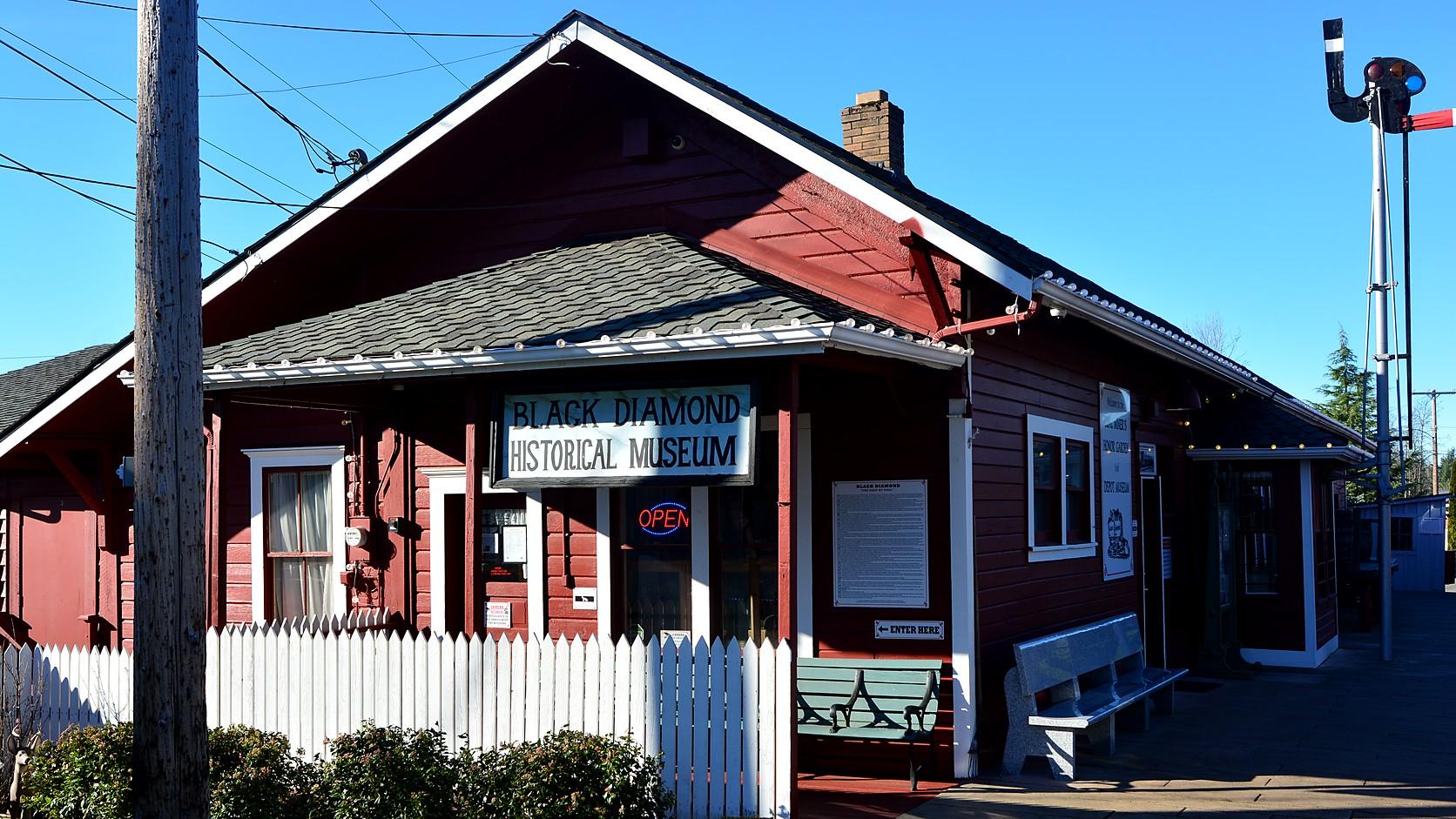
The nearest is the Black Diamond Historical Society and Museum, in the restored railroad depot at 32627 Railroad Avenue in Black Diamond. As of November 2026, its website lists hours of Thursday 9 a.m. to 2 p.m. and Saturday and Sunday 11 a.m. to 3 p.m., with admission "always free" and donations welcome. The phone number is 360-886-2142. The society sets those hours and posts them on its site, and its Visit Us page offers private tours for groups outside them. Hours were read on November 2, 2026, so check again before going.
On Monday, November 16, 2026, the anniversary itself, the museum is closed by its posted schedule; its next open days are Thursday, November 19, and the weekend of November 21 and 22. The museum's pages describe a "Coal Was King" experience. None of the pages opened for this article mentions a display on the 1915 explosion, so ask when you call. For the coal itself, see this site's John Henry mine story, about the Black Diamond pit that approved plans would leave a lake.
Before you go
Call the museum at 360-886-2142 or read its website for the day's hours, since a small volunteer-run museum can change them without much notice. The Ravensdale History Trail is a walk, not a drive-up exhibit, so check King County Parks for Ravensdale Park's current hours and conditions. Do not look for the cemetery on your own; nothing opened says it can be entered.
Story label: Original Story or Guide
Originally published: